
Original title: Q3 North America | TikTok’s New App Tops the Download-Rising Chart; Ant-Themed New Game “Colony Flow” Shines on Both Platforms; Short Drama and AI Tracks Sustain Strong Momentum
Author: Leslie Luo
Source: Diandian Going Global

Cover image source | pexels
Relying on the big-data mobile app platform “Diandian Data,” Diandian Going Global compiles the Top 20 apps & games by downloads and revenue on the App Store and Google Play across the Japan and Korea markets, hoping to help practitioners better understand the latest product trends and shifts in the region.
This report covers the period from July 1, 2026 to September 30, 2026.
Downloads Keep Growing, Simulation Category Rises Against the Trend
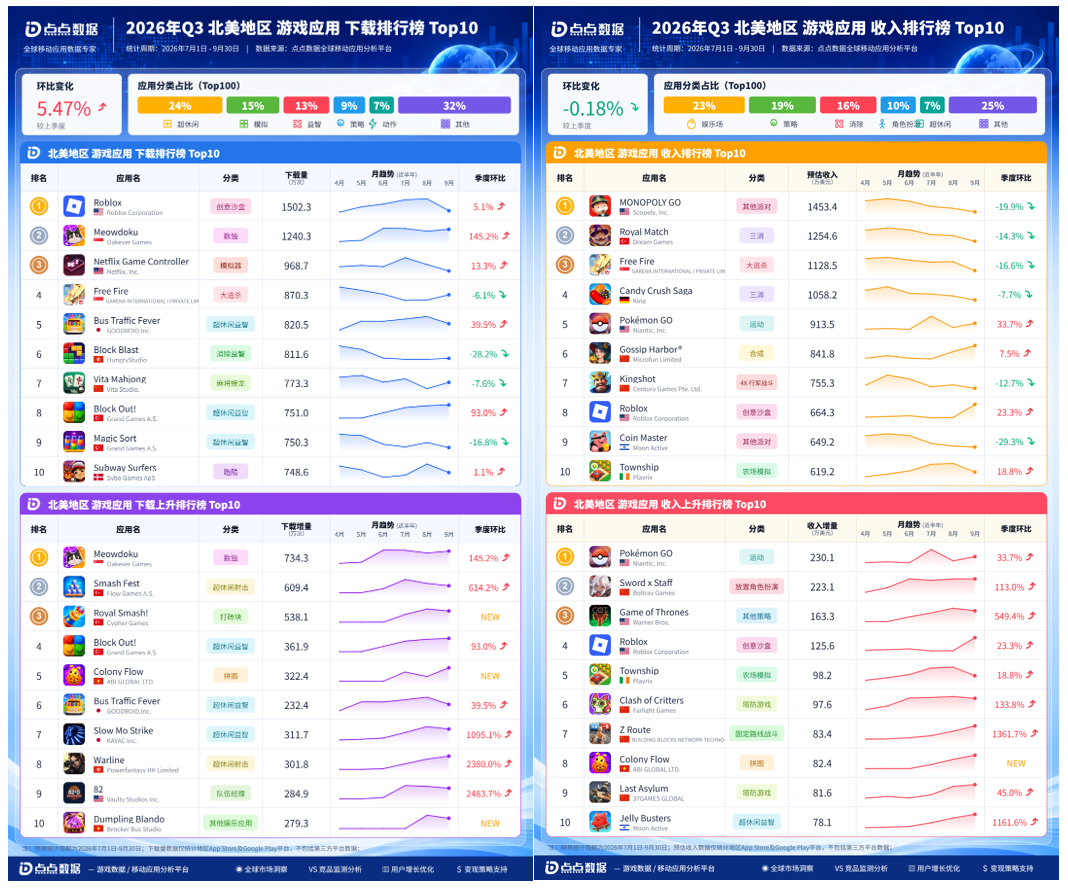
According to Diandian Data, total mobile app downloads in North America grew 5.47% quarter-over-quarter in Q3 2026, while estimated total revenue dipped slightly by 0.18%. Download growth accelerated again, with the United States, Mexico and Canada together contributing over 70% of downloads; growth in mid-tier regions remained the main support for the region’s mobile game data. The U.S. alone contributed over 91.3% of the region’s mobile game revenue. Compared with Q3 2025, North America’s mobile game downloads and revenue continued to post double-digit growth, with revenue up over 12.5% year over year.
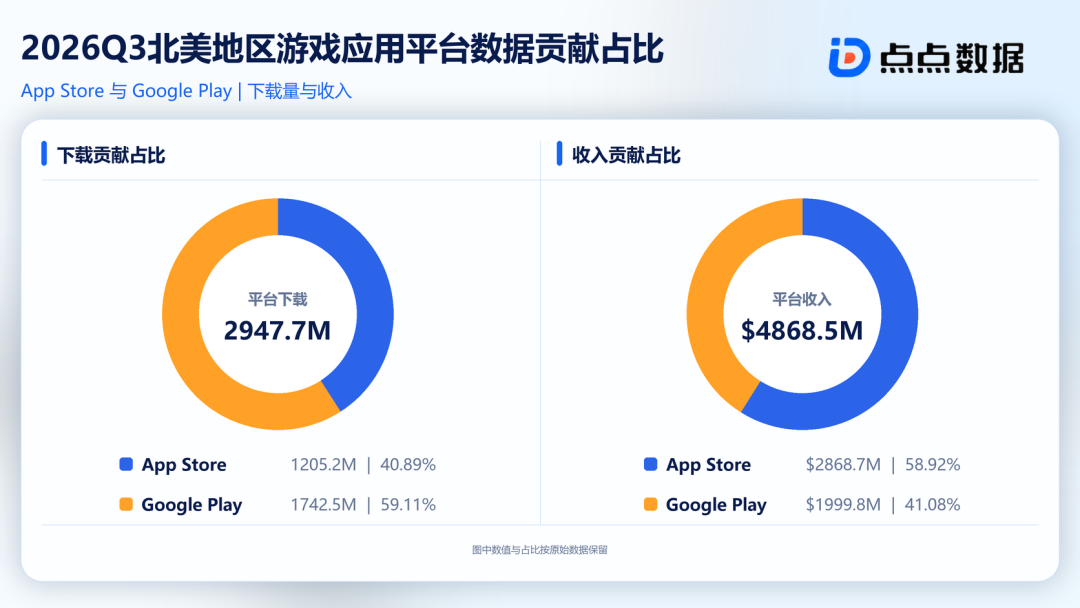
By platform, Google Play and the App Store each still hold a large share of downloads and revenue, with the overall split moving closer to a 60/40 ratio. In Q3, Google Play continued to shoulder the main user-acquisition role with 59.1% of downloads, but the decline in its revenue share was the main driver of the region’s overall revenue dip; the App Store, with 40.9% of downloads, contributed 58.9% of revenue, further strengthening its monetization advantage.
Source: Diandian Data
By category, the top three download categories remained Casual, Simulation and Puzzle, with Casual slipping slightly while the other two grew over 4% quarter over quarter. On the revenue side, Casual, Puzzle and Strategy still took the top three spots, but all three saw revenue declines of varying degrees. In contrast, simulation games kept growing on both downloads and revenue, with revenue rising over 2.6% against the trend, making it the growth direction worth watching this quarter.
Mature IP Translates into Strategy Experience, Revenue Ramps Up Fast
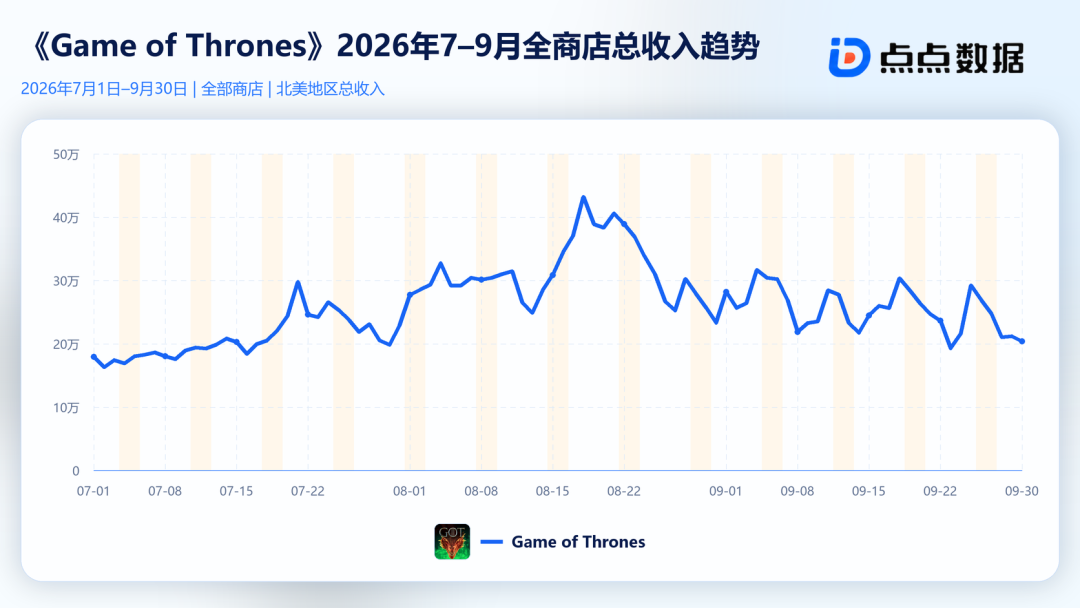
Within the reporting period, the strategy mobile game “Game of Thrones,” launched by Warner Bros. Games and HBO in late June and built on the world of “Game of Thrones” and “House of the Dragon,” completed its first full operating quarter after launching in the U.S. and other major markets. In Q3, the title captured an estimated revenue of over $19.29 million in North America, breaking into the top three of the region’s revenue-rising chart with an estimated revenue increase of more than $16.32 million.

Source: App store event details page
The influence of the mature TV franchise in North America was the key foundation for “Game of Thrones” strong early traction. Entering Q3, the game deepened its tie-in with Season 3 of “House of the Dragon”: players who watched the show and linked their HBO Max accounts could claim in-game rewards; the publisher also rolled out a Season 3 finale celebration, limited-time chests and dragon character comeback events in August. Looking at revenue trends, the product’s notable Q3 growth and peak periods largely coincided with these activities.
Source: Diandian Data
But product quality itself is what kept revenue growing. According to the publisher, the game revolves around dragon raising, territory building, army expansion and alliance warfare. Compared with IP adaptations that only borrow characters and art assets from the shows, this title embeds the world’s core conflicts into its growth, combat and social systems, giving players a reason to keep engaging within a familiar content framework. For North American users, “Game of Thrones” already carries strong brand recognition, while the strategy gameplay further extends how long players stay in the IP world, raising the odds of converting one-time content consumption into long-term game spending.
“Game of Thrones” results show both the commercialization potential of turning mature IP into strategy experiences and a reference for IP mobile games to run tie-in marketing with TV series. The game launched before the show aired and kept funneling audience attention through watch rewards, story-themed events and finale celebrations, blending the show’s content cadence with game operations to give players clear incentives to enter the game, join events and keep building. As the season concludes, whether the title can sustain engagement and spending through follow-up content updates will be the key test of the tie-in’s long-term impact.
Ant-Themed Light Puzzle Product Gains on Both Ends
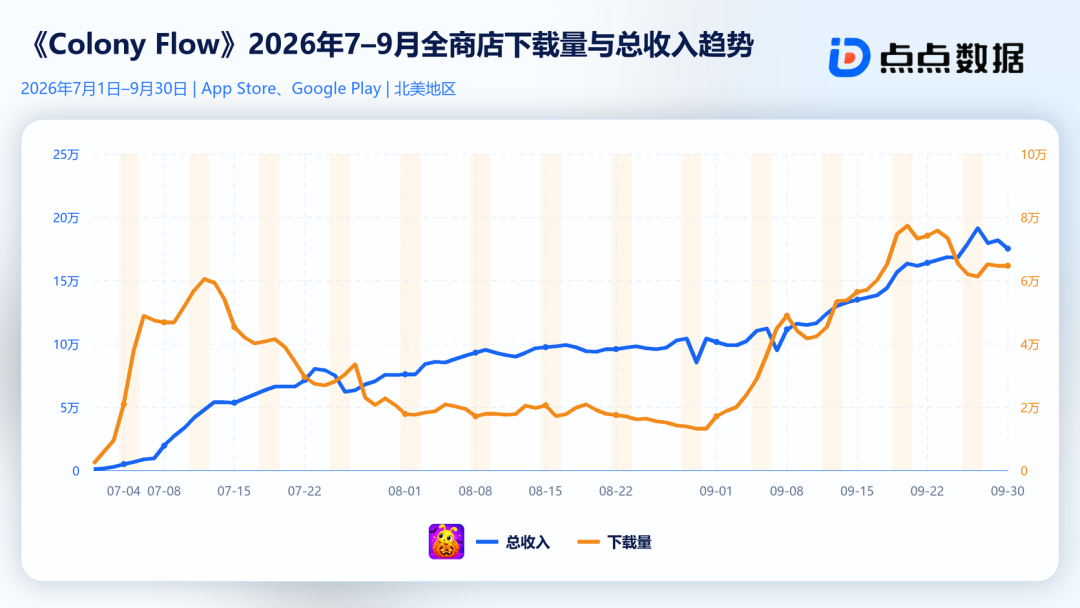
Unlike “Game of Thrones,” which relies on mature IP and mid-to-heavy strategy gameplay, “Colony Flow” represents a lighter growth path in the North American market. In Q3, the title climbed to No. 5 on the region’s mobile game download-rising chart with an increase of over 3.22 million downloads, while also breaking into No. 8 on the revenue-rising chart with an estimated revenue increase of over $8.23 million. For such a lightweight product, this revenue result is no small feat.
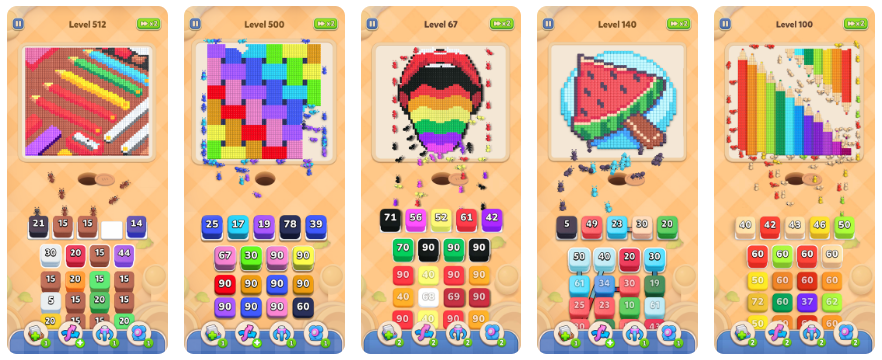
Developed by Vietnamese studio ABI Games, this light puzzle title takes ant-moving as its theme and blends color matching, path planning and pixel-elimination gameplay. Players place cubes of different colors into limited slots and send ants to carry same-color pixel blocks along reachable paths, gradually clearing the pattern. The orderly movement of ants and the dissolving pattern provide intuitive visual feedback, while the rule that cubes can only free a slot after all carrying tasks are completed adds challenges of sequence choice and space management. The product thus keeps a low barrier to entry and a relaxing experience while giving levels sustainable strategic depth.
Source: App store details page
Its revenue performance is closely tied to the item demand created by these gameplay constraints. The game offers helpers such as adding temporary slots, shuffling cube order, directing cubes into slots and clearing same-color pixel blocks, each addressing situations like insufficient space, limited choices or blocked paths. These items clearly help players keep progress and avoid restarting. Since our chart’s estimated revenue only covers in-app purchase items from stores, “Colony Flow” has already achieved scale on direct monetization, and its commercialization ability is proven.
Source: Diandian Data
Monthly data also shows revenue has not simply tracked new downloads. From July to September, “Colony Flow” estimated in-app purchase revenue in North America was about $1.26 million, $2.84 million and $4.14 million respectively; in August downloads fell about 50% from July, yet revenue grew about 124%. This trajectory matches a path where early user accumulation and deeper levels gradually unlock paying demand.
Growth Slows on Both Platforms, Market Structure Keeps Diverging
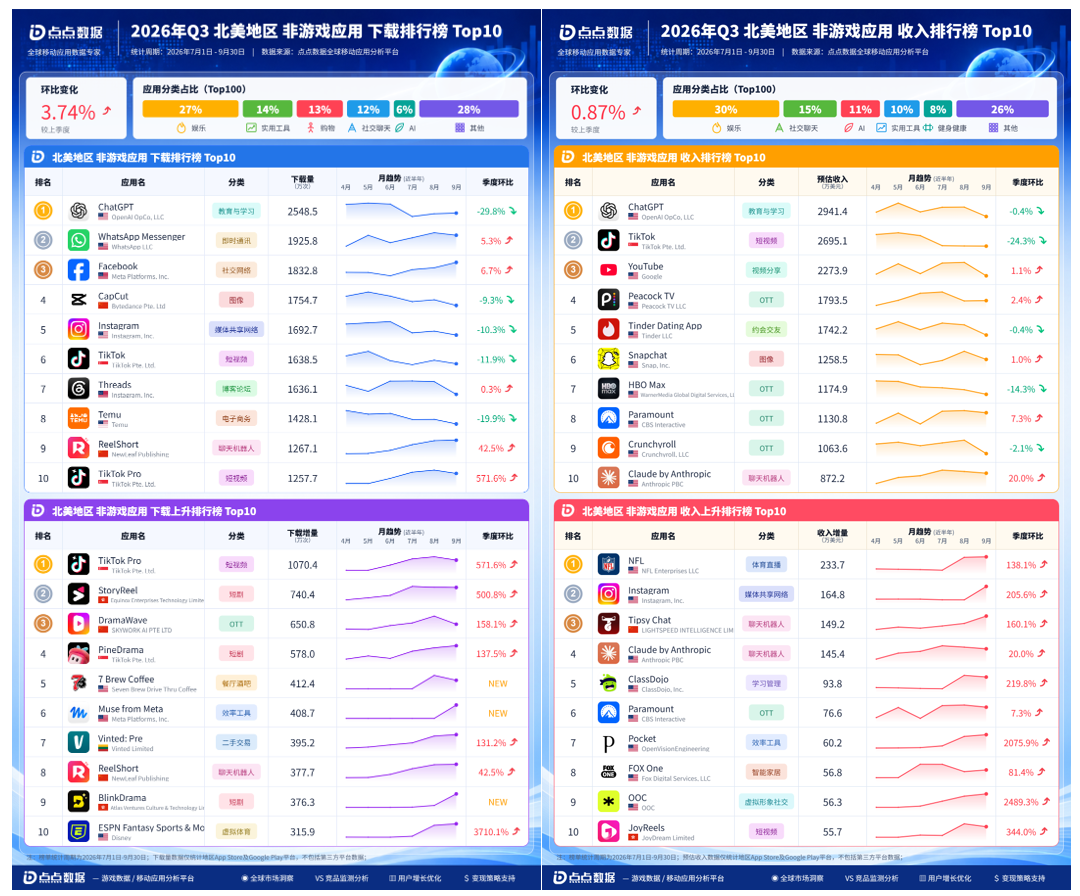
According to Diandian Data, total downloads and total revenue of mobile apps in North America grew 3.74% and 0.87% quarter over quarter respectively in Q3 2026, with growth easing from Q2. The U.S., which contributes over 40% of downloads, fell over 3.4% quarter over quarter, while all other regions rose noticeably, with mid-to-tail regions growing by double-digit percentages. On the revenue side, the U.S. still contributed over 91.9% of the absolute share; led by it, top regions including Canada and Mexico all saw modest growth, jointly supporting a mild increase in North America’s non-game app revenue.
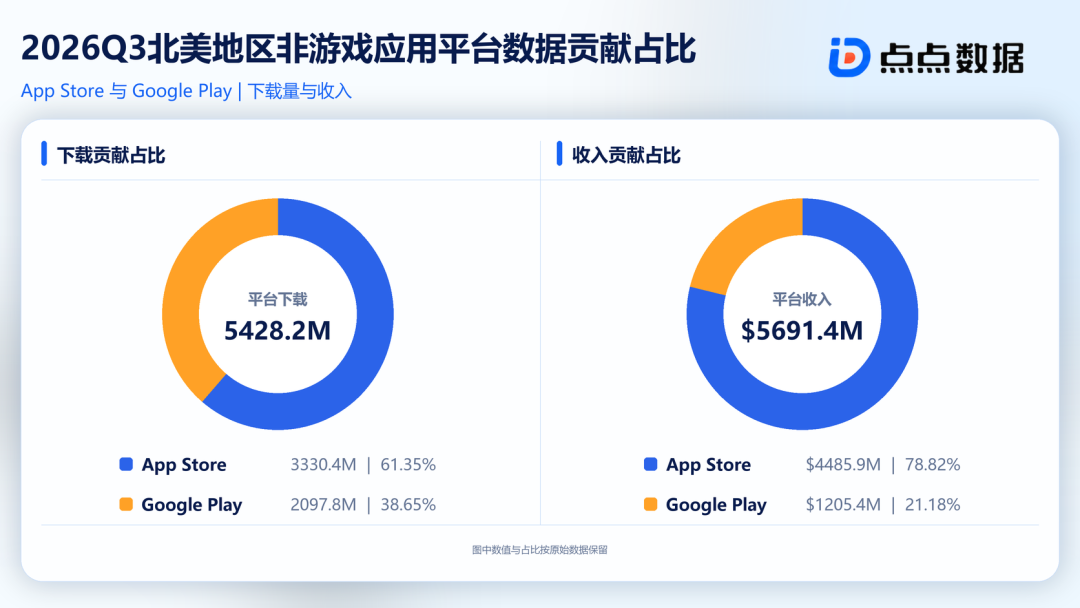
By platform, the App Store continued to hold a large share of non-game app downloads and revenue, with its revenue share approaching 80%. Compared with the previous quarter, Google Play’s download contribution kept rising to 38.6%. Overall, download sources in North America’s non-game app market are gradually becoming more balanced, but paid revenue remains highly concentrated on iOS, with the two platforms showing different characteristics in user acquisition and revenue contribution.
Source: Diandian Data
By category, the top three download categories were Tools, Entertainment and Lifestyle, while revenue was mainly concentrated in Entertainment, Lifestyle and Social & Communication. Among the leading categories, social and communication apps grew noticeably on both downloads and revenue, making them the most active direction this quarter.
New TikTok Product Opens a Fresh Incremental Window
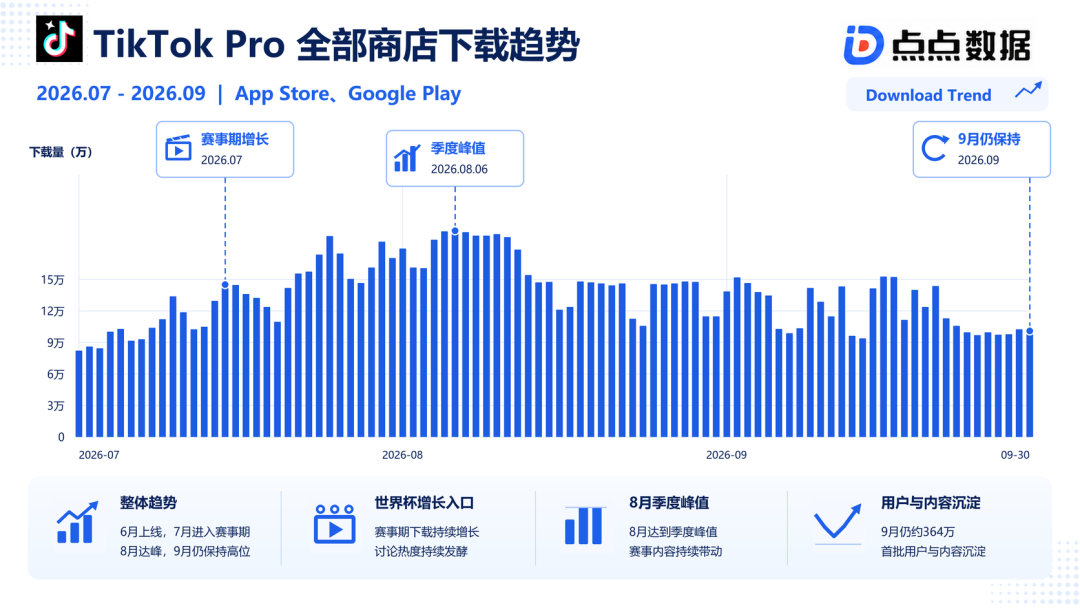
On the download side, “TikTok Pro” was the most standout non-game app of the quarter. According to Diandian Data, the product’s cumulative downloads in North America reached 12.57 million in Q3, adding 10.7 million from Q2, up over 571.6% quarter over quarter, ranking No. 1 on the download-rising chart and entering the top 10 of the overall download chart. As the product launched in June this year, the previous quarter’s base was relatively low, which amplified the quarter-over-quarter increase. Even so, in absolute incremental terms, “TikTok Pro” growth was still very impressive.
By positioning, “TikTok Pro” is not a short-video app in the traditional sense, but a standalone product TikTok built around major cultural events. Its first key scenario was the 2026 World Cup, where users could browse event-related content, trending videos and creator content, and earn Stars by searching hot topics, entering the World Cup zone or sharing content, which could be redeemed for official merchandise and TikTok Shop coupons. Compared with simply watching content, this “content + tasks + rewards” combination clearly does more to drive user engagement.

Image source: App store event details page
Judging by download trends, the World Cup did provide a very clear growth entry for “TikTok Pro.” After launching in June, the product entered the event period in July, and downloads hit the quarterly peak in August, showing that event content and creator discussions kept building. In September, downloads retreated somewhat but still held at 3.64 million, meaning users did not immediately churn as event heat faded. In other words, the World Cup delivered not just a burst of exposure but also helped the product build its first batch of users and content.
Data source: Diandian Data
For TikTok, “TikTok Pro” is more of an experiment in product segmentation: the platform funnels event content, the creator ecosystem and interactive rewards that were scattered across the main app into a standalone scene built around a specific track. For the platform, building a standalone product around cultural events both acquires users quickly in the short term and gives brands and creators a more concentrated space for content display.
StoryReel Leads, Short-Drama Track Still Holds Potential
Notably, short drama remained one of the fastest-growing non-game segments in North America in Q3. Two new titles launched in the first half of this year, “StoryReel” and “BlinkDrama,” both entered the top 10 of the download-rising chart: “StoryReel” added over 7.4 million downloads in Q3, up 500% quarter over quarter, while “BlinkDrama” added 3.76 million. By monthly data, the former performed steadily across the quarter at a high level, while the latter clearly accelerated in September, reaching 3.26 million downloads in a single month, far above the previous two months.
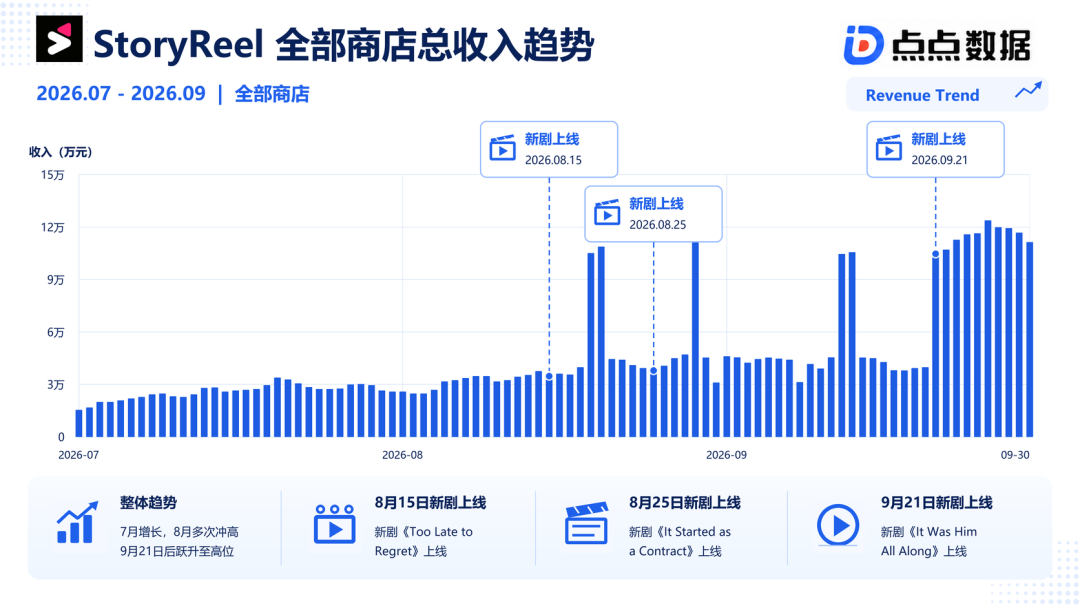
The two products grew at different paces, but their revenue growth followed the same logic: content. “StoryReel” maintained a fairly steady upward trend over the past three months. Its daily revenue trend data in North America shows several bursts aligning with new-drama release dates, and the late-September launch of “It Was Him All Along” pushed its revenue into a sustained peak period.
Data source: Diandian Data
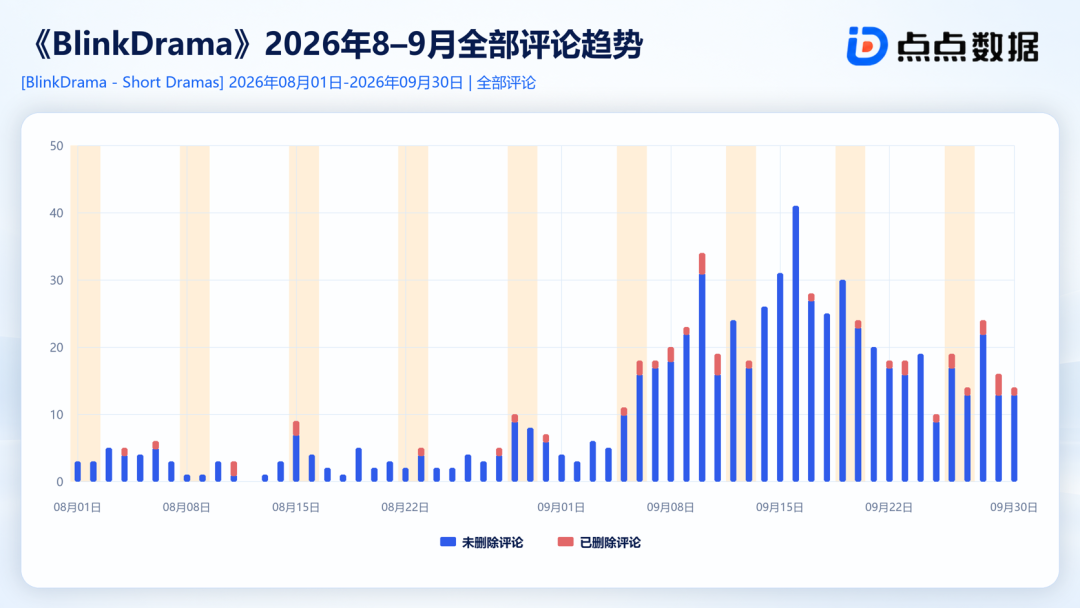
“BlinkDrama,” released around the same time, showed a more distinctly rapid expansion in North America in Q3. The volume and substance of user reviews make the product’s September heat obvious. In September, “BlinkDrama” averaged 4.30 stars in the U.S. market, with five-star reviews accounting for over 74.2%. Reviews frequently mentioned plot twists, suspense and the urge to keep watching, while titles such as “The Viper Donna” also earned positive comments for strong female characters and storylines.
Source: Diandian Data
As download scale grows, whether the product can simultaneously improve episode completeness, ad pacing and subscription service will be key to “BlinkDrama” and similar products converting stage-by-stage growth into stable revenue and sustaining momentum. Overall, the North American short-drama market in Q3 remained in a phase of rapid new-title influx and user base expansion. Amid different growth paces, continuously attracting users to consume content and building stable paying demand will decide how far these products can climb the charts.
AI Character Interaction Product Tipsy Chat Sees Revenue Explosion
On the revenue side, the AI character interaction product “Tipsy Chat” deserves attention. In Q3, its estimated revenue in North America exceeded $24.23 million, up over $14.91 million from the previous quarter, a 160% quarter-over-quarter increase that placed it No. 3 on the region’s non-game app revenue-growth chart. Growth notably accelerated in the back half of the quarter, with September alone bringing in over $12.54 million in estimated revenue, more than half of the quarter’s total.
By product experience, the core of “Tipsy Chat” is not simple AI Q&A, but letting users create and continuously use their own AI characters. Users can upload or generate a character image, then set the character’s name, personality, background, habits, opening lines and interaction scenarios, and can further shape the character’s way of speaking through sample conversations. Once complete, characters can also be searched and discovered by other users.

Image source: App store event details page
On top of that, the product adds voice, image and story-adjustment features, making interactions with characters feel closer to an ongoing narrative. That is also key to why “Tipsy Chat” performs on revenue. Once users build an ongoing relationship with a character, they naturally want to keep chatting, advance the story and refine the character setup.
Looking at Q3 revenue trends, “Tipsy Chat” appears to have formed a fairly stable revenue structure. Creators keep adding new characters and story settings, providing continuously updated content for the platform, while users find characters through search and recommendations and deepen their usage habits through ongoing interaction. Its results show that as long as AI chat products combine character supply, content interaction and emotional companionship, they can also build strong in-app purchase revenue potential.