

Image source | pexels
When it comes to Chinese smart-lighting brands going overseas, Govee is a familiar name. Through products like color light strips and ambient lights, it has turned lighting devices that were once mostly functional into consumer goods that create home atmosphere and decorate gaming spaces.
In the same track, there is another Chinese brand targeting overseas markets — Lepro. From light strips and bulbs to floor lamps and desk lamps, Lepro keeps expanding its product matrix, and is now trying to weave AI into lighting design.
According to Growjo data, Lepro’s annual revenue is roughly $11.5 million (about RMB 76.93 million). The brand’s official site says it has served more than 30 million satisfied customers and accumulated over 100,000 positive online reviews in the U.S. market.
So, when the competitive focus of smart lighting shifts from basic functionality to ambience, how exactly did this brand find its place in the overseas market?
Smart Lighting Opens a New Space
Lepro has been operating since 2012, according to what I learned. Founder Wu Ji graduated from Zhejiang University and previously worked at Alibaba. The brand started with LED lighting products aimed mainly at overseas markets, stressing practicality, energy efficiency, and value for money. As the business grew, Lepro gradually expanded from basic lighting into smart fixtures and decorative lighting.
Behind this pivot is a lighting industry that is itself changing.
A light bulb may look unremarkable, but it sits in a vast, mature, and highly competitive market. For standardized basic bulbs, parameters such as brightness, energy consumption, and lifespan are easy to compare horizontally, and consumers are more price-sensitive. Without obvious differentiation, brands easily fall into homogenized competition. Especially for online brands, price comparison and review-checking are effortless, so building an advantage through permanent low pricing is not realistic.
Smart lighting, then, opens another path. Grand View Research data shows the global smart LED lighting market was worth about $27.3 billion in 2024, is projected to grow to $68.5 billion by 2030, with a CAGR of about 14.9% expected between 2025 and 2030.
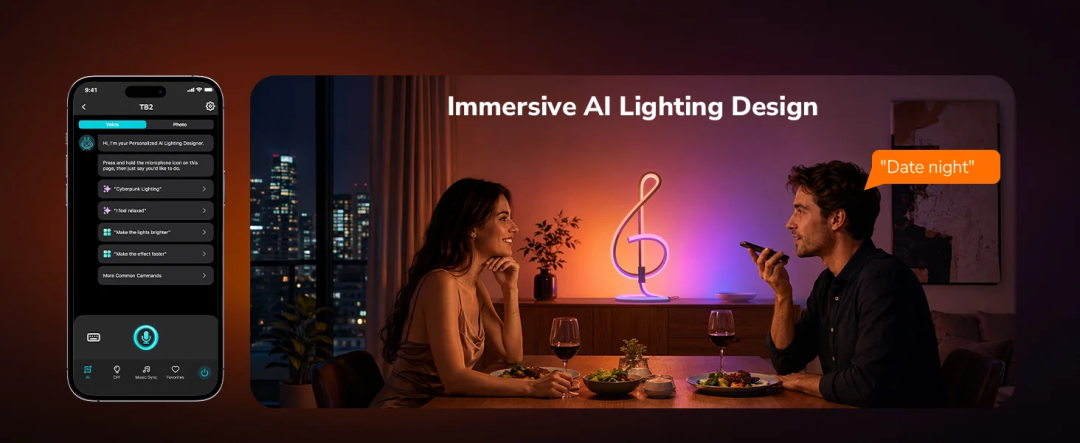
The significance of market growth is not just that fixtures can connect to the internet; it is also that the purpose of light is changing. In the past, lamps mainly solved the problem of "lighting up a room." Now, lighting must also decorate space and create ambience.
Gamers use light strips to go with their computer desks and monitors; audio-visual enthusiasts want lighting that responds to on-screen content; and ordinary households use floor lamps, wall lights, and ambient lights to change the look of a living room or bedroom. For such consumers, lighting is no longer just a household necessity — it can also be a consumer good that enhances the quality of life.
As consumption scenarios change, so do the selling points of a brand’s products. Compared with ordinary bulbs, smart light strips and ambient lights can deliver richer experiences through color changes, dynamic effects, music sync, and phone control. The competitive dimension also expands from specs and price to lighting effects, ease of use, and scene adaptability.
Lepro’s product lineup extends in exactly this direction, moving from basic bulbs into light strips, desk lamps, floor lamps, and outdoor lighting, trying to cover more usage scenarios.
On pricing, its smart bulbs sell for roughly $5.85–$22.50, smart light strips about $10.62–$69.99, and desk lamps and floor lamps about $39.36–$69.99. Overall, the brand spans multiple price tiers from entry-level bulbs to higher-priced ambient-lighting products.
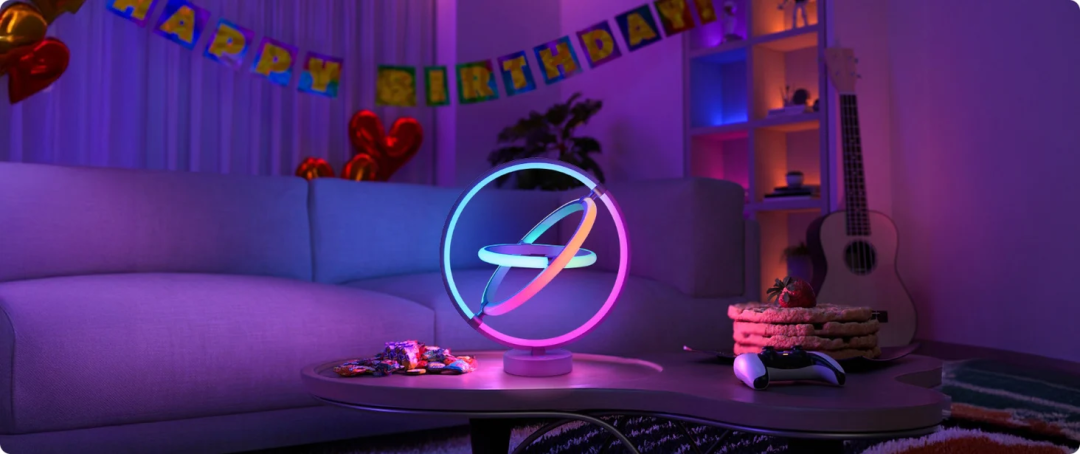
Redesigning Lighting with AI
After spreading across prices and scenarios, Lepro’s next strategic focus has clearly pointed to AI lighting — moving light from passive control toward actively understanding scenes and user needs.
In April 2024, Lepro launched its AI lighting system LightGPM, an attempt to bring AI into smart lighting. According to the official press release, the system integrates large language models, color psychology, and lighting-design knowledge, generating lighting effects from user commands and moods, with more than 12,000 effects available.
What LightGPM changes is the way users design lighting. Traditional smart fixtures support color switching, brightness adjustment, and scene presets, but users still have to pick colors, tweak parameters, or keep trying preset modes themselves. Lighting control through common smart speakers is also mostly limited to basic commands like on/off and color changes, making it hard to complete more specific ambience design directly.
LightGPM tries to hand that step to AI. Users do not need to understand lighting parameters in advance, nor name the exact color combination they want. Instead, they can directly describe a mood, activity, or scene — a warm atmosphere for relaxation, a sci-fi gaming space, or holiday-themed lighting — and the system generates matching effects.
Beyond text descriptions, users can also upload photos of a room, movie posters, or game-character images, letting the AI analyze the colors and visual style in the picture and produce a matching lighting plan. After generation, users can still fine-tune color, brightness, and dynamic speed to better suit their tastes.
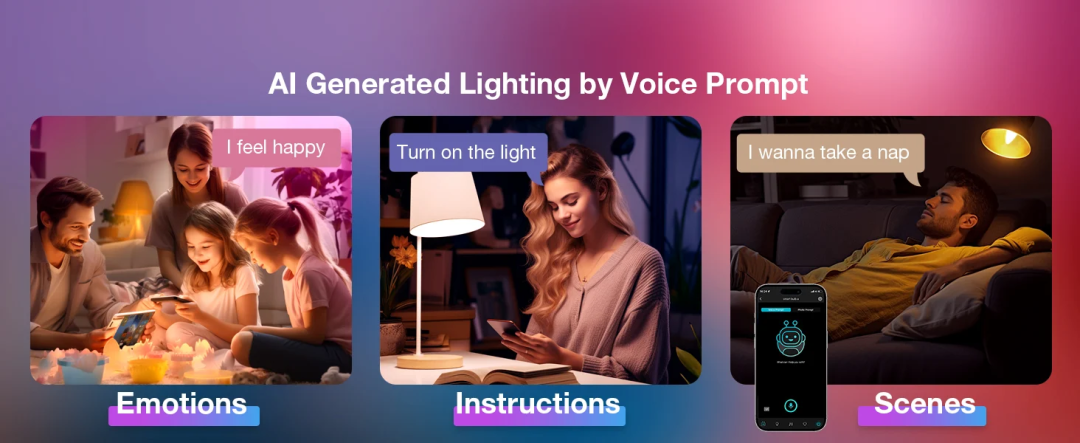
Concretely, the S1 AI smart light strip is one of the first products to ship with LightGPM. It combines AI effect generation with RGBIC technology, allowing different segments of the strip to show different colors at the same time, and supports music sync among other features. Lepro has since extended AI lighting to products like the B1 smart bulb, so the experience is no longer limited to light strips.
As products iterate, Lepro is also exploring more direct forms of interaction.
In January 2025, the brand released LightGPM 3, continuing to upgrade the system. The AI Lighting Pro series launched in September of the same year extended the capability to AI light strips, neon strips, desk lamps, and floor lamps, and added a built-in AI microphone. Users can wake the voice assistant with "Hey Lepro" and state their lighting needs directly, reducing reliance on the phone app.
From generating effects from text and images to voice interaction, Lepro is moving from single-effect generation toward a more complete user experience. For consumers, this promises to lower the barrier to operating smart fixtures; for the brand, it carves out a new competitive opening beyond traditional lighting.
From Social-Seeding to Community Building
For Lepro, lighting fixtures do more than illuminate — they also change how a space looks and feels.
Around this trait, the brand does not put its marketing focus on metrics like brightness, wattage, or lifespan. Instead, it places lighting inside concrete life scenarios. In this way, selling lamps becomes selling spatial experience and emotional value.
On TikTok and Instagram, Lepro mainly runs scenario-based marketing. Bedrooms, game rooms, living rooms, friend gatherings, and home movie nights are the frequently featured scenes. These scenarios are visually driven and emotionally direct, well suited to grabbing attention quickly with short video.
Beyond everyday scenes, holidays are an important entry point. For example, the brand pairs Halloween-themed decorations with signature lighting effects, showing how light participates in holiday styling and sparking demand for ambience decoration. Holidays carry natural timing and social-sharing attributes, making it easier to push users from browsing to actively trying setups.
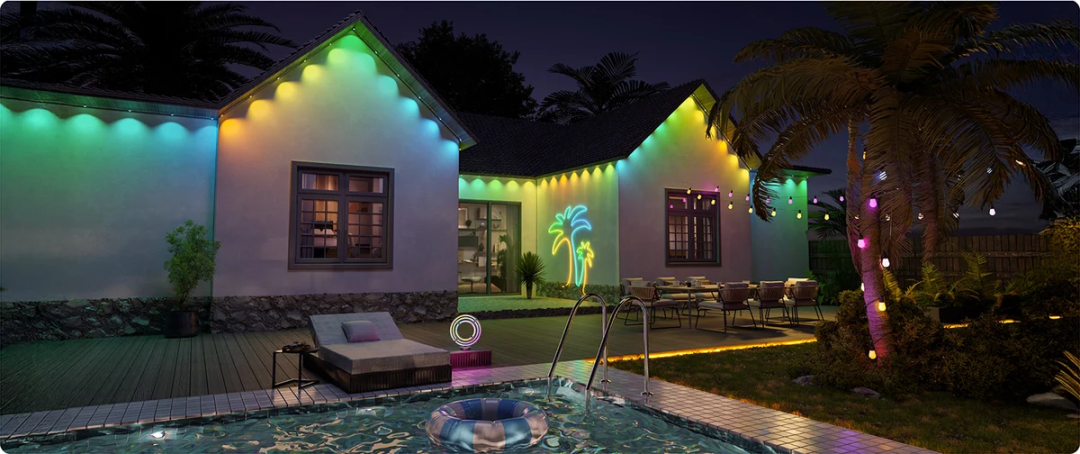
If social media is mainly about showing a product’s visual appeal, creator reviews on YouTube go further in helping consumers understand real-world performance.
For instance, tech creator Mrwhosetheboss, with 23 million followers, posted a roughly 26-minute Lepro TB1 video that drew about 4.21 million views. Compared with a brand talking about itself, third-party reviews earn trust from potential buyers more easily, helping reduce uncertainty before a purchase.
Besides reaching consumers through outside creators, Lepro also extends user engagement into its official website community. Users can share their lighting setups, color pairings, and dynamic effects, while other members can browse, like, and discuss.
These user creations give prospective buyers decoration inspiration and enrich the product’s real-life application scenarios. More importantly, the community turns marketing from a one-way broadcast by the brand to multi-directional interaction among users.
The community also serves product support and feedback collection. Users can ask about usage, report connection issues, or suggest features, and brand customer service joins in answering questions. To a degree, this narrows the distance between an overseas brand and its international users, and lets the brand catch usage pain points and shifting needs more promptly.
Overall, Lepro’s marketing touchpoints have extended from consumers learning about the product to the post-purchase usage stage. Social media sparks interest, creator reviews build trust, and the official community accumulates word of mouth and sustains relationships.
BrandArk Brand Watch
Judging from Lepro’s exploration, AI opens new imaginative space for traditional lighting — but technology itself does not equal competitive advantage. What consumers truly need is not more complex features, but more effortless operation, lighting experiences that fit their needs, and product value that blends into daily life.
For overseas brands, technological innovation is only the starting point. The key to going further is turning new technology into real value users are willing to try and pay for, and building brand recognition through continuous product iteration and user connection.