Family schedule management is not a new track. “Cozi” has survived for nearly two decades on a simple logic — putting family schedules, shopping lists, and recipes into one shared space to lighten moms’ burden — and its monthly revenue still occasionally hits the million-dollar mark. (See our earlier article: A Family Calendar App That’s Been Live for 20 Years — Can It Still Hit $1M in Monthly Revenue?)
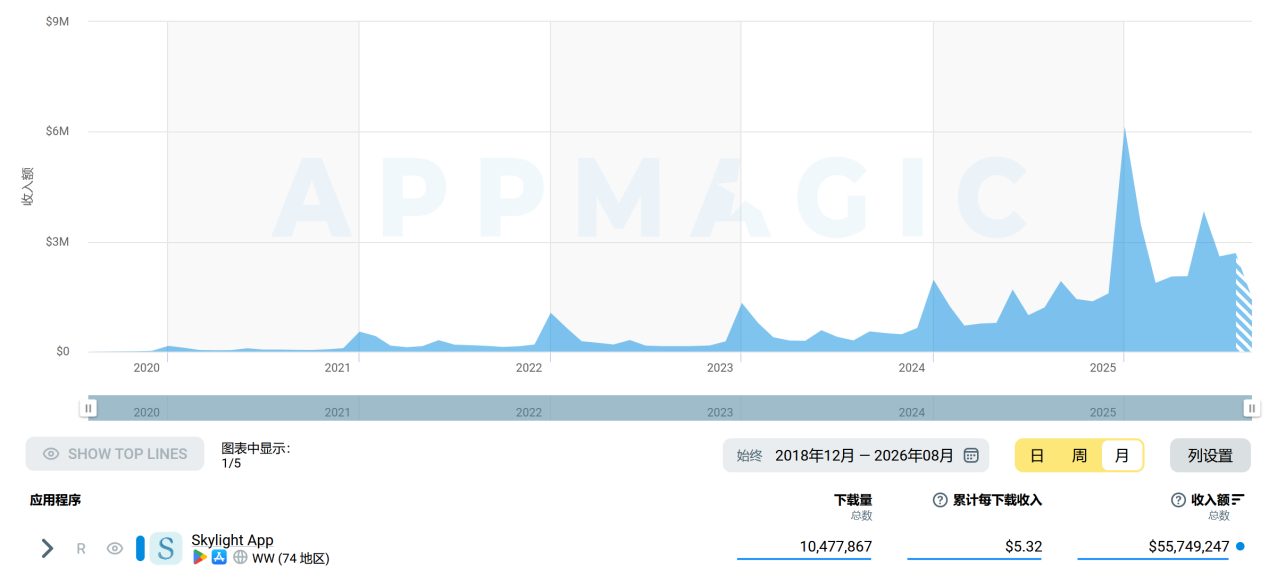
What surprised us even more: another family calendar app, “Skylight App” (launched 2018), saw its monthly revenue pushed to $6 million last December — six times that of Cozi.
The two apps overlap heavily in functionality and user base, and even the rhythm of their revenue peaks is nearly identical — both spiking every December and in May around Mother’s Day. Their “same track, different fate” performance sparked our curiosity.
From the pocket to the wall
Skylight was founded in 2014, initially making digital photo frames. A few years later, the team made a pivotal pivot, launching its Calendar product line: a 15–27-inch touchscreen that stays always-on, mounted on the kitchen wall or placed in the living room, dedicated to displaying family schedules. Prices range from $169 to $690, and the companion app went live in October 2018.
Functionally, “Skylight Calendar” and “Cozi” do the same things: sync schedules, share lists, assign tasks. But the different carrier creates a seemingly simple yet fundamental experience shift: information went from “passively queried” to “actively presented.”
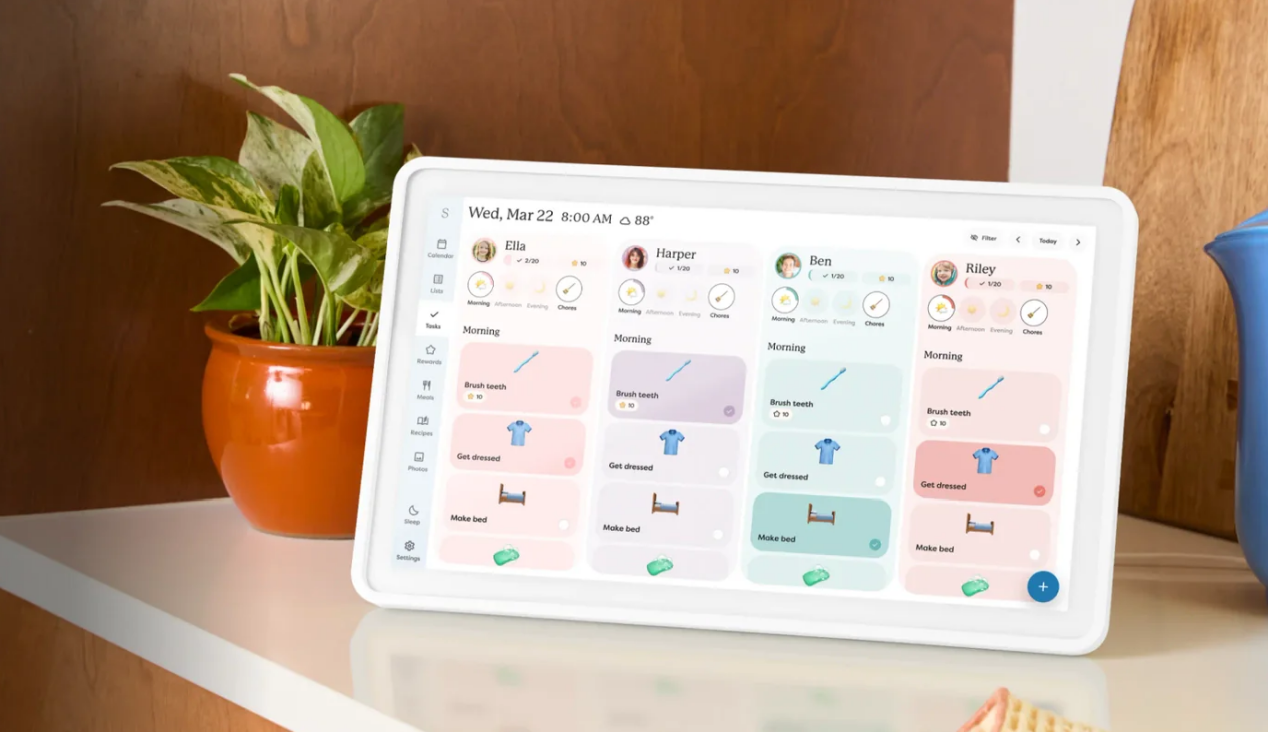
In “Cozi”, schedules can sync to everyone’s phone, but you still can’t see them without opening the app. With “Skylight Calendar” on the wall, users passing through the living room or kitchen can glance at today’s plans at once — who’s picking up the kids, what’s for dinner, whether milk needs restocking — no phone needed, no questions needed.
A phone is a personal device; a screen on the wall is shared space. This “see-it-in-passing” experience removes the upfront steps of information lookup and reduces family friction caused by “why didn’t you check the calendar”.
Like Cozi, a Skylight-commissioned survey found that the average family spends more than 30 hidden hours per week on “coordination communication.” Confirming schedules, reminding about tasks, chasing shopping lists — these trivial mental loads fall mainly on moms: 42% of mothers say they experience “mom guilt” daily, and 35% of parents admit they feel overwhelmed by life.
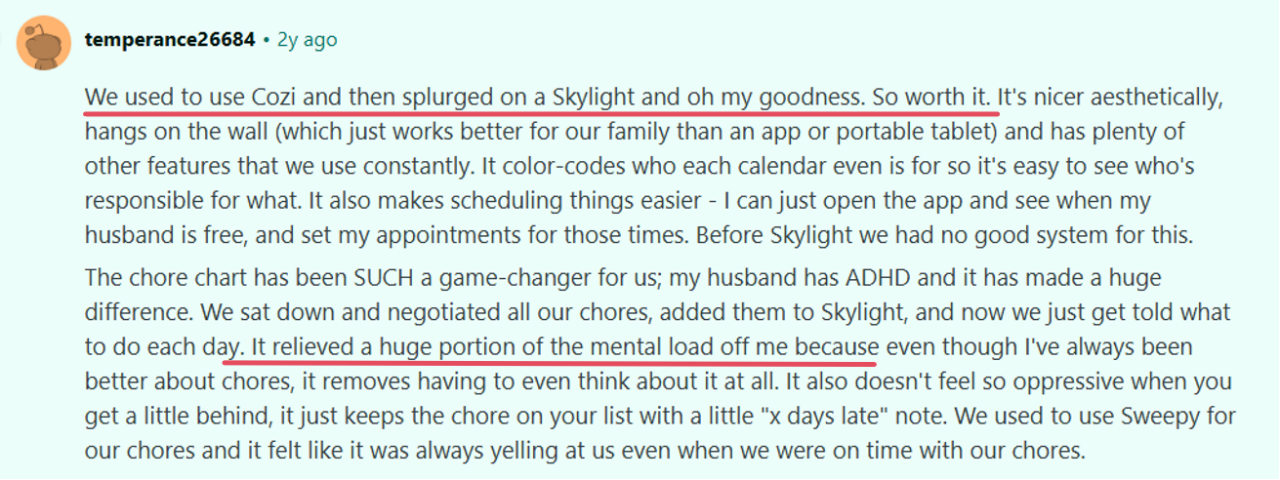
Carrier change — information flow change — reducing the friction of not actively seeking information may explain why “Skylight App” has built a revenue base far above Cozi’s.
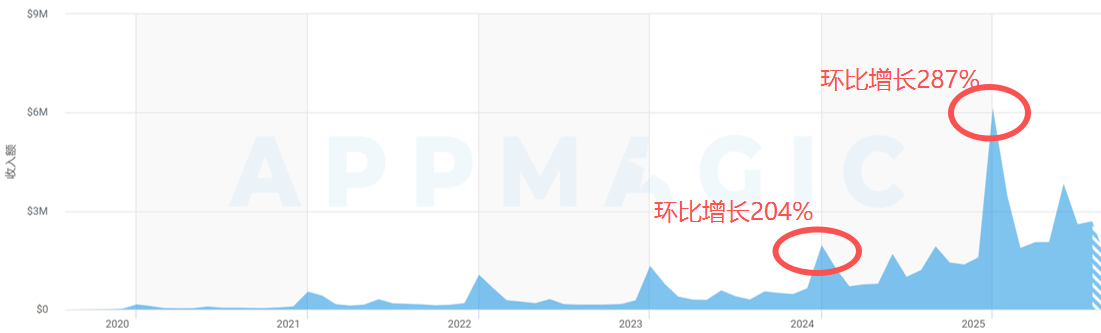
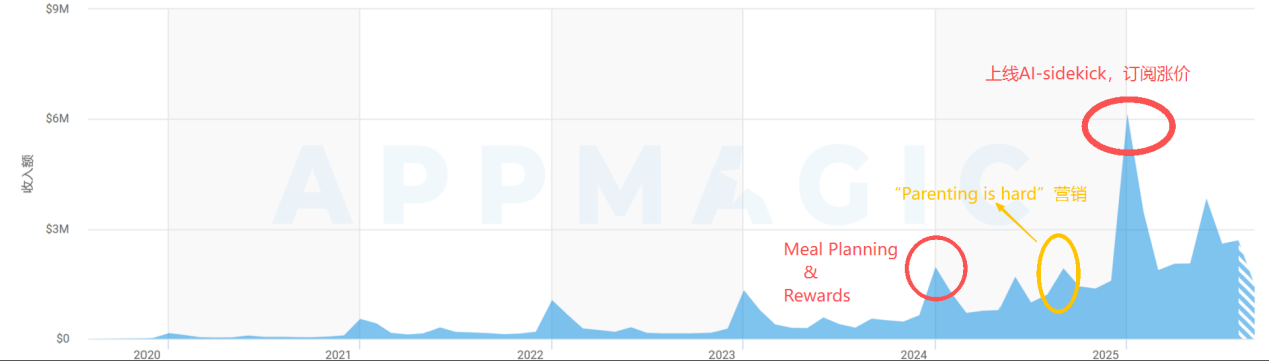
But along the way, two waves of growth far above prior-year levels appeared at the end of 2024 and end of 2025 — monthly revenue quickly rose to $2 million, then jumped to $6 million a year later. Beyond rising shipments of calendar screens bought as New Year gifts, the more critical “catalyst” lies in several rounds of iteration within the app itself.
“Stars” go live, truly closing the chore loop
In 2024, “Skylight App” shipped two relatively major feature updates — one mid-year, an AI meal-planning feature similar to Cozi’s, and the other, which we see as more critical, the “Rewards” feature launched at year-end.
The importance of “Rewards” is that it completes the missing “confirmation” step after chores are done. Parents can create chore cards in the app and set rewards (e.g., taking out the trash earns 1 star, finishing homework earns 2 stars); children can check them off on the screen once done, and accumulate stars to redeem preset real-world rewards, like a scoop of ice cream or an extra half hour of gaming.
Rewards is not an innovation in any substantive sense — many readers will recall exchanging pocket money for doing dishes as kids — but porting this real-world mechanism into the app changed the most energy-draining part of family chore collaboration.
Before Rewards, whether a schedule app or a calendar screen, the product only solved task assignment; even with more convenient hardware, it still didn’t solve task execution — moms still had to chase down “did you finish your homework” and “did you take out the trash.” Now, whether tasks are done and how many stars have been accumulated are visible at a glance.
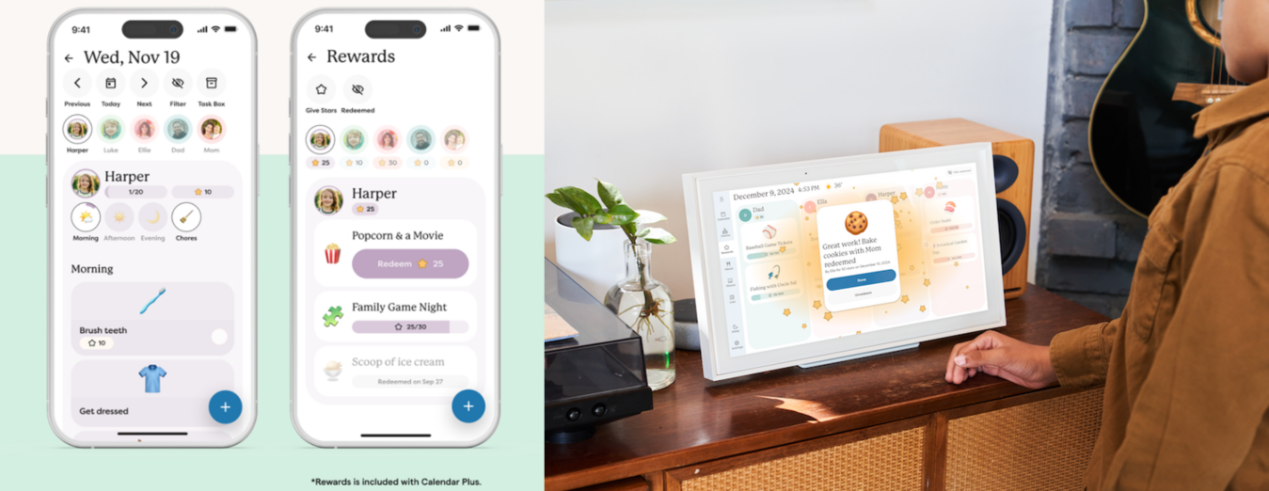
Following the rewards approach, in 2026 Skylight further launched the Buddy line of hardware designed specifically for children, radically simplified versus the main product, with features focused on task-card syncing and star rewards; the device lets parents send voice reminders remotely from the app. In Buddy’s marketing, easing “mental load” remains a key selling point.
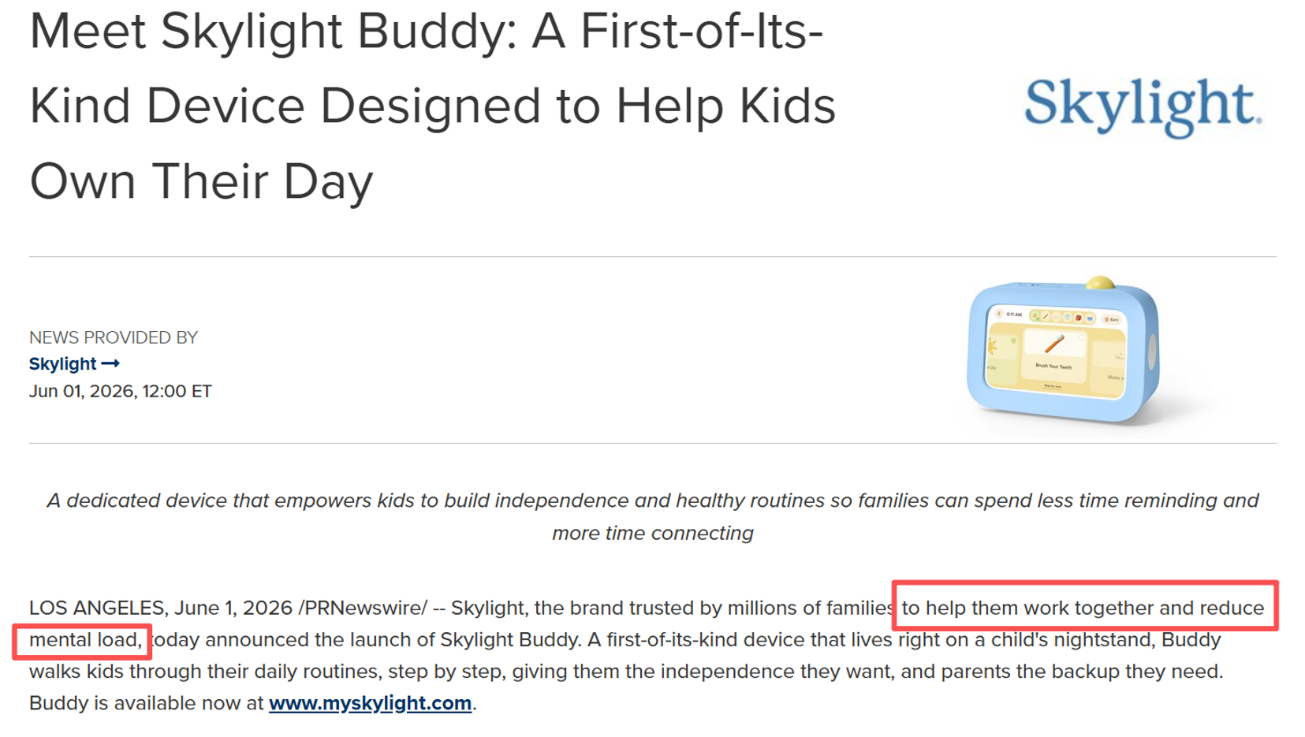
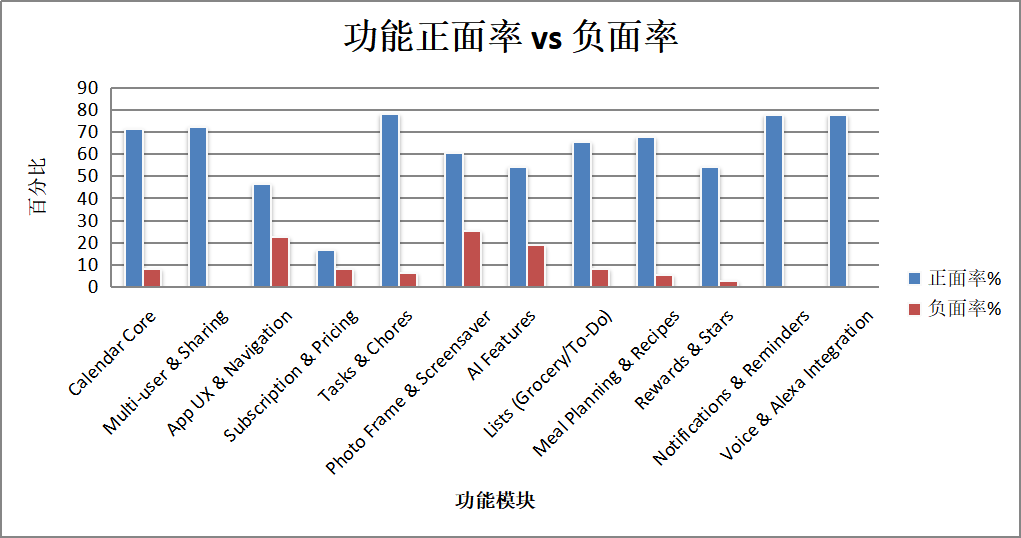
The overall lift in monthly revenue in 2025 can be attributed mainly to the introduction of AI and to “Rewards”, which closes the full loop, being bundled into the subscription.
In early 2025, Skylight launched AI features including Calendar Events (parsing and scheduling from email), Items to Your Lists (image recognition / voice input to auto-generate to-do lists), and Week’s Meals (weekly meal planning and ingredient add-ons), while raising the annual subscription price to $79, later bundling “Stars” rewards and custom screensaver features into the subscription as well.
To be honest, on the AI front, “Skylight App” is not much different from “Cozi” in our previous story — yet the returns are completely different: Cozi users are unwilling to pay a premium for AI. Beyond the “star rewards” difference, another root of the divergence lies in the touchpoint of use. In a public-facing context, the perceived value of hardware is naturally stronger.
By contrast, “Cozi” faces a base of users who have used the app for years with entrenched habits; new AI features don’t change their existing usage patterns, making it hard to convince them that “an AI patch is worth $40 more.”
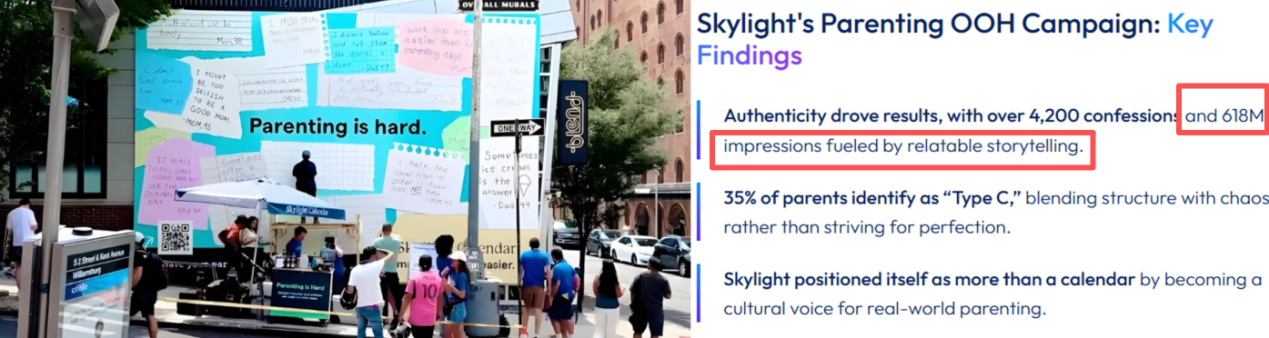
Building on the feature iterations, a marketing campaign in summer 2025 further amplified the growth momentum.
“Skylight” staged a “Parenting is hard” offline event in July, using parents’ real stories to highlight household pressure and the relief the product brings, and spread it widely across social media. According to DesignRush’s analysis, the campaign generated roughly 618 million impressions. In the following August, “Skylight App” revenue rose nearly $1 million month over month — striking given that summer is not normally the peak season for family calendar usage.
Final thoughts
The family calendar track is, on the surface, a battle of features; underneath, it is about “what form family information should take.”
“Cozi” answers “in the pocket” — two decades proving that the switching cost of family schedule data is high enough. But the ceiling of a pure software form is equally obvious: it can only passively wait for users to open it, unable to actively intervene in the family’s information flow.
“Skylight” answers “hung on the wall everyone shares.” It uses hardware to reshape how information is presented, and as it packs reward mechanisms, AI schedule parsing, and member-behavior guidance one by one into the system, it is no longer just a calendar tool — it is closer to the prototype of a “family operating system.”
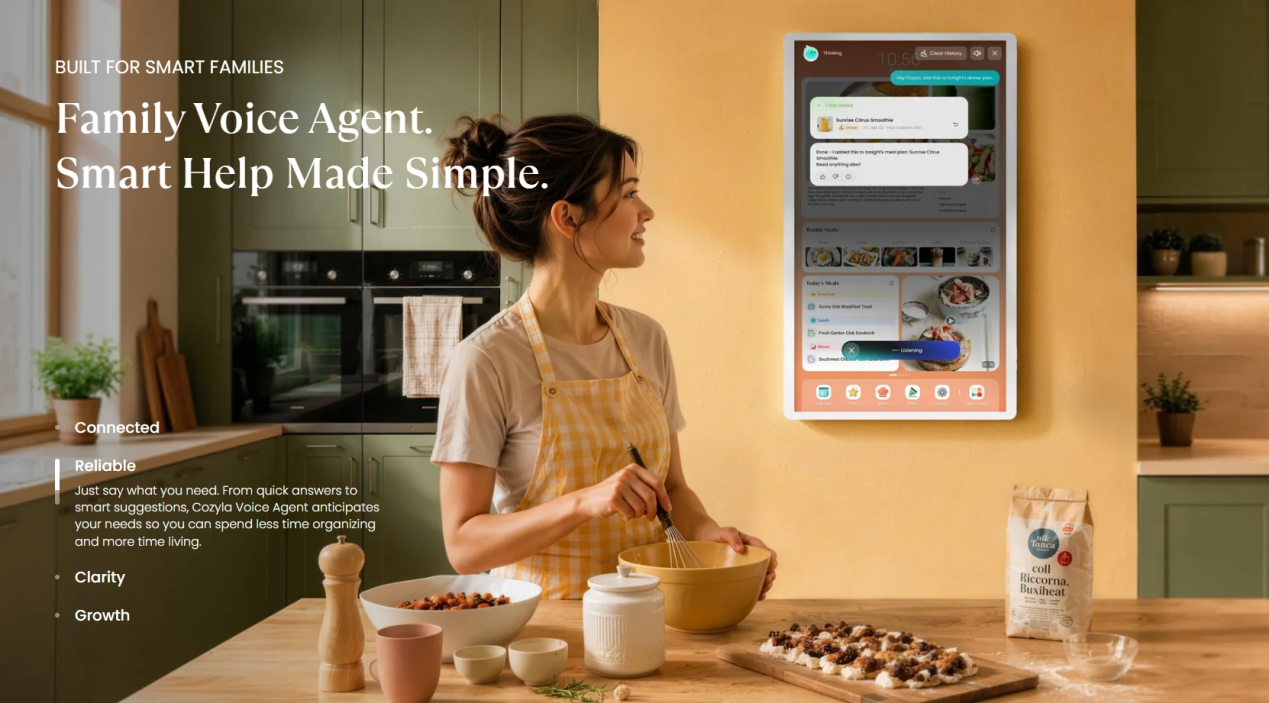
Many Chinese teams are already following this direction. Besides “Nori” from ByteDance and Samsung alumni, which we’ve been watching, “Cozyla” — founded by Yao Li, former Lenovo global VP — is walking almost the same path as Skylight: entering calendar hardware from digital photo frames, targeting the mental-load pain point, with products now in more than 200,000 overseas households and major North American retail channels including Walmart, Best Buy, and Costco. Recently Cozyla has also begun loosening its previous buyout model, launching the “Calendar Neo” line with AI Agent and subscription options. The endpoint is the same: a dedicated, always-on, family-shared information hub that the home scenario needs.
As for AI, its role in this story is more like a catalyst. It hasn’t created new demand — it’s finding ways to make “relieving mental load” work better. That may be the most noteworthy point: in the family scenario, technology is always a means; helping people worry less is the end.