Original title: Breaking down creator earnings across six major overseas short-drama platforms: picking the right platform saves you two years of detours!
By: DaSheng GoGlobal (大声出海)
Source: DaSheng GoGlobal
Cover image source | pexels
Let's start with a number: in the first half of 2026, the overseas AI short-drama/manga-drama market is expected to exceed $4 billion, accounting for nearly 70% of the entire overseas short-drama market.
On one side is a windfall opportunity, on the other a bloodbath. For AI digital-human creators, is entering the market now about getting a share of the soup or taking over the bag?
Last week, I talked with a few friends working on overseas short dramas and gained some insights I'd like to share with you in this article:
How do the six major overseas short-drama platforms actually calculate their revenue-share policies for AI digital-human short dramas? What genres do users on each platform prefer? And what pitfalls in signing contracts have people actually stepped into?
Understanding the revenue-share policies of the six major short-drama platforms
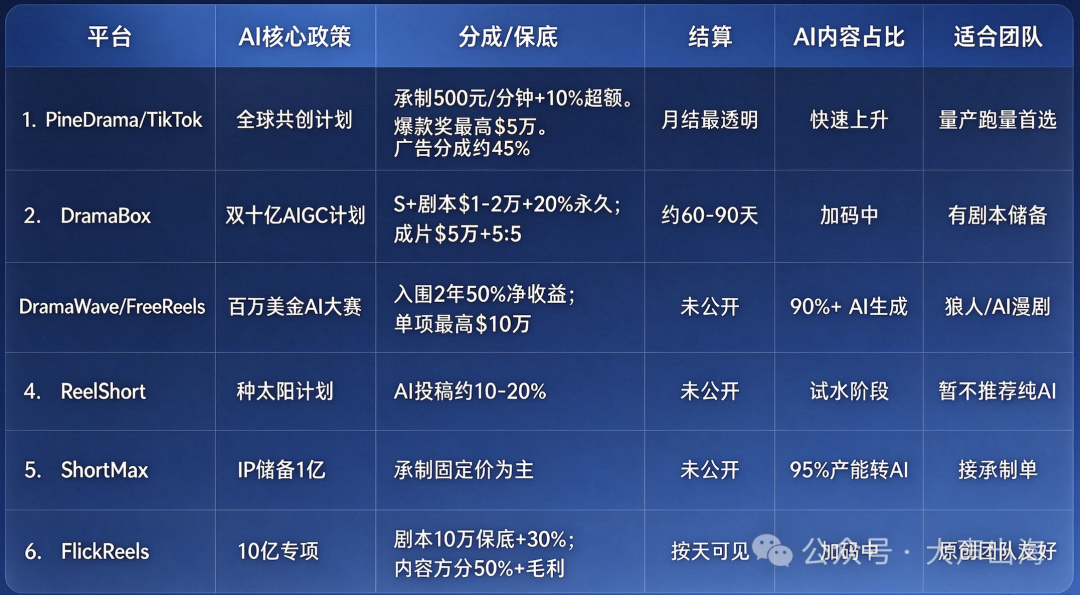
1. PineDrama / TikTok Drama Center (ByteDance ecosystem, mainly IAA)
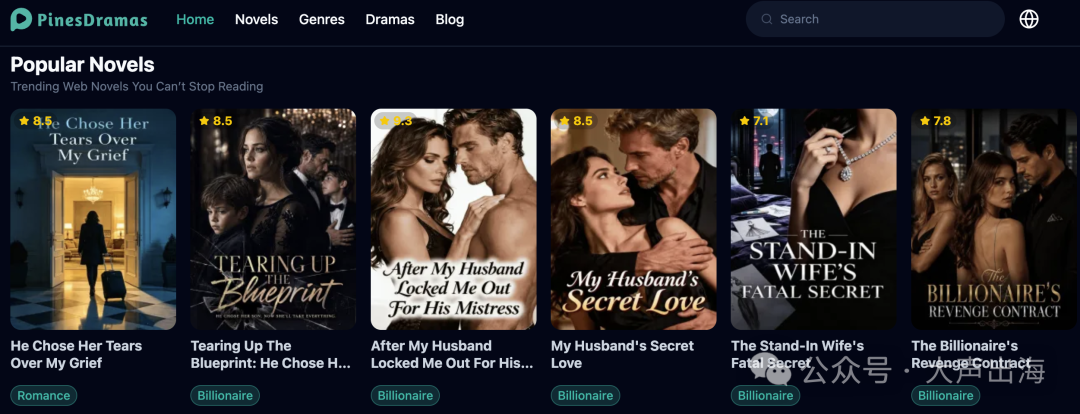
Basics: launched in early 2026, mainly targeting Indonesia/Brazil/US; surpassed 100 million downloads in 9 months, with roughly 7 million DAU.
Dedicated AI policy (from the August 2026 "AI Short Drama Global Co-Creation Program" official announcement):
Premium script licensing: guaranteed minimum + revenue share, or no minimum with a higher share; copyright holders of hits can take up to 50% of adaptation revenue;
AI production services: guaranteed minimum of RMB 500 per minute, plus an extra 10% share of anything above the minimum after profitability;
Hit bonus: tiered cash awards, up to $50,000 per title.
Revenue-sharing pool:
From January to August 2026, cumulative payouts exceeded $142 million (about RMB 950 million); among them, AI short-drama payouts grew at the fastest month-over-month rate.
Settlement (biggest highlight): monthly settlement, statements issued by the 20th of each month, wire transfer within 5 business days after review approval, supporting receiving accounts in 6 regions: China/HK/US/Singapore/Japan/Canada.
Best fit: high-volume AI studios, AI manga-drama volume teams, and small teams looking to recover cash quickly through monthly settlements.
In one sentence: the most transparent payment terms and the largest traffic, but production services are a low-margin volume business—suited for scale rather than chasing high revenue shares.
2. DramaBox (Dianzhong Technology, mainly IAP)
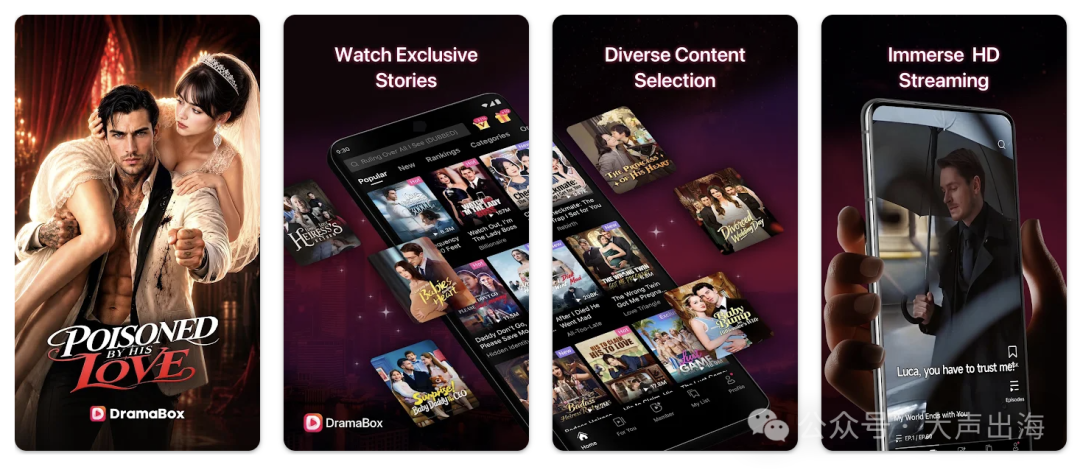
Basics: overseas in-app purchases of about $195 million in H1 2026, No.1 in the industry; deepest localization in Southeast Asia.
Overseas script guarantee: S+ tier $10-20K + 20% permanent share; B tier $2,000-3,000 + 10% share.
Finished-film guarantee: up to $50,000, with a 50:50 revenue split.
Domestic production: RMB 100-200K per title, plus up to 20% share; a pure-revenue-share model (up to 80%) is also available.
Best fit: AI digital-human teams, Southeast Asia localization teams, and volume producers able to take on RMB 100-200K production orders.
In one sentence: the most aggressive AI-dedicated guarantee (S+ script $20K + 20% permanent share), but make sure you're signing the AI-dedicated program, not the traditional live-action one.
3. DramaWave / FreeReels (Kunlun Wanwei, dual-track IAP+IAA)
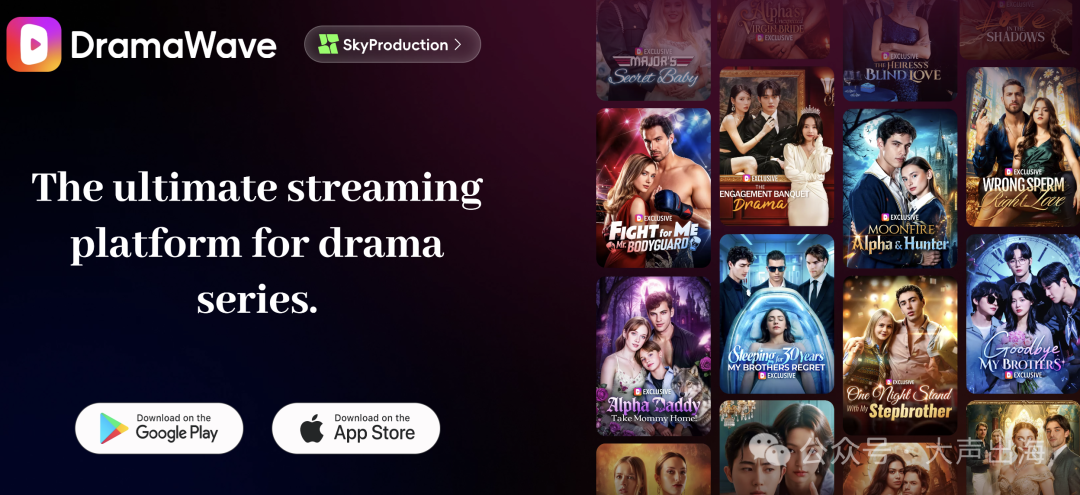
Basics: DramaWave targets premium paid content in Europe/US, FreeReels runs global free ad-supported content; FreeReels' 2026...
AI policy (from the February 2026 "Million Dollar · AI Drama" competition, official announcement):
AI live-action drama: up to $100,000 prize per title; AI manga drama: up to $30,000 per title; shortlisted works get a 50% distribution share for 2 years.
Features: since July 2026, over 90% of new content is AI-generated—the most aggressive AI bet among all leading platforms. Self-developed...
Caution: since May 2026, the industry has cut the revenue-share coefficient for AI digital-human dramas (some reports say from 60% down to 40%).
Best fit: AI manga-drama teams, werewolf/vampire genre creators, and teams that can accept payment-term risk.
In one sentence: the fastest riser, with shortlisted works earning a 50% net-revenue share for 2 years—but it was just exposed in August for owing RMB 2 million, so payment terms and collection clauses must be nailed down up front.
4. ReelShort (Maple Interactive/Chinese Online, mainly IAP)
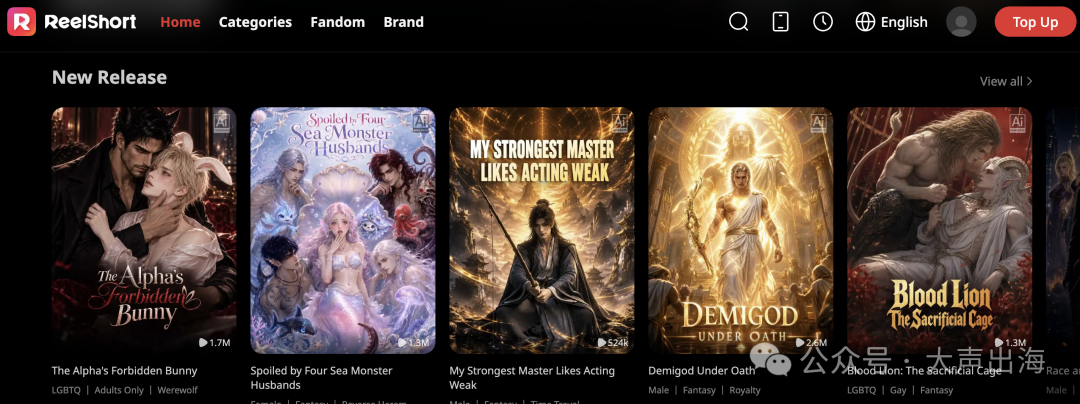
Basics: pioneer of paid short dramas; the US contributes 56-66% of revenue—most reliant on the North American market.
AI-related policy (December 2025 "Plant-a-Sun Plan"):
Co-produced titles get up to RMB 3 million per title in production funding; third-party accounts put AI-submitted revenue share at only 10-20% (practitioner feedback, credibility to be verified).
Reality: ReelShort is still in the trial stage for AI content; its mainstay remains locally produced live-action. AI digital-humans have little say there.
Note: Chinese Online and Maple are locked in litigation over the "Reconciliation and Governance Agreement" (2026-08); signing exclusive deals then gets you banned from TikTok promotion; it's rather unfriendly to new teams.
Best fit: for now, pure-AI teams are advised not to prioritize it; wait until its AI content strategy becomes clearer.
In one sentence: the highest brand and hit-ceiling, but AI content is not yet its mainstay—pure-AI teams should hold off for now.
5. ShortMax (Jiuzhou Culture, IAP+IAA)
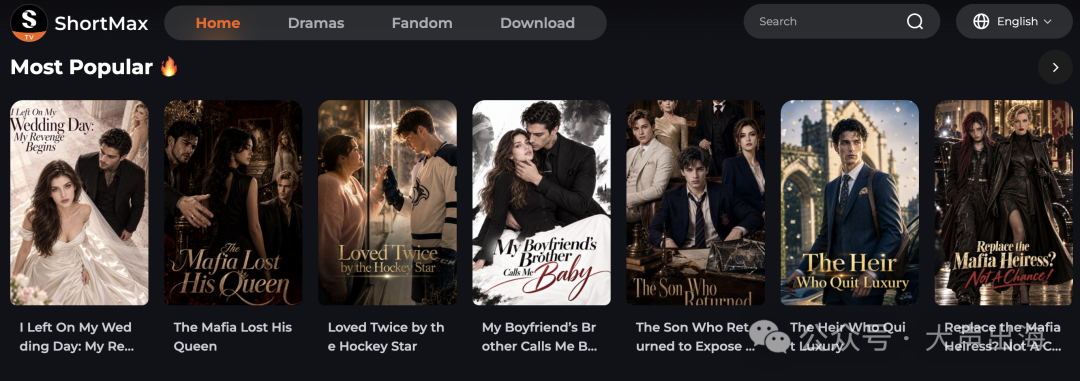
Basics: covers 200+ countries, cumulative downloads of about 400 million; main battleground in Europe/US (UK/Germany about 26%).
AI-related: in 2026 it invested over RMB 100 million to stock nearly 5,000 web-novel IPs, with 95% of capacity betting on AI. Mainly pure production services at fixed prices.
Pitfall: wins on volume but lacks top-tier hits; production services are mostly fixed-price, with no hit-revenue-share upside.
Best fit: AI volume studios that can take fixed-price production orders.
In one sentence: steady production orders, but fixed-price dominant and lacking hit upside—it just had layoffs in August.
6. FlickReels (Zhangwan Network + Tinghuadao, mainly IAP)
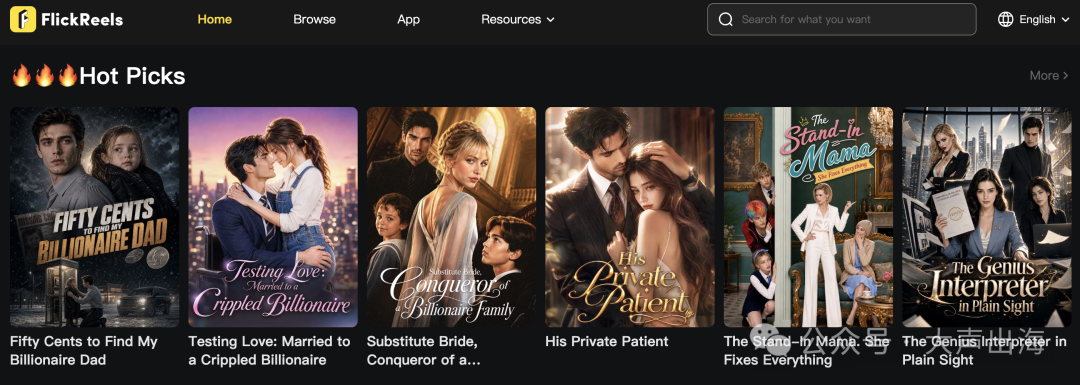
Basics: Zhangwan + Tinghuadao (Mimeng's team), covering 240+ countries; main battleground the US.
Policy (announced in April 2026, RMB 1 billion special fund to ramp up overseas AI short dramas, official announcement):
Original scripts get up to RMB 100K guaranteed minimum, adapted scripts from RMB 30K; plus up to 30% revenue share; content parties share over 50% of gross profit, with open...
Features: differentiated play on the silver-haired (senior) genre; over 1/3 of hot ad creatives feature middle-aged/elderly protagonists; "Silver Vows" has over 500 million views on Douyin. Friendly to original...
Pitfall: its gross billings haven't entered the global top five yet—still climbing.
Best fit: original script providers, AI digital-human teams, and teams wanting a "guarantee + share" partnership model.
In one sentence: RMB 100K script guarantee + 30% share, content parties get 50%+ of gross profit, with daily transparent back-end data—the friendliest newcomer for original teams.
A side-by-side comparison of the six platforms' revenue-share terms
Content performance and user preferences across overseas short-drama platforms
Revenue share decides "how much you take home," genre decides "whether the show can take off." AI digital-human dramas perform vastly differently across platforms.
First, let's look at three cross-platform macro trends:
1. AI dramas' paid conversion has caught up with live-action
Holywater's real-world test: AI drama "My Muse" hit 23.6% paid conversion vs. live-action "My Drama" at 23...
2. A tectonic shift in gender mix
Females still make up about 85% of the overall base, but male MAU has grown from 1.1% to 30.3% over seven quarters (Holywater 2026).
3. The dubbing-vs-local relationship has flipped
Locally produced dramas' share of ad spend rose from 27% in H1 2025 to 46% in H1 2026. Users are no longer satisfied with "translated Chinese-punch dramas"...
Next, let's analyze in detail how each platform performs by genre and user preference:
PineDrama: Indonesia+Brazil account for 82% of downloads. Focused on geo-local dramas; Nigeria's "10 Billion Naira Bride" hit 40 million views in a week...
DramaWave: 77.6% female, 38% aged 25-34. Female-oriented emotional/city-life content (70% of TOP10), rich-boss...
DramaBox: US 52.4%, most gender-balanced (58% female / 42% male). Female-oriented romance/revenge/family; male side leans on dubbed war-god...
ShortMax: werewolf/Shifter/Alpha romance is dominant. Fastest dubbing; 95% of capacity bet on AI. A...
NetShort: half AI manga dramas, weird/apocalyptic/hurt-love/vampire/system genres, appealing to both male and female, strongest in Japan.
FlickReels: differentiates on silver-haired content; middle-aged/elderly protagonists account for over 1/3 of hot ad creatives. AI digital-humans have a natural edge in silver-haired content.
My advice: the steadiest play for AI digital-human teams is to first pick the genre you're best at, then choose 2-3 primary platforms to scale on—don't spread across all of them...
A pitfall-avoidance guide for short-drama creators when signing contracts
The 5 clauses AI creators must nail down in contracts, plus whether to sign exclusive deals:
1. Revenue-share base must never be left vague
"Net revenue" means the money left after deducting all costs (including ad spend)—you might end up sharing on zero. It must be written as "ad revenue / recharge revenue after deducting channel fees, tax..."
2. Guarantees must be written into the contract
A verbal "RMB 500/minute" promise is worth zero if not in the contract. Specify the amount, payment milestones, and whether it's offset against future revenue shares.
3. Shortest possible settlement cycle + penalty clauses
Aim for ≤30 days; write in "0.5%/day penalty for overdue payments beyond 15 days, right to terminate beyond 30 days"; fight for back-end data query rights, otherwise...
4. Spell out copyright item by item
Ownership of AI-generated content, adaptation/sequel options, overseas distribution rights, and sub-licensing cannot be vaguely written as "owned by the platform." AI content copyright is currently legally...
5. Keep the AI asset authorization chain clean
If you use third-party AI tools/models/assets, confirm whether the license covers commercial use and whether it can be distributed to overseas platforms. If there's a problem, the platform will come after you...
6. Exclusive or non-exclusive?
Exclusive: higher guarantee, higher share, traffic support (overseas exclusive 10K plays earn $20-45), but you're locked in. Non-exclusive: diversify risk across channels, but lower share...
My signing strategy: newcomers/individuals should start with non-exclusive pure-revenue-share to practice and scale, without selling out too early; teams with production capacity should fight for "guarantee + tiered share"...
At the end of the article, I'll be honest: AI digital-human short dramas are indeed one of the rare tracks where ordinary people can bet on a globalization opportunity with just tens of thousands of yuan—but don't get carried away by the...