

AI plagiarism has been stirring up a storm lately, spreading anxiety far and wide.
All I can say is, things may be even worse than most people imagine.
When AI becomes this easy to use — when you can wish a game into existence with a single sentence — it's only natural that some people start scheming. If it weren't for a group of indie developers speaking out, most ordinary people might never have realized how badly AI is being abused.
Earlier this year, Freya Holmér, a Swedish indie developer, shared a prototype video of a rotating Tetris-style mechanic on X. At the time, Freya was just humbly sharing a creative idea, without even the rules fully worked out. Within less than five hours, someone had already used AI to build a playable demo of it. Annoying, right?
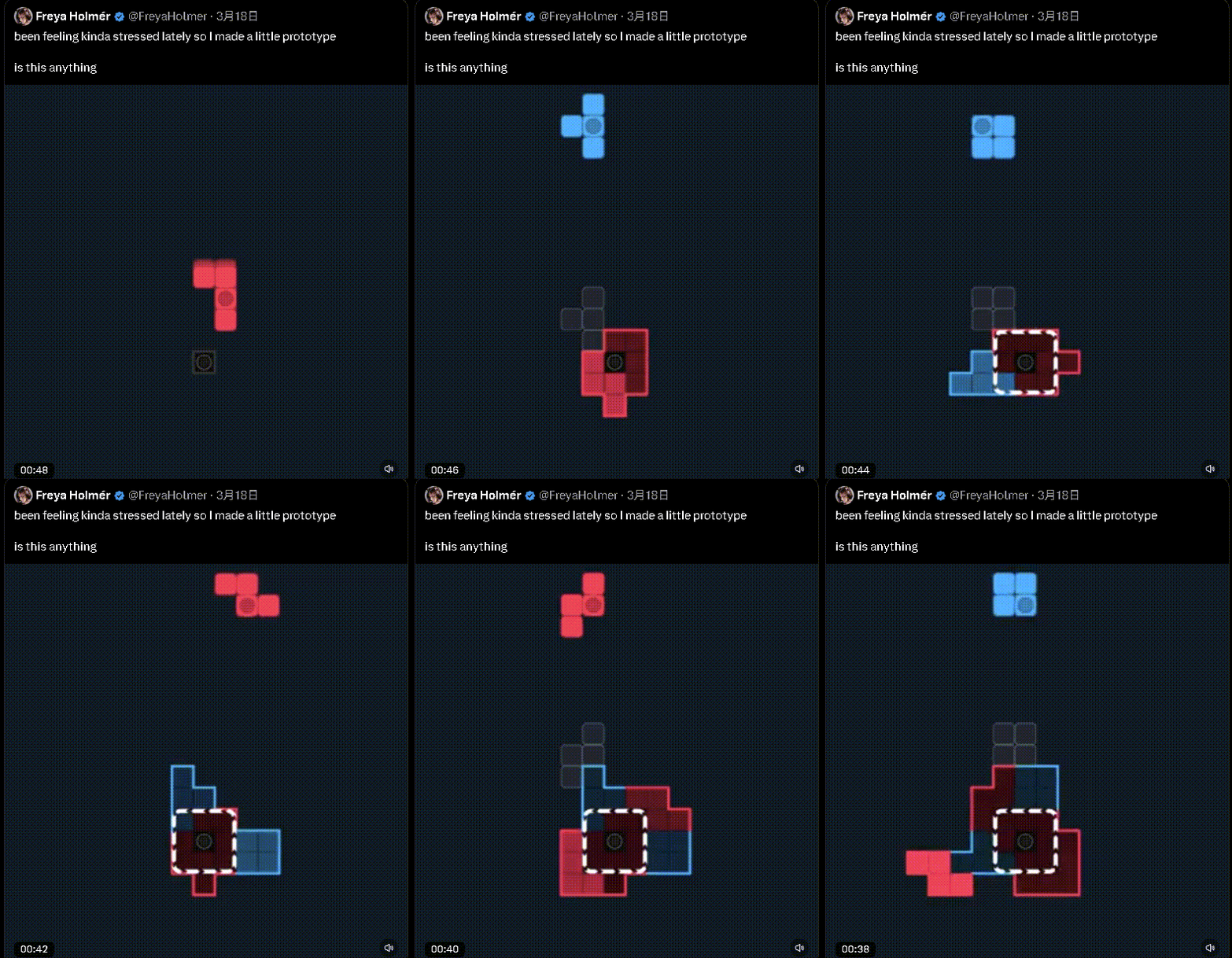
There are plenty of similar cases, especially in casual and creative gameplay. Whether or not a demo has been released, a single video demonstration, a dev log, or even just an image can be rapidly copied. Overseas, people call this “cloning” — and it's a pretty fitting term…
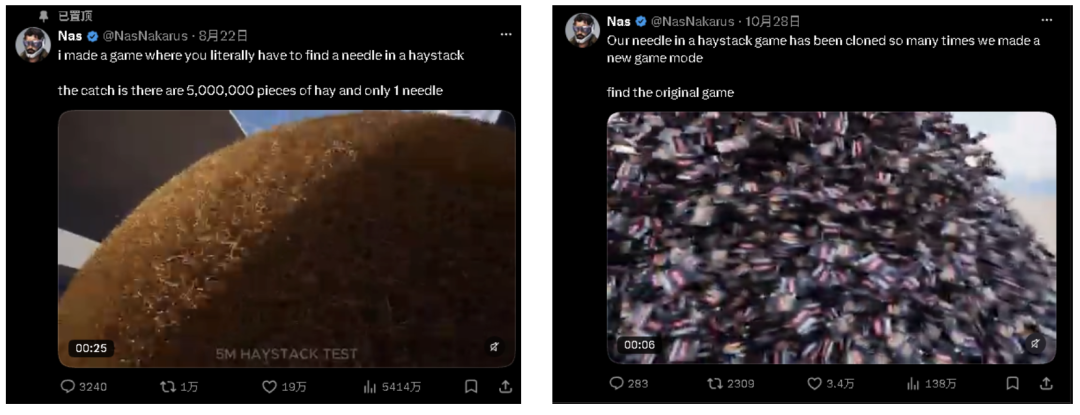
Take a game called Needle-in-a-Haystack Simulator, where you search for a needle in a pile of straw. Its video racked up 50 million views on X. Once the video went viral, a dozen clones popped up on Steam, some of them even explicitly advertising that they were made with AI assistance. At that point, the original creator hadn't even released a demo yet.
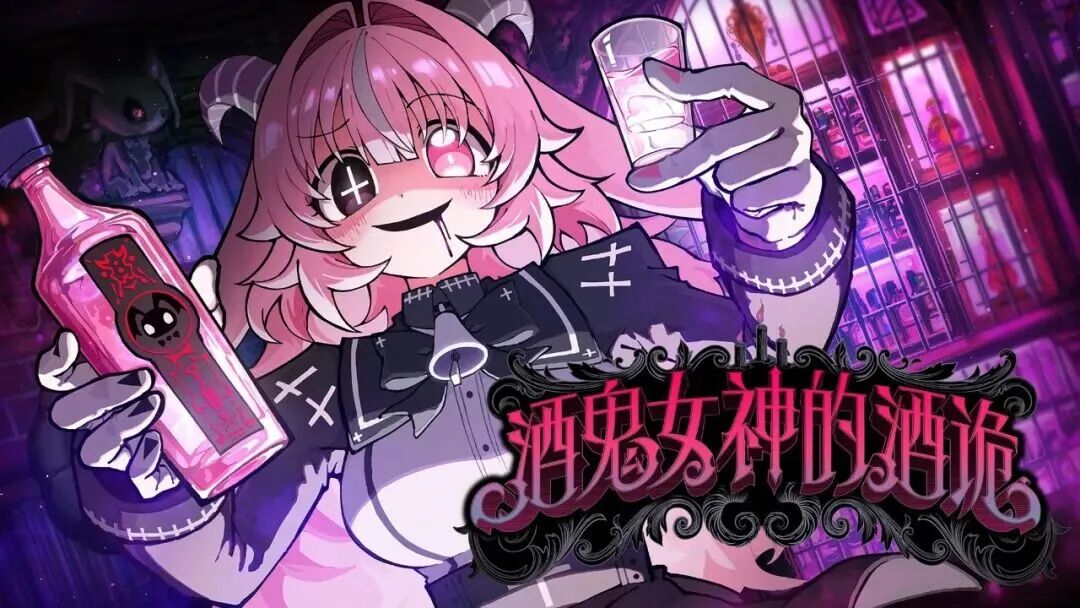
As more of these incidents pile up, more and more creators are going quiet. Japanese game developer Rinpu Shou previously announced that their game Drunk Goddess's Sake Tricks would no longer release a free playable demo, switching instead to small-scale lottery-based playtests. The team behind the well-known roguelike Moonlighter also announced that their new title ReVamp would cancel its open testing, keeping only a closed test for the Discord community.
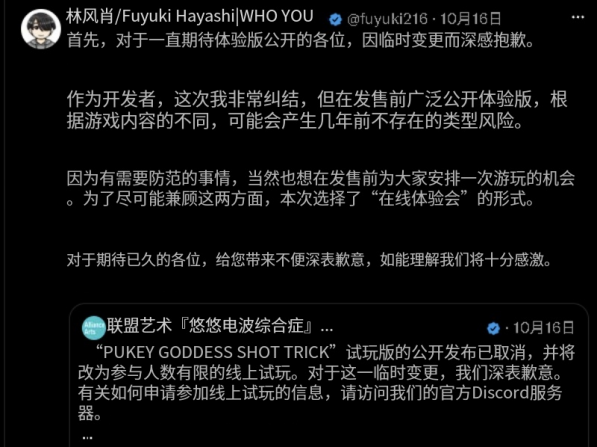
Many other teams are following suit, deciding to hide their demos away from public view… afraid that once they're released — or even just a playtest clip leaked by players — someone will immediately clone them with AI and beat them to market.
What, you thought only indie studios are victims? No, no. Even some commercial games still in testing or operation have already been beaten to the punch by private servers.
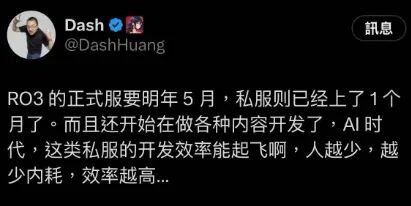
A couple of years ago, the most common criticism of AI in the gaming world was studios abusing AI art assets. Last year through early this year, people started complaining about the flood of AI slop games. But now, the problem seems to go beyond “how much garbage AI can produce” — more and more people are using AI to cash in on others' hard work.
To put it bluntly, among this crowd there are teams actively working to destroy the game industry.
AI cloning has become a business
Why so serious? Because from our perspective, those cases of copied indie ideas and demos are just the tip of the iceberg.
What's truly terrifying is that in the deeper waters of the industry, many teams have started seriously thinking about how to use AI to turn “cloning” into a production line that can scale, then use that production line to attack the entire market.
Putaogun has heard of one type of team before: they keep their eyes glued to various leaderboards, hunting for games worth cloning. Feed the screen recordings to AI, and it automatically decomposes the systems and numerical structures, generating a white-box project that can be edited directly.
Rumor has it that with such a pipeline, in less than a month and with around a hundred thousand yuan in costs, they can complete a clone of a mature product — and most products on the market can be covered by AI cloning capabilities.
Even more extreme: they've built a complete business logic around this capability.
Many people think cloning games is just about selling copies, or rushing to market ahead of the original to make money. But there's an even more aggressive play — first use AI cloning to crush R&D costs, then build your own platform and distribution channels, let users play the AI games for free, and monetize through ads and other means.
Coincidentally, in some earlier roadshows, Putaogun also saw teams writing similar thinking directly into their project approval PPTs.
One clearly articulated approach: target Steam products, especially co-op multiplayer games. Find games with viral promotional videos that haven't released a demo yet, then use AI to rapidly mass-produce smaller titles with better visuals. Believe it or not, this playbook has actually earned recognition from some investors and publishers.
At the end of the day, these teams don't think they've done anything wrong. In their view, as long as it cuts costs and grabs market share, it's a clever business move. As for how much blood, sweat, and time the original teams poured in — that's probably never on their radar.
Truly good games aren't afraid of being copied… or are they?
These phenomena make it hard not to feel pessimistic about the future. First, from the perspective of AI technology development, slowing down or stopping it is impossible. Although Anthropic has begun deliberately countering this behavior by adding rules to Claude that refuse to replicate games, that hardly solves the problem at its root. I'm confident workarounds will be late — but they will never fail to show up.
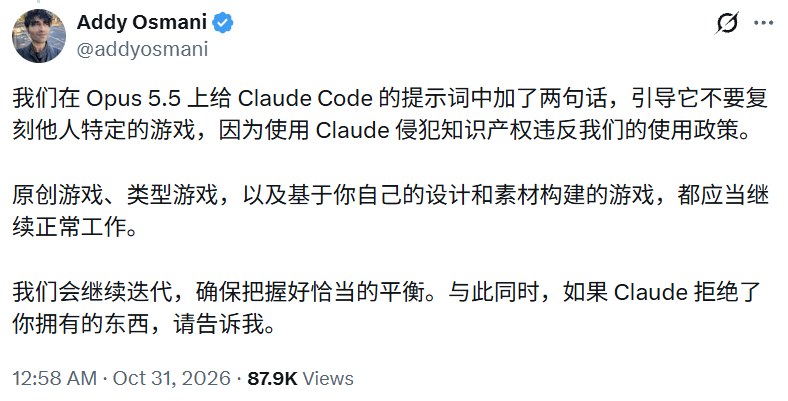
Of course, there will always be optimists who believe truly good games aren't afraid of being copied.
After all, in our long-held common sense, a good idea is just the first step of a long march. However creative you are, it still takes a long process of development, polishing, and testing to turn it into a genuinely fun game.
But the problem is that AI is so powerful now that many people haven't realized how much AI is already in their daily lives — the answers you read on Zhihu might be written by AI; the videos you watch on video platforms might be generated by AI that found those high-voted answers and turned them into videos; the comment sections are full of auto-commenting AI; and the ads below the videos might be for AI-made mini-games or short dramas, all of it equally made by AI…

At this rate, next year's AI creative output will probably exceed most people's imagination once again, leaving us all collectively stunned and slumped in our chairs.
The experience of the past few years is enough to teach us one fact: the impact of AI on the content industry is hardly something that can be held back by artificial limits. Today you might still find it rough and cheap, but it won't be long before that changes — the short-drama industry is a living example.
If there's anything left that serves as a temporary last line of defense for human creators, it's probably only our niche, quirky tastes.
Second, from the game industry's perspective: if competition used to be about “who can make it better,” part of the logic now seems to have become “who can find the target faster and more accurately.”
Even before the AI era, the business world had a default rule: gameplay ideas are hard to protect tightly. If you create or refine a gameplay genre, others can of course bet their own costs to follow. That means no matter how brilliant the idea, creators find it hard to capture 100% of the returns — just like how Juduoduo lit the first fire for auto-chess products, but the followers who came later took the biggest share of the market.
But today, AI's technical capability has largely overturned this rule: others can quickly build what you wanted to build, even better than you. The eventual traffic and revenue will likely be carved up by a flood of imitations through competition, pushing the original creator's share of returns infinitely close to zero.
Setting aside money, in the past we would at least dig into the question of who originally created a gameplay mechanic, giving the original author the praise or sympathy they deserved. But in the AI era, a game's clones may so overwhelm the original that nobody knows who the true innovator is. Because the products you see and play first might all be made by AI.
When the victims were few, all we saw were a handful of creators complaining. But over time, as originality becomes less and less worthwhile and original creators grow more disheartened, who knows whether the industry's creative drive will be worn down — or even whether its production logic will be upended…? Hard to say. But once we're on this path, it's tantamount to slowly destroying the game industry.
Strip away fame and fortune, and what's left for creators? Probably just so-called passion and idealism.
People who love games probably share an ultimate dream: like the makers of Stardew Valley, Animal Well, Balatro, and other games, toil for years alone or with partners, pour heart and creativity into a great work, and ultimately achieve both self-fulfillment in creation and fame and fortune…
All along, many people in the game industry have been moving forward with such dreams.
After all, everyone knows the game industry encourages innovation and rewards it. Even if society beats you down and tells you that's not always the case, at least everyone still has the right to dream.
But in the AI era, every creator may become a child trembling in the dark forest. This most unadorned idealism might turn into a luxury. That future is unsettling just to think about. I only hope that in this era, enough passion will still break through the obstacles and push back against this darkness.