

TT123 learned that on October 29 local time, TikTok Shop US released a new policy announcing that the Alternative Therapy Product category under Health & Wellness is now open for sales to some sellers — meaning healing crystals and energy stones that went viral under the “mysticism” label now have an official entry signal.
Now this “niche” business has been pushed onto the table by policy, and the opportunities and hurdles beneath the iceberg are gradually surfacing.
TikTok Shop US partially opens the alternative therapy category
According to the latest rules released by TikTok Shop US, the Alternative Therapy Product category is now open to some sellers. By definition, the platform draws a clear boundary around “alternative therapy”:
Such products should aim to promote overall wellness, comfort, relaxation, sensory experience, or other non-medical lifestyle purposes, and must not be used for diagnosing, curing, alleviating, treating, or preventing disease. At the same time, they must not be marketed as substitutes for professional medical care, prescription treatment, emergency care, or FDA-authorized diagnosis and treatment. Under the policy, the platform gives three categories:
Certain products that can be taken orally or applied topically;
Certain non-medical health and sensory products;
Certain non-edible crystals, stones, and minerals. (See the image below for specific subcategories)
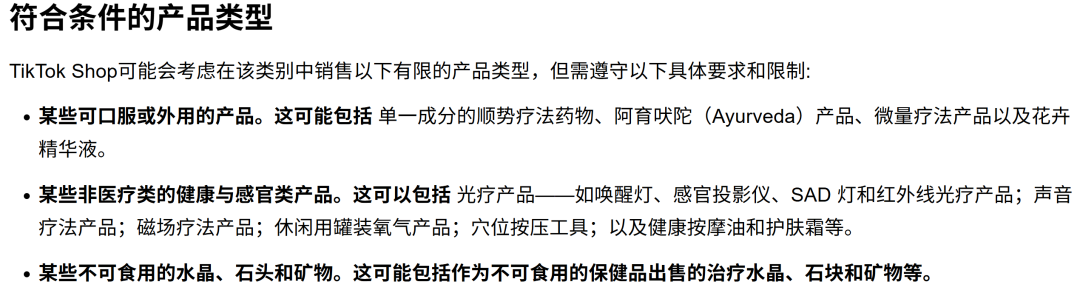
Image source: TikTok Shop
On access: sellers must first pass the corresponding category review before listing eligible products; some subcategories are limited to invited sellers only.
Reading the signals from the policy: on one hand, the platform is building clearer business boundaries for such products, showing that consumer demand has a solid market base; on the other hand, clearer rules also mean the platform now has more specific requirements on product attributes, creators' sales talk, and content expression.
For sellers, the category opening is undoubtedly an opportunity — but they should also verify product qualifications, descriptions, and marketing materials in advance. Products that could easily be linked to medical effects need extra care with titles, detail pages, and promotional content, to avoid crossing platform red lines with overreaching claims.
The consumer outlook behind alternative therapy
Though alternative therapy may look obscure at first glance, as a branch of complementary medicine it already enjoys considerable market acceptance in the US.
A blog post published by evergladesuniversity in August 2026 shows that NCCIH (National Center for Complementary and Integrative Health) research found 38% of American adults have tried alternative medicine — with acupuncture, mindfulness/meditation, yoga, massage therapy, chiropractic, herbal supplements, and homeopathy among the common types. On top of that, Americans spend $30.2 billion out of pocket on complementary medicine each year, reflecting consumers' sustained focus on daily health management, mind-body relaxation, and living comfort.
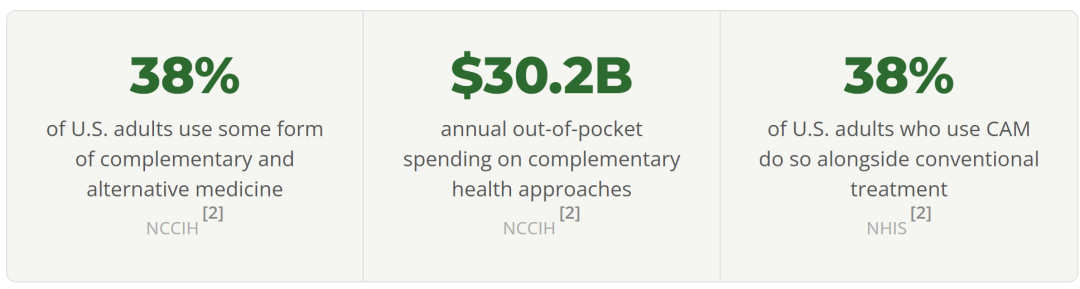
Image source: evergladesuniversity
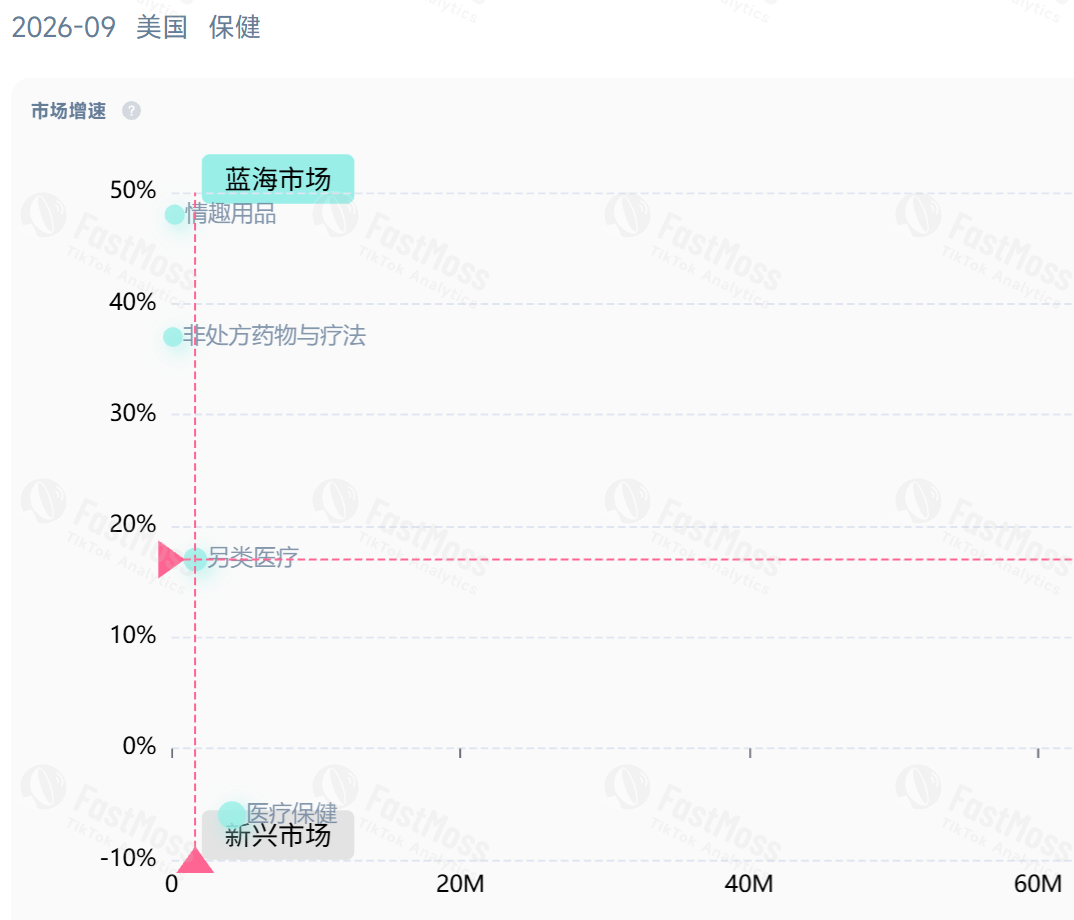
According to TT123's H1 2026 TikTok Shop Research Report, the wellness category ranked 4th among the top 10 GMV categories on the US site in H1 2026 with $800 million in GMV. Meanwhile, third-party data from September shows that alternative therapy (dubbed “alternative medicine” by the third-party tool) still sits at low visibility compared with core branches like health food and supplements — and is being flagged as a blue-ocean/emerging market.
Still, thanks to the wellness category's stable audience on TikTok Shop US, along with brand influence and established user awareness, sellers have a solid audience and awareness foundation when launching new products in the category.
Data shows that within the alternative therapy category under TikTok US's wellness vertical, bestsellers include aromatherapy oils, topical roll-ons, herbal patches, and more — effects centered mainly on scent and touch, giving sellers a fairly clear product direction.
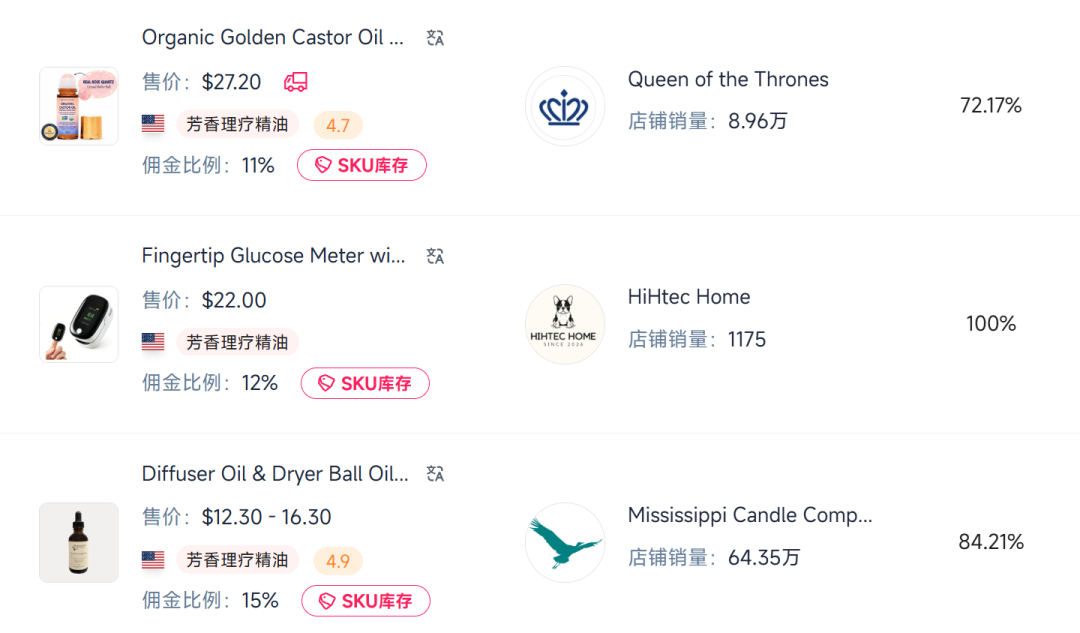
On the healing side, scent and touch connect closely with daily relaxation and home ambience. These products are also easier to showcase through materials, usage process, and real feel. For such products, consumers aren't necessarily buying a specific function — they may be buying the sensory experience and lifestyle the product carries. Niche directions that have produced phenomenon hits before, like light therapy, sound therapy, and crystals, are also worth sellers' continued attention.
Unlike traditional medical consumption, some alternative therapy products emphasize daily experience and lifestyle attributes, giving them more room to be showcased and spread through TikTok content. On TikTok, vertical topics like #Alternative Therapy are drawing plenty of participation, and discussions around alternative therapy keep building.
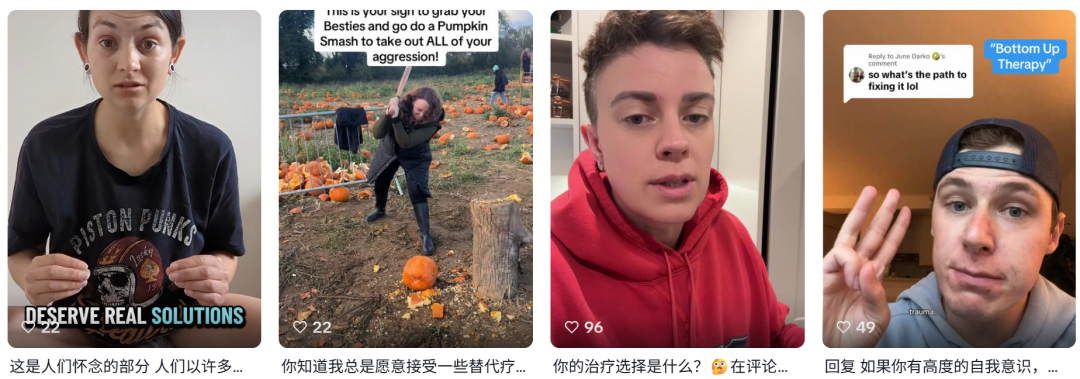
Image source: TikTok
From therapist substitutes and unpacking family-of-origin pain to finding alternative therapy communities, the author observed that healing-oriented content around keywords like “OTC” and “alternative” strikes a chord with many netizens. For this kind of content that needs to “speak to the heart” and mine emotional anchors, sellers should first understand the target consumers' emotional needs, habits, and content preferences, then find the connection between product and scenario — only then can they earn user attention. This is a key point when operating related product content.

Image source: TikTok
On the whole, whether in content creation or product selection, sellers must mind the platform's red lines: product titles and details must not mislead consumers into medical-use descriptions, and promotional content should avoid words or spoken claims about treating anxiety, depression, or insomnia. Stick to showing general relaxation or daily-use scenarios without hinting at disease treatment, e.g., before-and-after comparisons of different mental states, to stay clear of regulatory risk.
A final note
On one side, niche tracks like light therapy, sound therapy, and crystals offer product selection space; on the other, category access, qualification review, and marketing compliance set up multiple hurdles. For sellers, seizing this window depends not only on selection judgment but also on mastering platform rules and overseas compliance requirements. With the policy fresh and the competitive environment relatively loose, sellers can weigh their own qualifications against the rule thresholds, confirm which subcategories are open, and plan content around consumers' real usage scenarios to amplify product heat — that's the more solid path into this business.