
Author: Shuangmu | Source: AMZ123

Image source | Unsplash
If cross-border sellers were to count the challenges they faced on the road to going global in 2026, rising costs would surely be among the most unspeakable pains. Logistics price hikes, warehousing fees, ad bidding and compliance spending pile up layer upon layer, forming a mountain pressing on most sellers' margins.
At this key moment of peak-season inventory preparation, Amazon US marketplace has successively adjusted two fee-related policies, again shaking the "mountain" of costs.
Temporary adjustment to inbound defect fee policy
AMZ123 has learned that Amazon US marketplace recently sent sellers an email about a temporary adjustment to its inbound defect fee policy.
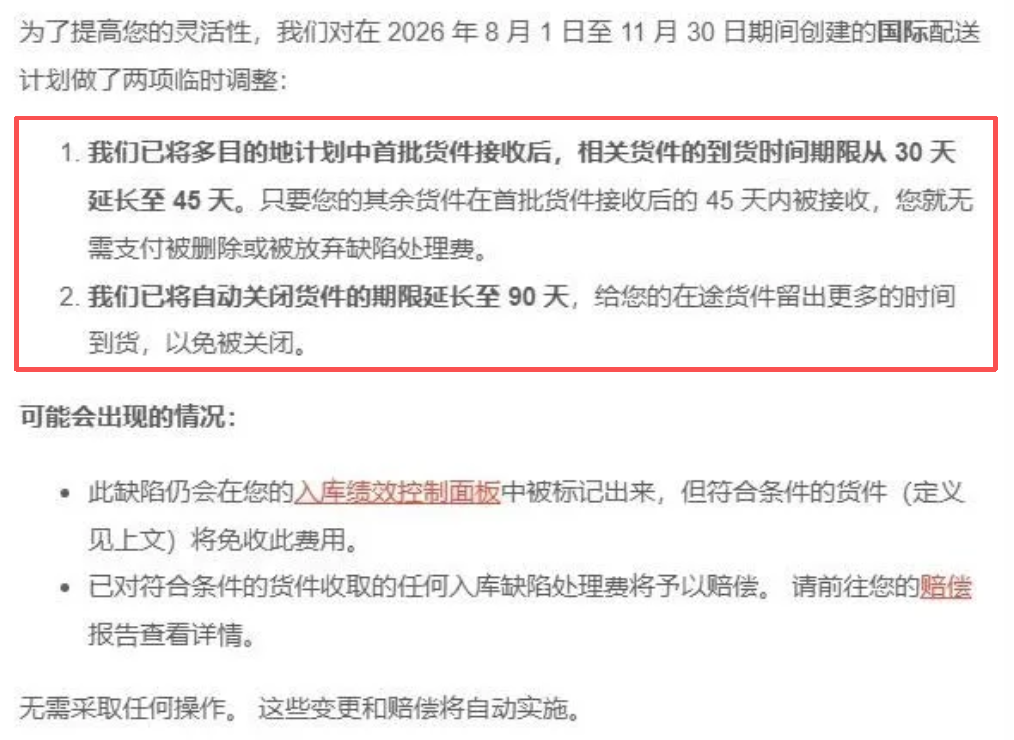
According to the email, for international shipments created between August 1 and November 30, 2026, Amazon has made two temporary adjustments:
First, the automatic shipment closing window has been extended from 75 days to 90 days, giving in-transit shipments more time to arrive at the warehouse;
Second, the arrival window for related shipments has been extended from 30 days after the first shipment is received to 45 days — that is, as long as related shipments under the same shipping plan complete inbound within 45 days of the first shipment being received, no inbound defect handling fee will be charged.
Amazon also said it will reimburse the inbound defect fees charged on shipments that qualify. That is, if related shipments previously met the conditions but had inbound defect fees deducted because their arrival window fell in the 30-to-45-day range, the fees will be refunded to sellers' accounts.
It is understood that during the annual peak-season stocking cycle (usually Q3-Q4), due to external factors beyond control, port congestion, difficulty booking truck appointments and warehouse overcapacity have become the norm. Overall peak-season capacity fluctuates widely, and although many US sellers prepare inventory in advance, it is still hard to avoid tripping the original 30-day red line, forcing them to pay inbound defect fees.
The policy adjustment immediately sparked heated discussion in the industry:
"When the news came out I didn't dare believe it; it was only after receiving the official email that I confirmed it was real."
"I created several shipments on July 30; I feel like I lost a fortune."
"Great news — every bit of cost reduction counts."
Most sellers see this as a favorable policy — it lowers operating costs to some extent. According to the notice, sellers need to take no action; the platform will automatically refund inbound defect fees to the accounts of sellers whose shipments meet the conditions.
According to industry feedback, some US sellers have already received the refund without applying. Some sellers who did not receive the automatic refund promptly chose to file appeals, which were quickly approved, and their inbound defect fees were returned.

But some sellers pointed out that the policy looks like Amazon's compromise to secure warehouse inventory supply during the peak season. In other words, the platform may be worried that sellers, afraid of overtime fee deductions, would not stock up in large volumes, ultimately leaving shelves empty during Black Friday and Cyber Monday.
It is also worth noting that the policy only extends the inbound defect fee window for new shipments created between August 1 and November 30. Other types of inbound defects, such as shipments sent to the wrong fulfillment center or with quantities seriously inconsistent with declarations, will still be charged as normal. The platform has not relaxed its standards for inbound management; it has simply provided a buffer period that fits the peak-season logistics situation.
In other words, sellers on the US marketplace should view this favorable policy window rationally. For now, inventory management pressure remains, and sellers should pay close attention to the entire logistics chain, trying to avoid being caught off guard by delays from unexpected situations.
While the inbound defect fee policy adjustment was being hotly discussed, another adjustment on Amazon US marketplace also officially took effect recently.
New insurance policy requirements for the US marketplace
AMZ123 has learned that on November 2, two new requirements for commercial liability insurance on Amazon US marketplace officially took effect. Listings that do not meet the policy requirements face removal or suspension until a compliant policy is submitted and verified.
According to the announcement, this change adds the following two requirements on top of the original ones:
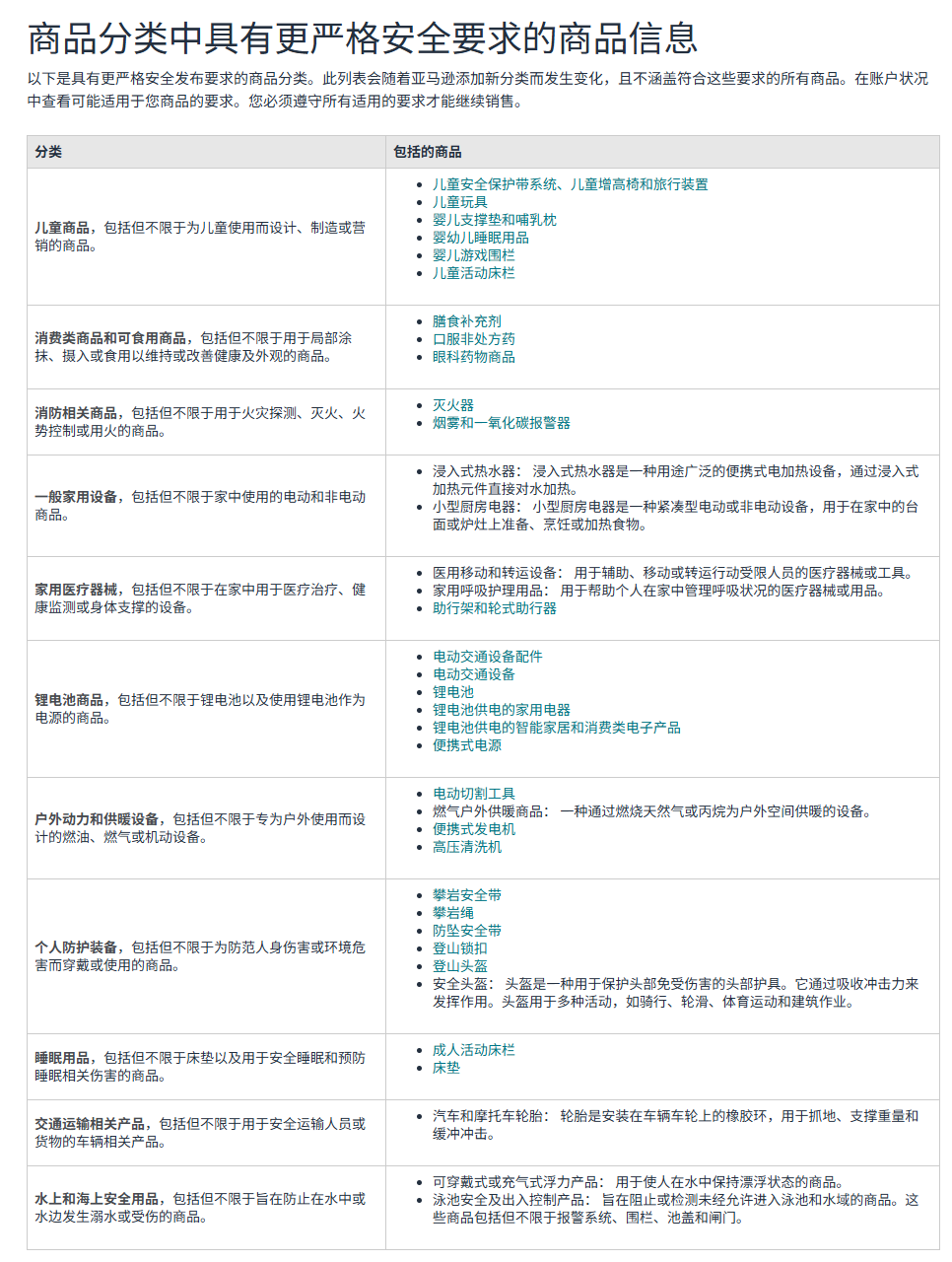
First, sellers of products in categories with "higher safety listing requirements" must carry insurance regardless of sales volume.
Under the previous policy, sellers were generally required to carry insurance only when monthly sales exceeded $10,000. Under the new rules, as long as a product falls in a category with "stricter safety listing requirements," sellers must maintain a commercial liability insurance policy whether or not monthly total revenue reaches $10,000 and regardless of whether the listing is new or old, with a minimum coverage of $1 million per occurrence and in aggregate.
The platform's list shows that categories with "stricter safety listing requirements" that require mandatory insurance cover 11 major categories: children's products, consumer products and edible products, fire-related items, general household appliances, home medical devices, lithium battery products, outdoor power and heating equipment, personal protective equipment, sleep products, transportation-related products, and water safety supplies.
Many of these are very popular tracks for Chinese sellers expanding into the US, such as lithium battery products and general household appliances.
Second, sellers whose company address is in mainland China must obtain insurance policies through Amazon Insurance Accelerator (AIA).
Specifically, policies newly submitted from November 2 must be obtained through AIA; policies issued through non-AIA channels will be rejected by the platform. Third-party policies previously submitted and compliant can continue to be used until expiry, but upon renewal, a new policy must be obtained through AIA.
Judging from industry discussions, for some sellers, the new rules seem bound to bring some cost increases.
On the one hand, sellers in categories with "stricter safety listing requirements" whose monthly sales were previously below $10,000 will add a fixed annual expense;
On the other hand, Chinese sellers used to be able to compare quotes from multiple insurers horizontally and choose the most cost-effective plan, but after the unified switch to AIA, the list of selectable insurers is locked by the platform, and in the long run, overall premiums are likely to rise.
At the same time, some sellers believe one reason Amazon US marketplace added these two requirements is to shift the cost of managing product liability risk onto sellers. It is reported that US consumer product-related class actions and personal injury claims involve extremely high compensation amounts; if a product has problems and sellers cannot afford to pay, Amazon would likely face joint liability risk.
However, some industry insiders also point out that the AIA channel has its advantages — AIA's insurers are all pre-vetted, which can greatly reduce the communication cost of rejected policy uploads and repeated material revisions, and reduce the risk of listing delays caused by non-compliant policies and repeated submissions.
For now, Amazon's trend of strengthening product compliance requirements is irreversible. It is recommended that, as the new rules take effect, sellers calculate costs in advance to re-plan their sales strategies and complete compliance requirements, so as to avoid affecting normal operations.