
Original title: Taking the global No.1 spot, xTool is still anxious
Author: Mai Lin
Source: BrandArk

Image source | pexels
As 2026 begins, the Hong Kong Stock Exchange welcomes an unusual candidate.
xTool, a Shenzhen brand founded in 2021, books 2.5 billion yuan in annual revenue from selling laser engravers overseas and holds a 47% market share, putting it in a league of its own globally. Tencent led a $200 million round on the eve of its IPO, and Sequoia China has been alongside since the Series A ten years ago. If the listing goes through, it will become the first publicly listed consumer laser engraver company.
On the surface this is the story of an industry leader smoothly moving onto a bigger capital stage. But the other side of the story is buried in the financial numbers: slowing growth, deteriorating cash flow, inventory doubling.
More awkward still, as more competitors cross over directly into its core territory, the ground xTool once held firmly is also at risk of being lost.
Just recently, industry sources said xTool has confidentially refiled its listing application after its earlier prospectus lapsed for structural reasons, launching another push at an IPO.
Global No.1 on one side, stalling growth on the other. For xTool this is not the best moment to list, but it is a point where waiting any longer would be too late.
xTool sprints toward an IPO
xTool itself has long been good at crossing categories. Its predecessor, Makeblock, was founded in 2013 in the STEAM education robot business and at its peak operated in more than 140 countries and regions, with Sequoia China and Shenzhen Capital Group among its backers. That did not last: the pandemic and the "double reduction" policy dealt fatal blows in succession, and overnight Makeblock came close to bankruptcy.
In that corner it decisively pivoted into laser engravers, and xTool was born. In 2021 the xTool M1, the world's first cutter combining blade and laser cutting, landed on Kickstarter, raised $2.6 million and took the No.1 spot for laser-related crowdfunding on the platform that year.
In under five years, xTool arrived at the door of an IPO as the leader in laser engravers.
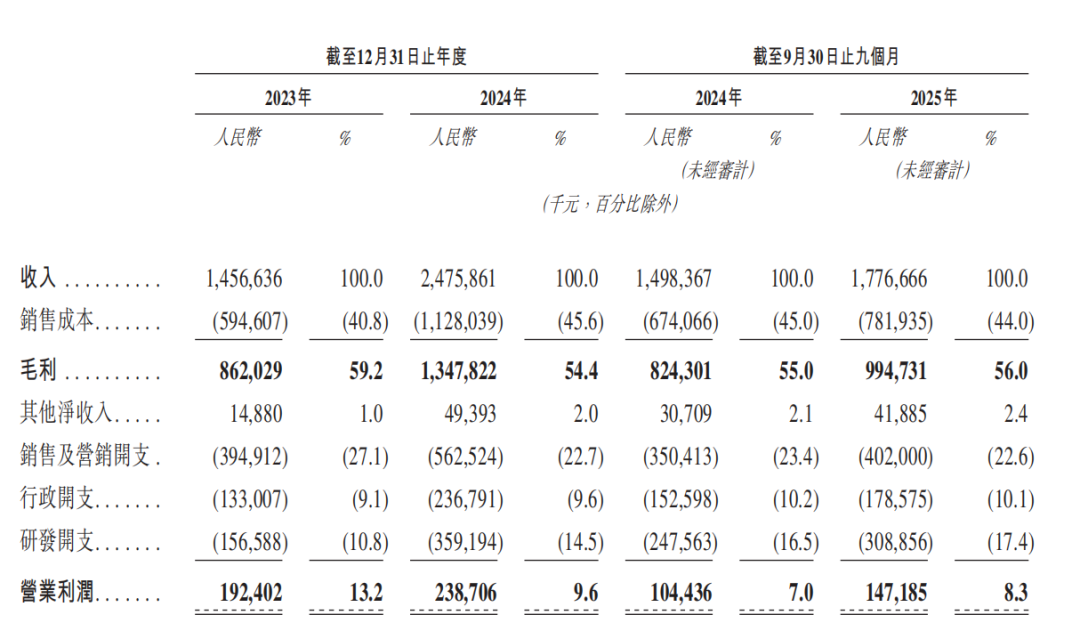
The prospectus shows that in the first three quarters of 2025 xTool generated 1.777 billion yuan in revenue, up 18.6% year on year. Measured by GMV in that period, xTool held a 47% global market share — six times that of the second-largest brand and more than the combined share of brands ranked second through tenth.
With that overwhelming advantage, xTool dominates the consumer laser engraver category, and this standout scorecard is the foundation for its capital-market push.
So the question becomes: why now? What is xTool's real purpose in listing?
The answer is also hidden in xTool's financial numbers.
According to the prospectus, xTool booked 2.476 billion yuan in revenue in 2024 with adjusted net profit of 149 million yuan, a net margin that barely reaches 6%. In the first three quarters of 2025 revenue growth plunged from 70% a year earlier to 18.6%, while the net margin slid further to 4.7%.
Although xTool's gross margin is as high as 55%, a razor-thin net margin exposes how fragile its profit structure is. Where did the money go? The prospectus answers part of it: sales and marketing expenses have long accounted for more than 22% of revenue, and from 2023 to 2024 marketing advertising spending rose from 216 million yuan to 314 million yuan, up 45% year on year.
In the first three months of 2025, unit sales of xTool's laser personal creative tools and accessories fell from 85,900 sets a year earlier to 71,900 sets, while the average selling price per kit climbed from 15,600 yuan to 21,100 yuan. Through a premiumization strategy it defended both the revenue curve and the gross margin.
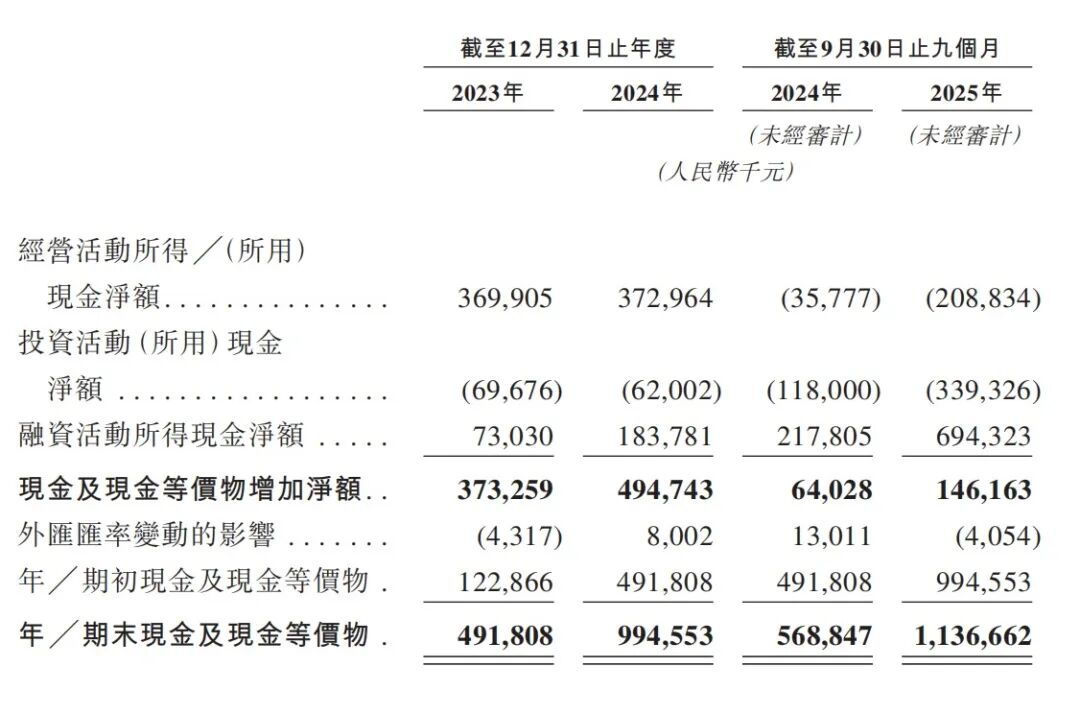
But the truth behind it is that the base of xTool's core products is shrinking and its growth engine is stalling. A stark cash flow number punctures the respectability it has barely maintained: operating activities generated net inflows of 370 million and 373 million yuan in 2023 and 2024 respectively, yet in the first nine months of 2025 that turned into a net outflow of 209 million yuan; over the same period inventory jumped from 433 million to 857 million yuan and inventory turnover days stretched from 124 to 226.
What xTool has done over the past four years is build "the brand is the category" awareness in a category dominated by white-label products, capturing the dividend of penetration going from zero to one. Now that sales are contracting, that dividend is nearing its end — and there is a limit to how far price increases can stretch.
Bambu Lab arrives at its doorstep
Even with growth slowing, xTool's dominance in the laser engraver category remains beyond dispute at this stage.
Looking at the second tier of the category — LaserPecker, Atomstack and Ortur, brands that also emerged from Shenzhen, focused on portable or entry-level products with fragmented shares — none of them fights xTool's 20,000-yuan high-end machines in the same weight class.
But as one heavyweight player reaches its doorstep, the situation starts to change.
Bambu Lab — the undisputed leader in 3D printing — entered xTool's core territory in September 2026 with the consumer laser cutter R1, priced from $2,499 and aimed directly at xTool's product lines around $3,000.
Bambu Lab is no ordinary entrant. The supply chain, fan community and software ecosystem it built in 3D printing carry over to laser with almost no need to start from scratch. More dangerously, its playbook is to bring the 3D printing industry's "high spec, low price" logic into a new category.
And the boundary between laser engraving and 3D printing was never as solid as outsiders assume. In investors' judgment, 3D printing and CNC could partly replace, or even fully displace, laser engraving.
Bambu Lab's R1 is not just a product, it is a signal: competition in consumer maker tools is shifting from product iteration within a single category to system-level capabilities migrating across categories.
Of course Bambu Lab is not the only one crossing over; the boundaries of desktop fabrication hardware are melting across the board.
Creality, another 3D printing giant, launched the Falcon T1 — the world's first five-in-one laser workstation — and entered the laser category the same way: using engineering capability and supply chain built in additive manufacturing to attack the parts of subtractive manufacturing whose professional barriers have not yet been dismantled.
Desktop CNC is also approaching from another direction. CNC, 3D printing and laser engraving are known as the maker trio; not only do they share a similar user base, their underlying architecture is connected, and desktop CNC can also take a slice of the laser engraving market. That means laser engraving faces pressure from 3D printing on one side and from CNC, with its harder machining capability, reaching down from the other.
All the signs suggest that 3D printing, laser engraving, CNC and UV printing — categories that once each had their own table — are being squeezed onto the same table from different directions by the same group of players.
It is precisely at this point that the IPO turns from optional to mandatory.
In its prospectus xTool describes the use of proceeds restrainedly but thoroughly: deepening R&D, strengthening the brand, expanding overseas communities and hardening supply chain resilience. Put plainly: use public-market money to raise the barriers higher, spread the scale wider and keep Bambu Lab and others outside the door.
xTool's IPO is essentially a player that won the first half trying, before the rules of the second half change, to turn its chips into cash and buy a ticket to stay at the table.
Whoever first secures public-market ammunition is the one most likely to seize the high ground in the next round of fierce competition.
xTool's three walls
In 2026 xTool sits in a delicate position.
Behind the global No.1 ranking and the absolute leadership in its category, it is going through a series of internal troubles: a stalling growth engine, deteriorating cash flow. Now the uninvited arrival of Bambu Lab adds a sense of crisis it has never felt before.
Under these circumstances xTool is trying to build its barriers higher, chiseling walls in three directions at once.
The first wall is chiseled at the boundary of product definition.
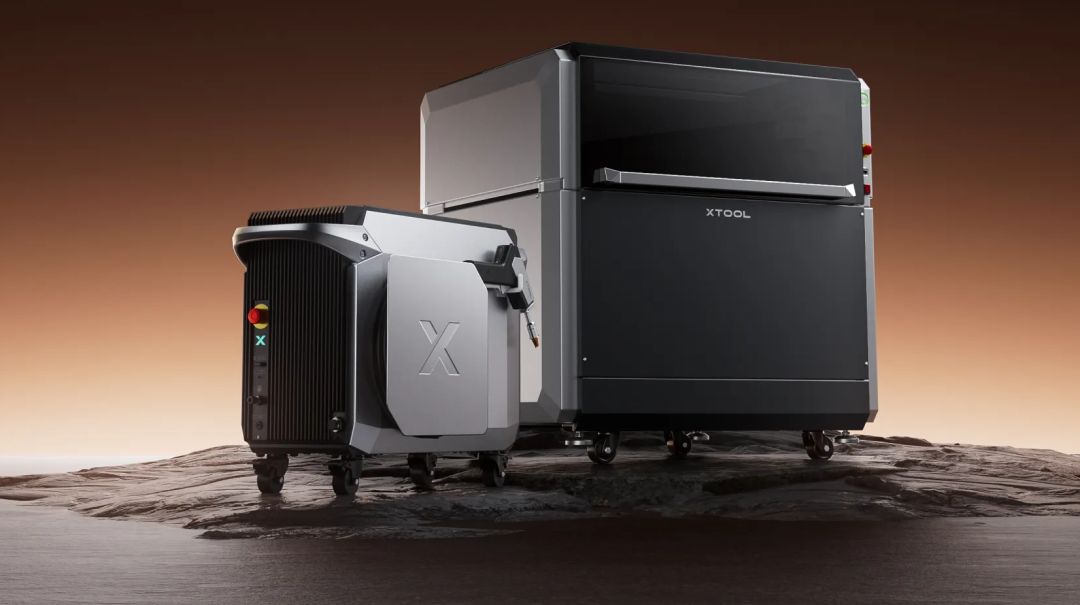
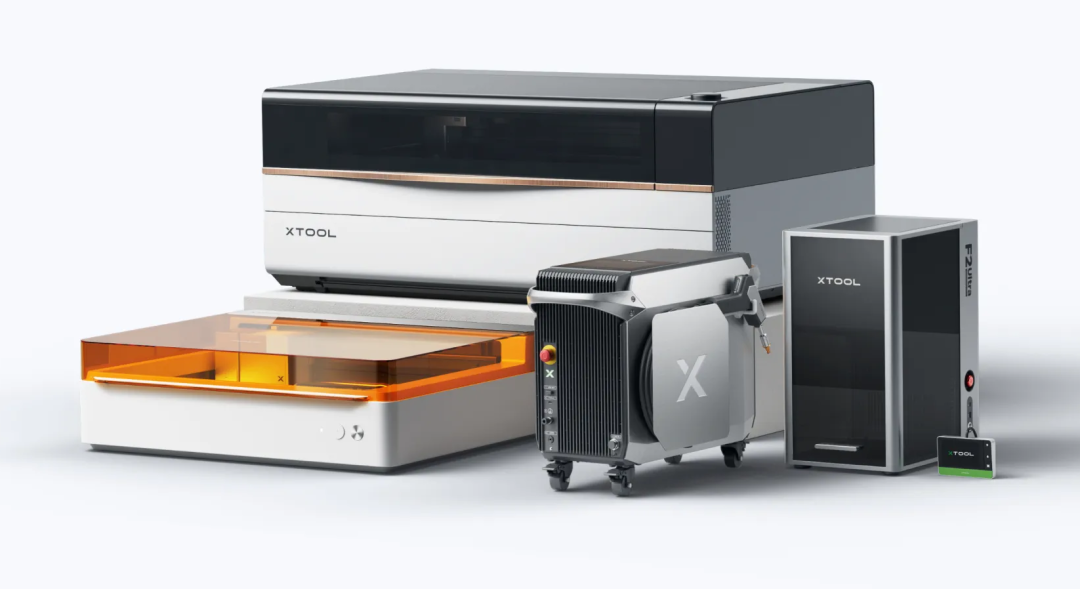
In the first half of 2026 xTool fired three shots in quick succession, a rarity: in April it launched the smart heat press WonderPress, which raised more than $4 million cumulatively on crowdfunding; in May it rolled out the color smart laser engraver M2, entering the mass market at an entry-level price; and in June it released the all-material printer O1, setting an industry record with first-day sales above 100 million yuan.
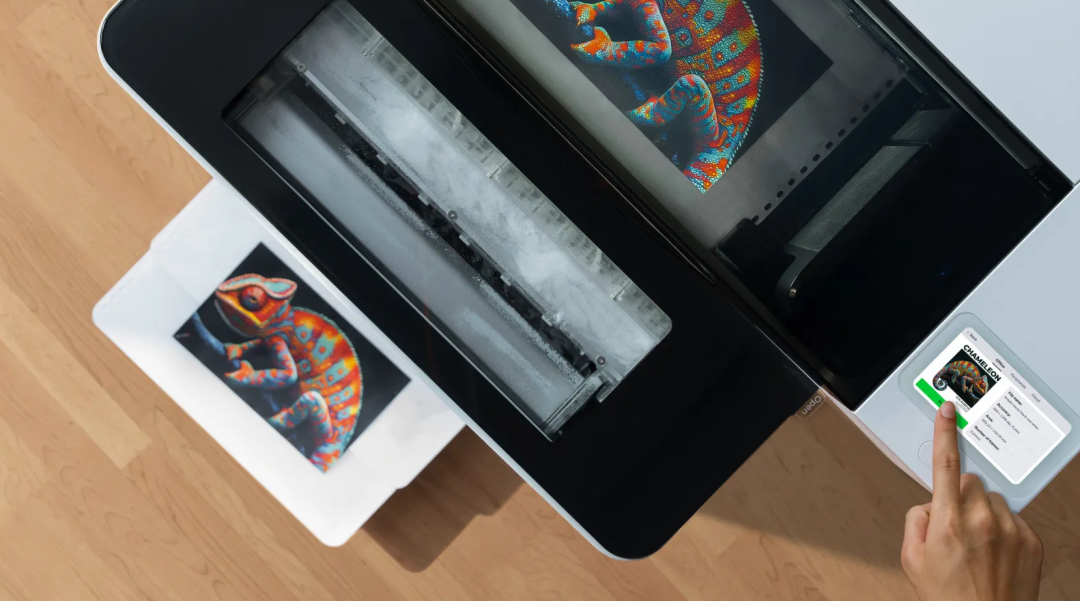
The color smart engraver M2 packs CMYK inkjet printing, laser engraving and cutting into one machine, starting at 3,299 yuan and reaching down into the entry-level price band for the first time. The cleverness of this move is that it does not take the bait in the price-performance battle Bambu Lab has set for laser engravers, but pulls the battlefield to the dimension of a single machine completing the whole flow from design to coloring to cutting.
The arrival of the O1 goes further, integrating UV, DTF, DTG and UV DTF printing capabilities into one device and precisely defining the category of desktop all-material creative workstation, in an attempt to open a second growth curve beyond laser engravers.
Laser engraving handles shaping while printing handles coloring and material extension — with the O1, xTool is telling the market plainly that it is no longer just a laser company but a platform company building tools for a world without limits.
The second wall is chiseled into the depth of channels and scenarios.
The Bambu Lab threat is real because it excels at harvesting markets with consumer-product playbooks. xTool's counter is precisely to play the DTC card deeper than its rival. Data shows more than 60% of its revenue comes from its own brand site, overseas revenue accounts for 97%, and Europe and the United States together account for 85%.
Betting heavily on its own site keeps user data and brand premium in xTool's own hands, with an overall repurchase rate around 40%. But the online direct channel is only one link: xTool also works with more than 40 brands including Decathlon, Nike, Ray-Ban Meta and Huawei, and invests heavily in offline channels, covering more than 2,000 stores worldwide so far.
Beyond that, in Europe it uses the xTool Squad model to upgrade experienced users' studios into authorized service points, covering 32 countries and more than 470 hosts, reaching local consumers at deeper levels. In the first half of 2026 its European business grew 100% year on year and offline experience spaces expanded to more than 750.
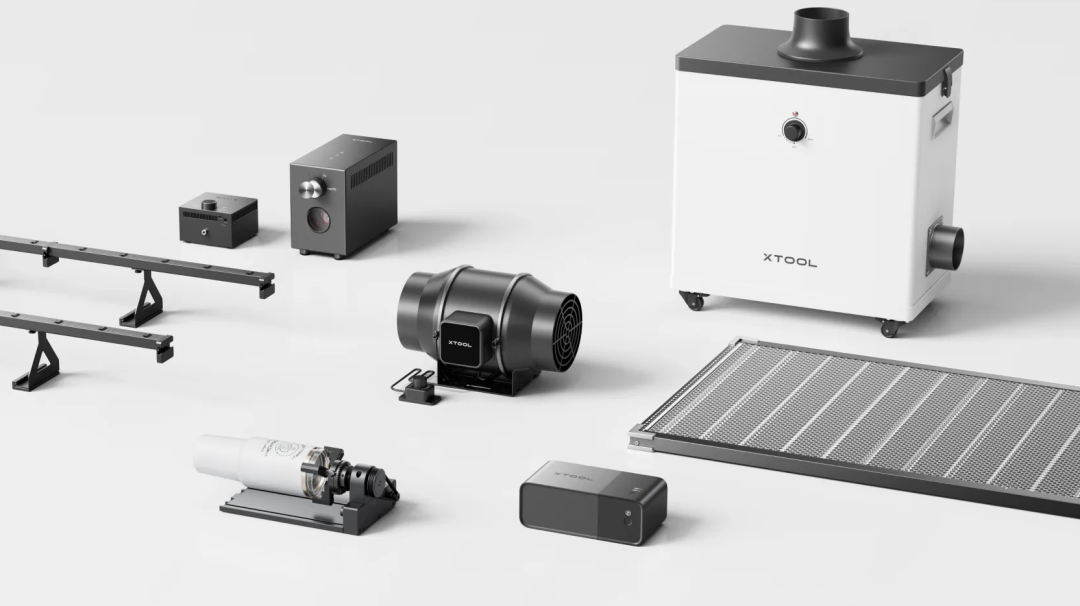
While Bambu Lab is still feeling out users and testing the water with online channels and e-commerce logic, xTool has already moved from online into offline, deep into the real scenarios of users' lives.
The third wall is chiseled at the transition from one-off hardware to an ongoing business.
Laser engravers have a natural awkwardness: the machine is a one-off big-ticket item, and once the novelty wears off consumers easily leave it gathering dust, so the consumables repurchase curve is far less steep than imagined.
In the first nine months of 2025, consumables and other revenue fell back to 8.9% of the total at xTool, and the razor-and-blades model of equipment plus consumables has not truly closed the loop. xTool's answer is to lower the barrier to creation enough that the machine turns from a toy into a production tool.
Its Atomm creator community has accumulated more than 60,000 templates, tutorials and directly monetizable cases, letting zero-experience users pick a template, load material and hit process, walking easily through the whole flow from inspiration to delivery.
Beyond that, its in-house xTool Studio strings design and fabrication into one line, and the AImake agent tries to bridge the gap between "I want to make something" and a file the machine can process with AI. When one device can help a one-person company take orders and make money, the logic of repurchase is no longer buying another roll of material but buying a stronger machine to take bigger orders.
But these three walls are far from the point where xTool can breathe easy. Reaching down to entry level with the M2 is a defensive counterattack in Bambu Lab's strongest price band, fought with feature density; the O1's second curve had a stunning debut, but the competitive logic of printing is entirely different from laser, and reusing supply chain and channels does not come free.
On top of that, expanding the offline experience network means heavier operating costs, and in the first three quarters of 2025 sales and marketing expenses stayed above 22% of revenue.
The more fundamental issue is that Bambu Lab's entry changes not only the intensity of competition but the rules of the whole category. xTool's response is essentially to turn itself, before the category is consumerized, from a laser engraver company into a net woven from product boundaries, technical barriers and user stickiness.
If that net is finished, Bambu Lab's R1 is merely stirring up trouble in one local battlefield; if it is not, xTool's market share will sooner or later be eaten away.
Five years ago Makeblock clawed its way back from the edge of a cliff by digging through Amazon search data to find a gap where white-label products ran rampant and no brand existed.
This time the gap is not in the data but at the critical point where "creation" itself turns from a geek toy into an everyday tool for ordinary people.
Whoever stands on that point first earns the right to define the next stage of the game.