Original title: On the Eve of the AI Interactive Drama Boom, Will the Short Drama and Game Businesses Be Rebuilt?
Author: Addison
Baijing Note: This article is a column piece published on Baijing by WaveGlocal. For reprint or use, please contact them to seek the author's authorization.

Cover image source | pexels
Just as the story reaches its most tense moment, it stops abruptly and three options pop up on the screen:
Trust the man in front of you / Leave with someone else / Search for the truth alone.
How the story unfolds is no longer decided entirely by the writers; it is handed over to the audience. This is not a game, but a new format that has recently emerged in the short drama market — AI interactive drama.
In April this year, the Chinese team DRAMAGO launched its first AI interactive drama, "Sterling Lies". The 74-episode production revolves around three character storylines, and viewers can enter different storylines and unlock different endings through different choices. In August, DRAMAGO released "Blood on the Badge", expanding the branching narrative to 14 paths.
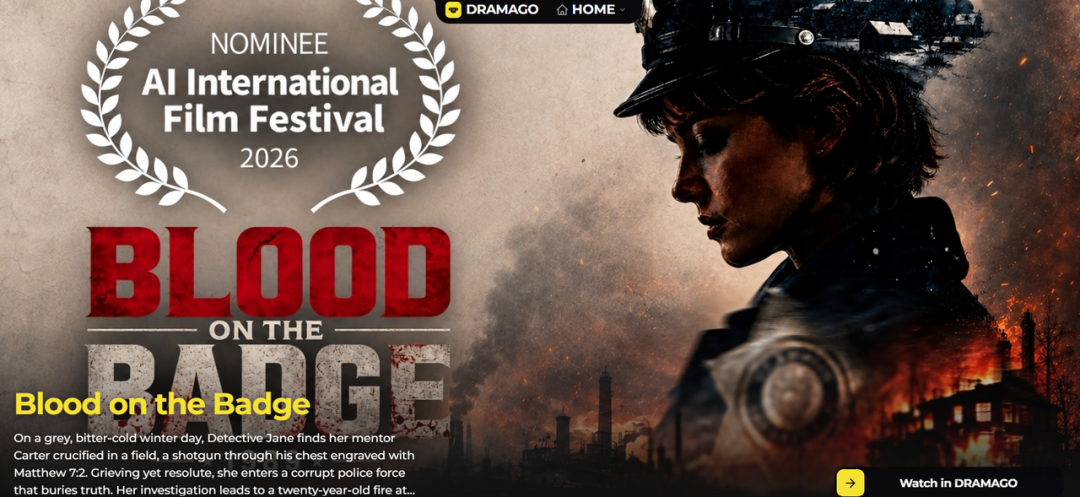
Blood on the Badge
Around the same period, Castloop, under XVERSE (Yuanxiang Technology), brought real-time AI generation into interactive storytelling, so the plot no longer depends entirely on pre-set branches but can develop dynamically according to user choices. Overseas short drama platform StoReel raised $34 million in equity and user acquisition funding, and plans to further connect content distribution, creation tools and user interaction.
As platforms pile in one after another, AI interactive dramas have also delivered an interesting set of numbers. According to DRAMAGO, the completion rate for the first three episodes of some AI interactive dramas is nearly twice that of live-action short dramas on the platform, the conversion rate at the first paywall is nearly 30 times higher, and the next-month return rate is about 40%. Meanwhile, Adjust data shows that the Day-30 retention rate of global short drama apps in Q1 2026 was only about 2% ("The Short Drama Apps Report 2026" by Adjust).
From preset branches to AI-generated dynamics, more and more players are exploring this new content format. What kind of business is this really? Is it merely a new twist on top of short dramas, or a new track with unlimited potential?
A Drama That Can Be "Rewritten"
To understand what an AI interactive drama is, we should start with "interaction".
In an ordinary series, viewers can only follow one pre-set storyline, whereas in an interactive drama viewers can change the direction of the story through their choices, spawning dozens of endings, and with AI involved the plot may even develop into N possibilities.
Broadly speaking, AI interactive dramas currently take two forms:
One is preset plot branching, where AI only takes part in video production.
This format is similar to Netflix's interactive film "Black Mirror: Bandersnatch": how the story develops and which endings exist are designed in advance by the writers, who then use AI to generate the corresponding videos.
For example, in DRAMAGO's "Sterling Lies", the writers set up different storylines around three characters: Sander, Julian and Leo. Viewers make choices at key moments to enter different plots and see different endings, but they cannot step outside the pre-designed story range.
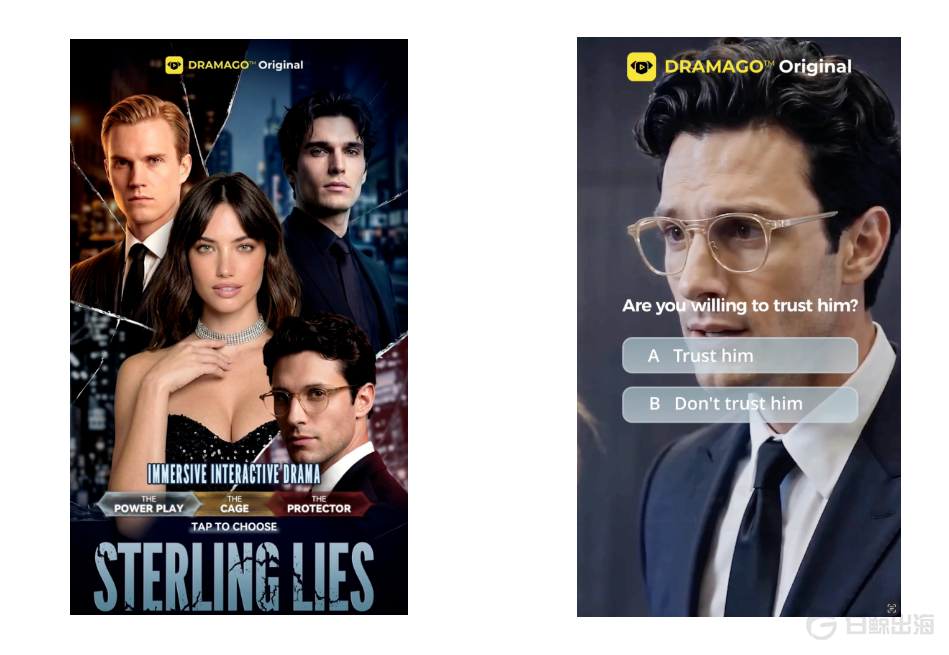
Compared with traditional live-action interactive dramas, the format itself has not changed much; what is truly different is the production method. Because characters, scenes and performances can all be generated by AI, the cost of producing multiple plot branches is reduced.
The second form is dynamic AI-generated plot, which is closer to an interactive movie-game.
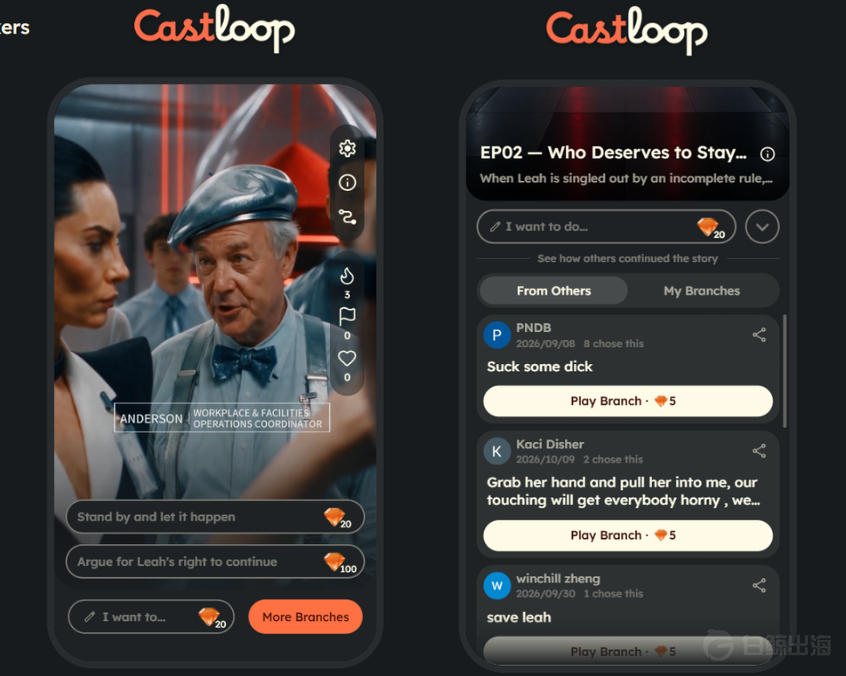
Viewers can not only pick from ready-made options but also type in their own actions, letting AI generate what happens next. For example, in Castloop's "Death Game: Outlive Your Coworkers", players take the role of Eve and enter a workplace survival game. At key moments, viewers can tap the preset options offered by the system or type in their own ideas, and AI generates or adjusts the subsequent story accordingly.
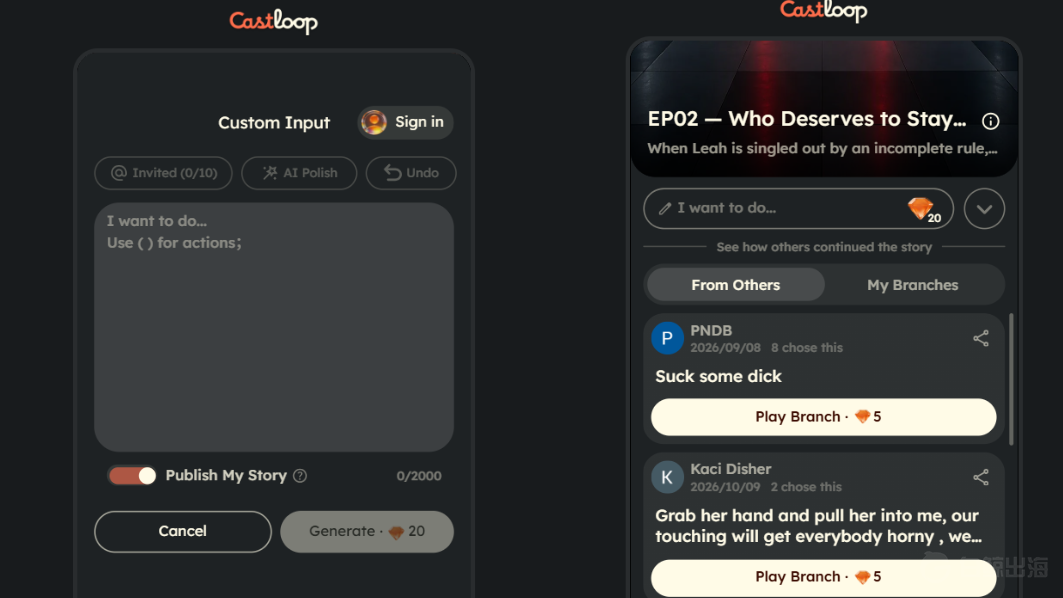
Simply put, in the first form viewers choose among several paths prepared by the writers, while the second allows viewers to propose new paths and lets AI continue the story. The latter, however, is not entirely free-form generation: a preset main storyline and plot rules are still required to control how the story develops.
This also blurs the boundary of AI interactive drama. On this point, Chang Jing offered a simple distinction in conversation: "Interactive drama is drama first, interaction second", whereas interactive movie-games "take game and interaction as the first priority". In other words, the core of an interactive drama is still watching a story, with interaction serving to increase immersion; the latter places more emphasis on operation, exploration and gameplay.
That is, an AI interactive drama is a new content format built on AI-generated video, centered on film and television narrative, in which viewers take part in the development of the plot through choices or input. It retains the viewing experience of short dramas while absorbing the interactive mechanics of games, sitting between the two.
AI Interactive Dramas Are Off the Starting Line — Who Will Grab the First Ticket?
By definition, AI interactive dramas carry the typical DNA of both short dramas and games. Yet the first movers in this track were neither the leading overseas short drama platforms with deep production experience and large user bases, such as ReelShort and DramaBox, nor the top game companies, but a group of small and mid-sized short drama teams and AI technology companies.
Take DRAMAGO: after entering the overseas short drama market in 2024, it tried launching live-action and AI short dramas but never broke through under competition from the leading platforms. Founder Chang Jing revealed that the platform found a new breakthrough only after pivoting to AI interactive dramas in 2026. From launching its first AI interactive drama "Sterling Lies" in April to the end of September, DRAMAGO had released 14 AI series, 10 of them interactive, covering romance, suspense and other genres in seven languages.

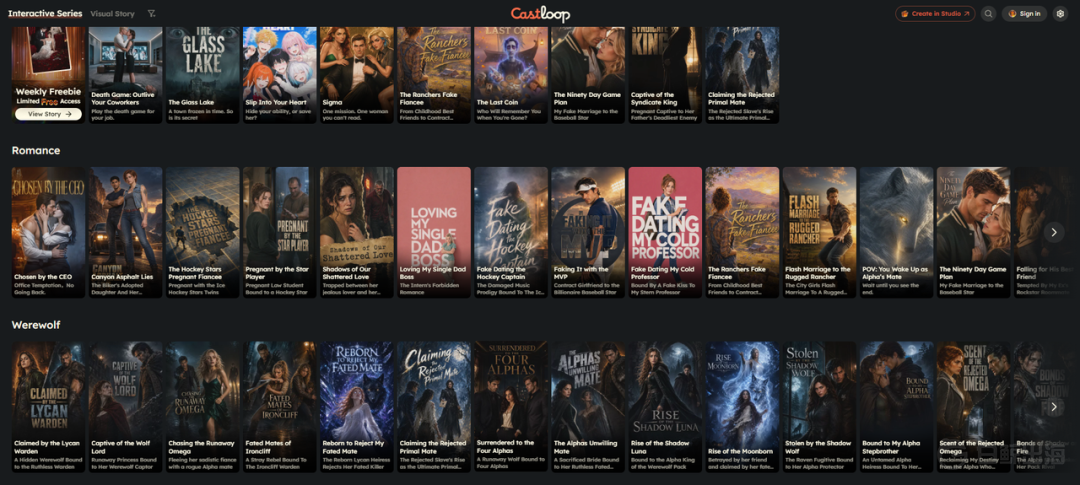
Besides short drama teams, there are also platforms entering with AI technology, most notably Castloop under XVERSE.
Before launching Castloop, XVERSE had already rolled out the AI social UGC platform Saylo in 2024, letting users interact with AI characters and take part in story creation. This technical and product groundwork shaped Castloop's direction.
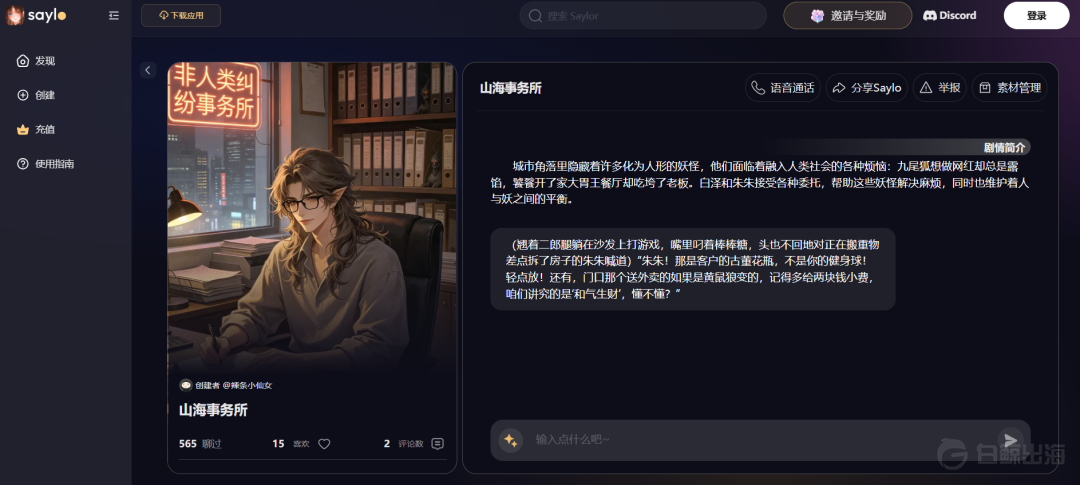
Saylo, an AI social UGC platform
In the series released on Castloop, viewers can create content directly on the viewing platform. Beyond the platform itself, Castloop has also built the creation tool Studio and a content consumption platform, so that outside creators can produce and publish interactive works through AI. Lowering the creation barrier has also improved the efficiency of content supply: by the end of September, the platform had published more than 100 original works.
By contrast, StoReel set its sights beyond series. This China-backed overseas platform raised $34 million in equity and user acquisition funding this year and distributes AI short dramas, including AI interactive dramas, to European and American markets, covering romance, sci-fi, fantasy and LGBTQ+ stories.
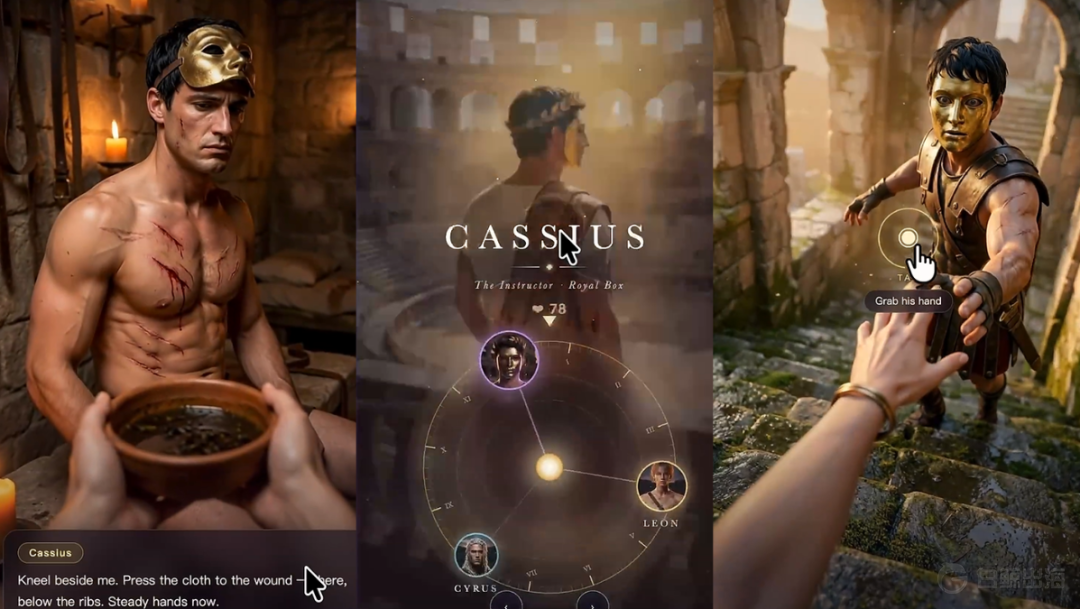
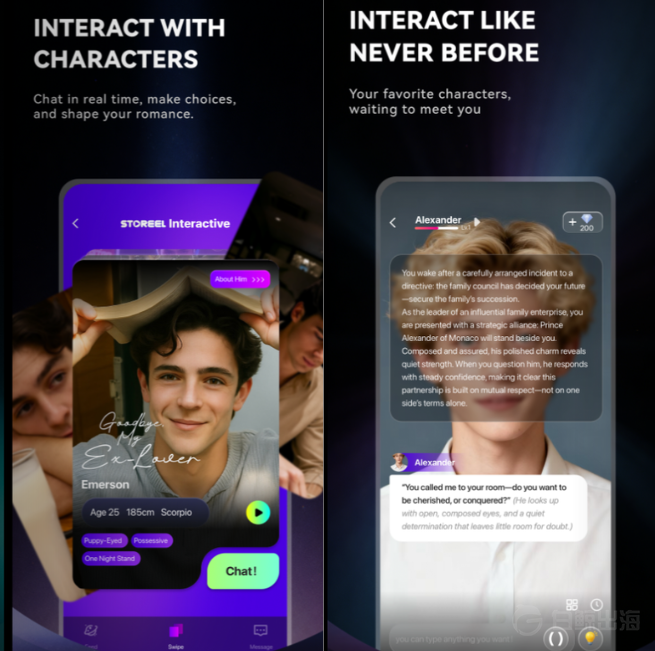
Inside the shows, viewers take part in how the content evolves by voting on plot directions and key moments, interacting with character IP in multiple dimensions; outside the shows, StoReel runs persona-based operations for some core characters, building independent character content matrices and continuously extending and interacting around plot development, further strengthening user stickiness and IP value.
Beyond Chinese overseas teams, new explorers have emerged in overseas markets after giants such as Netflix — also from small teams. In July, AI interactive video platform Yoroll launched "AI Odyssey", featuring more than 140 AI-generated video clips and 11 endings. According to the Yoroll team, the work was completed by a single creator in two days on a budget of about $250, and it drew more than 10,000 views in its first week.
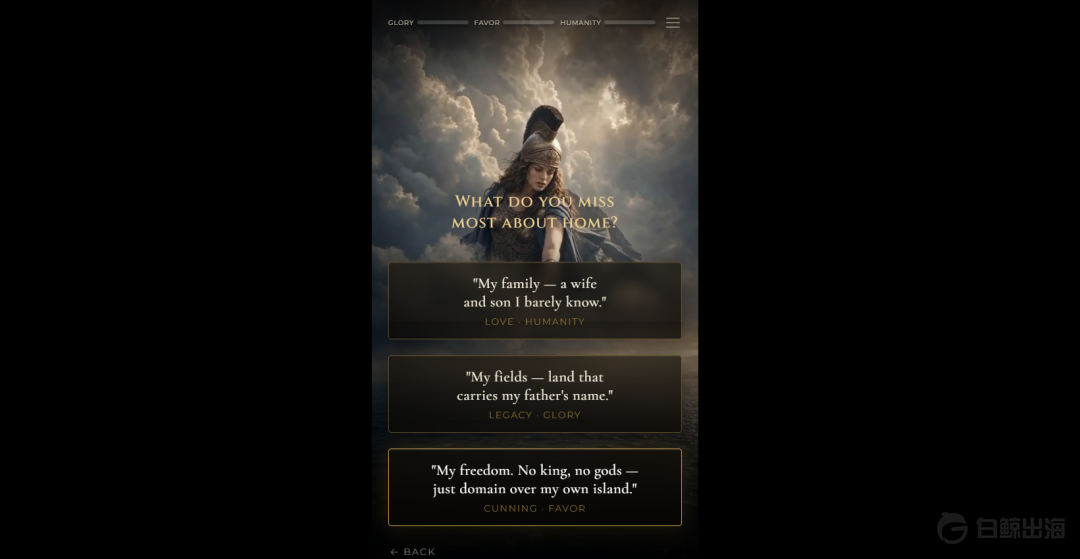
Judging from the current market landscape, AI interactive dramas have not yet seen an all-out war; instead, AI has lowered the production barrier, allowing a group of small and mid-sized teams from different backgrounds to run ahead.
However, as new players keep entering, excitement aside, whether the business actually works is another matter. How much more will users pay for this new format between short dramas and games, and how much revenue can it bring to platforms?
From Selling Stories to Selling Experiences: How Do AI Interactive Dramas Make Money?
Judging from current experiments, AI interactive dramas both continue the content payment model of traditional short dramas and borrow the virtual currency mechanics of games, while also trying to extend the business to character interaction, content creation and IP development.
The first is the most common payment model in content formats — in-app purchases (IAP), where users pay for different plots.
Compared with traditional short dramas, AI interactive dramas add paywalls for character side stories, key choices and different endings. For example, after pivoting to AI interactive dramas, DRAMAGO kept its original paid-unlock model while adding charges for plot branches. The platform also kept membership subscriptions. The team said that new titles are initially monetized mainly through top-up unlocks, and about two weeks later they are included in membership benefits, balancing immediate revenue per title with long-term subscription value.
Castloop extends charges to the AI generation step. The platform uses a virtual currency model: users can buy diamonds for premium options or personalized content generation. According to the App Store listing, non-members need 5 diamonds to generate one text-only plot and 20 for an illustrated one; with a Castloop+ subscription, text-only generation is unlimited and illustrated generation drops to 10 diamonds.
The mechanics differ, but the payment logic behind them is the same, and early data shows that interaction does create new conversion opportunities. DRAMAGO co-founder Chang Jing said that after the platform's pivot, the user interaction rate and overall paid conversion rate were about twice those of traditional short dramas, and the core audience shifted from women aged 30 to 45 to the 25 to 35 group, with the male-to-female ratio gradually converging. This suggests that interaction not only creates more spending opportunities but may also help platforms reach users beyond traditional short dramas.
Another mainstream payment model is IAA, that is, advertising. Like traditional short dramas, AI interactive dramas unlock subsequent content by watching rewarded ads. For example, DRAMAGO has already adopted a similar mechanism: according to its official FAQ, users can earn points through daily check-ins and watching ads, then use them to unlock further content.

Industry-wide, advertising is also an important supplement for short drama platforms. Sensor Tower's "2026 Short Drama Apps Report" notes that more and more short drama apps are expanding ad revenue beyond in-app purchases. An Adjust survey shows that 67% of the app marketers surveyed have already advertised in short drama apps or are interested in trying.
For AI interactive dramas, however, how to combine ads with interactive moments without interrupting the story while still generating steady revenue still lacks sufficient real-world operating data.
There is also off-screen creation and IP commercialization, extending the business from viewers to creators.
AI not only lowers the barrier to content production but also provides a creation platform. StoReel launched the AI creation tool Canvas, and Castloop launched Castloop Studio. Creator participation relieves the pressure on platforms to keep updating content; platforms also have the chance to earn from production services, content revenue sharing and IP partnerships, rather than relying entirely on viewer top-ups.
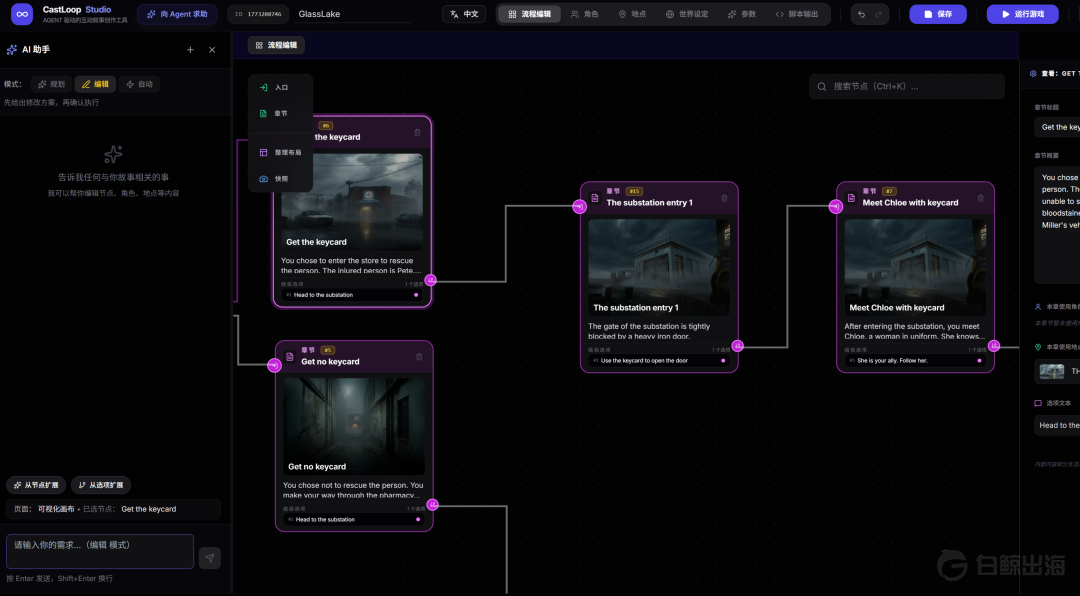
Castloop Studio
In addition, there is IP commercialization of AI characters. DRAMAGO has launched a character chat feature where users can spend in-app points to talk with virtual characters. StoReel likewise builds AI character dialogue into the product experience, letting viewers keep connecting with story characters beyond watching. This mechanic, similar to AI companion apps, extends a character's commercial value beyond the series: even after the story ends, users may keep spending to chat with favorite characters and explore exclusive plots.
In overseas markets, these three payment models are not without precedent. Sensor Tower data shows that in-app purchase revenue for global short drama apps in Q1 2026 was about $750 million, up 20% year on year. In interactive storytelling, apps such as "Episode" have long cultivated a group of users willing to pay for plot choices.
The maturity of the short drama paid market, together with accumulated interactive storytelling consumption habits, gives AI interactive dramas a ready-made user base. This may also explain why some Chinese overseas teams have already achieved results abroad before domestic leading platforms entered at scale.
Conclusion
Whether in content format or business model, the arrival of AI interactive dramas is blurring the lines between short dramas, games and AI social products.
DRAMAGO and StoReel extended from series into AI character interaction, and Castloop even positions itself directly as an "AI Story Game". When binge-watching, game interaction and character companionship are put into one product, platforms have more room to monetize, and small and mid-sized teams have a chance to enter the market with differentiated mechanics.
But more mechanics do not necessarily mean an easier business.
First, cost. StoReel estimates that producing one hour of AI series costs about $20,000 to $40,000, far below traditional live-action production — but interactive dramas must additionally bear the costs of branch development, content validation and model calls, and how those should be accounted for remains a question.
Second, retention. Adjust data shows that the Day-30 retention rate of global short drama apps in Q1 2026 was only about 2%. Whether interaction can turn viewers from watch-and-leave into long-term users willing to repeatedly explore plots and keep using the product — there are not many reference answers yet.
Finally, user experience. The appeal of short dramas lies in a relaxed, continuous viewing experience, while games emphasize choice and exploration. Combining the two adds a sense of participation but may also interrupt viewers' binge-watching rhythm through frequent interactions. How to calibrate the degree of interaction also tests a platform's understanding of user needs.
Whether AI interactive dramas evolve into an independent track or become a common format within short dramas, games and AI social products, for those entering the field the priority is not to keep stacking features but to find an experience that truly fits user habits and can sustain ongoing payments.