A run-of-the-mill pet plush toy typically sells for $10 to $30, while its cost can be as low as a few dollars.
Yet on My Woolever Friend, an independent site, a felted pet doll can sell for millions of dollars per piece — dozens or even hundreds of times the price of an ordinary plush — with annual revenue reaching eight figures.
Why can a handcrafted felted pet doll command such a sky-high price and even sell out amid frenzied demand? The answer lies not only in the craftsmanship itself, but more importantly in how the brand has redefined something filed under pet supplies or handicrafts as a different category altogether: an emotional object that carries loss and reunion.
Turning pet bereavement into an emotional business
According to Grand View Research, the global pet funeral services market was worth $1.7 billion in 2025 and is projected to grow to $3.6 billion by 2033, a CAGR of 9.6%.
As pet humanization deepens, the boundaries of this business are no longer confined to the functional handling of remains, but increasingly extend to the ritualized placement of emotion. In a context where grief over losing a pet is often socially "disenfranchised" or dismissed, My Woolever Friend emerged.
According to official materials, My Woolever Friend was born from founder Tina’s desire to memorialize her beloved pet after its passing. As an artist, she discovered that felt wool is soft to the touch and warm, just like a pet, making it an ideal medium for lifelike pet portraits — and so the idea of building a personalized pet-customization brand took shape.
Its target users are highly specific: pet owners willing to pay a heavy premium for "loss" and "devotion." In other words, its core audience is not general pet lovers, but a group with strong emotional drivers and a particular willingness to pay.
For many pet owners, a pet is not just family but a soulmate. The grief of losing a pet can therefore rival losing a close human relative — yet this grief rarely receives adequate social acknowledgment or ritual support in public discourse. Human bereavement comes with a ready-made toolkit of meaning-making: funerals, obituaries, wills. Pet owners often have to piece together their own mourning rituals alone.
So My Woolever Friend decided to fill that void. By transforming a departed pet’s likeness, fur, and even ashes into a tangible object that can be preserved forever, it offers pet owners a private, touchable, shareable keepsake.
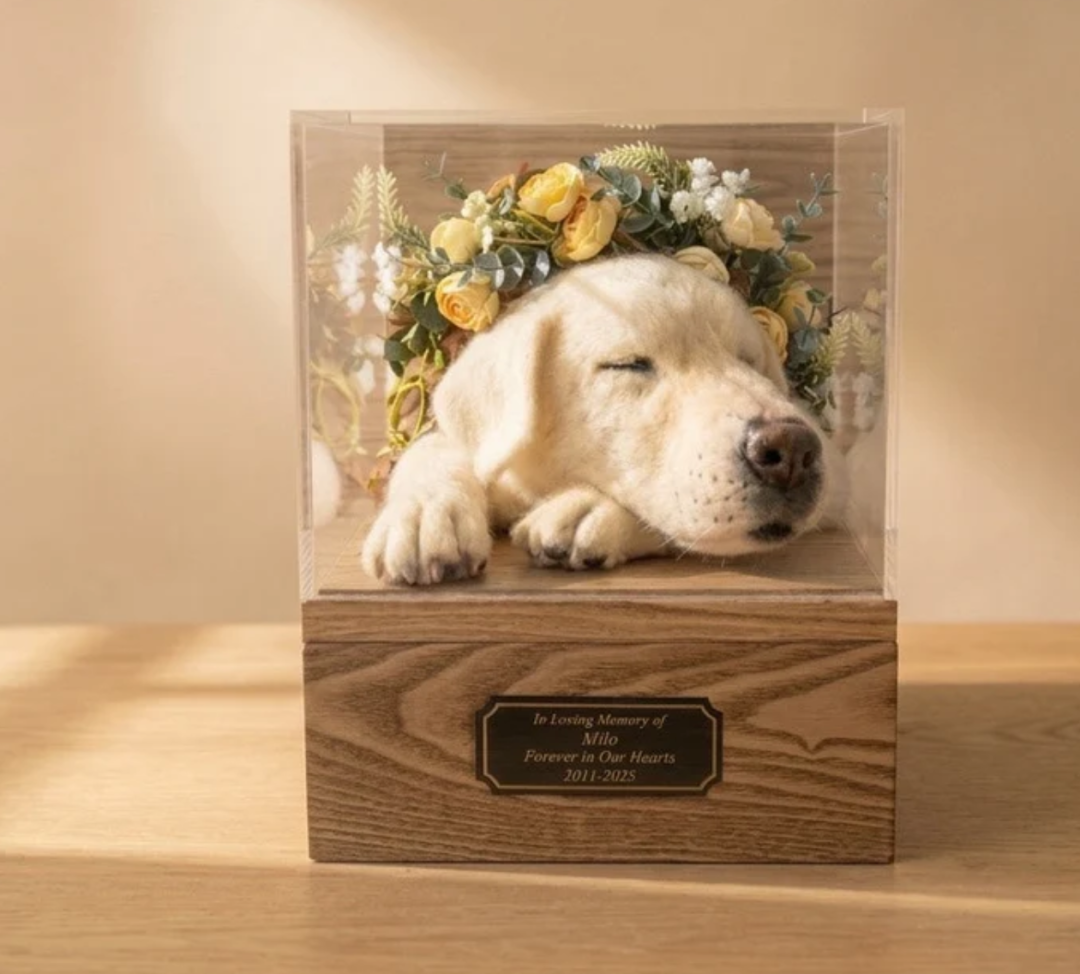
At its core, My Woolever Friend is not selling felted handicrafts but an emotional service, a psychological anchor, a solution that materializes and ritualizes the bond between human and pet.
As we learned, all My Woolever Friend products are handmade to order, focused on replication rather than interpretation — maximizing fidelity to the pet’s real form, spirit, and personality, so that the owner’s feelings have somewhere to rest and the sense of the beloved pet being beside them again can be recreated.
Specifically, My Woolever Friend has built a tiered product matrix.
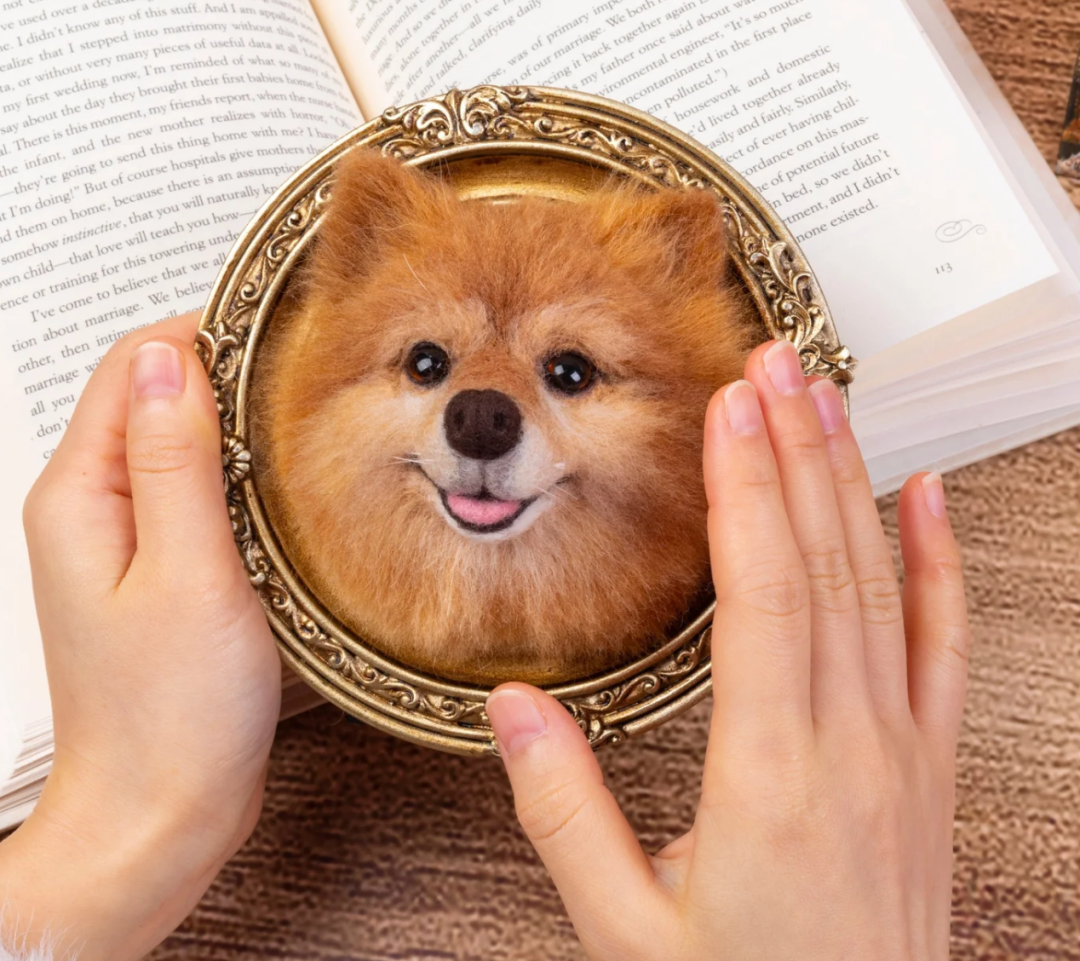
The entry level includes custom pet décor such as miniature framed portraits and small felt pieces, priced from $100, suited as gifts or keepsakes.
Next come flagship display products: framed pet portraits, miniature pet models, and wool-painting portraits. This is My Woolever Friend’s best-selling line. The framed portrait, its star product, is a 3D lifelike wall piece with strong visual impact; wool-painting portraits use 2D needle-felting on a flat surface, suitable for wall or desk display.
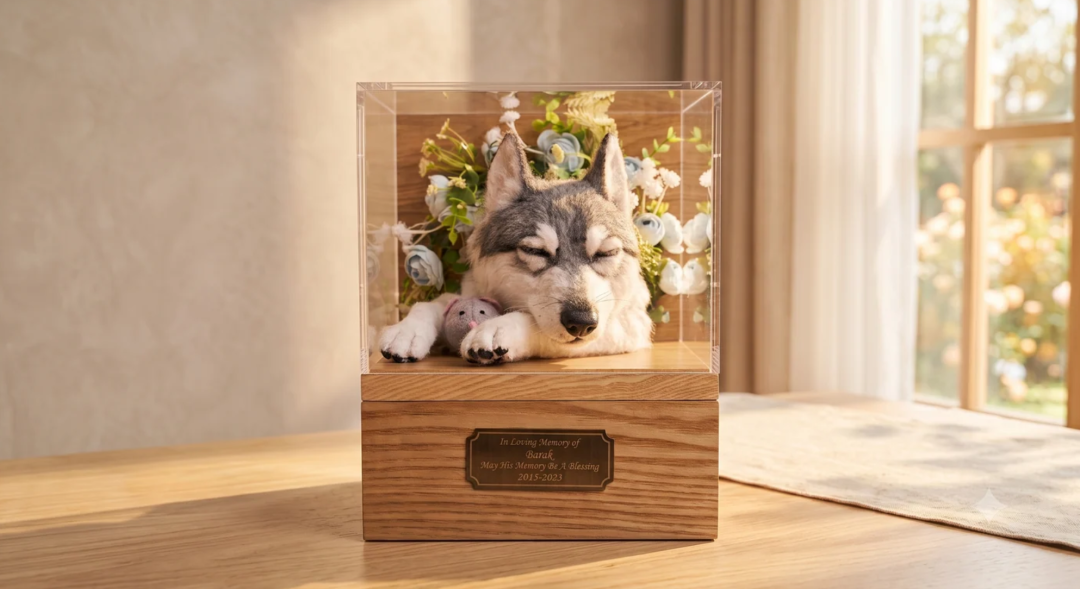
At the top sit full-body pet dolls and signed memorial ash keepsakes — premium lines with more refined, complex craftsmanship that combine commemorative value with practical function, comparable to luxury goods.
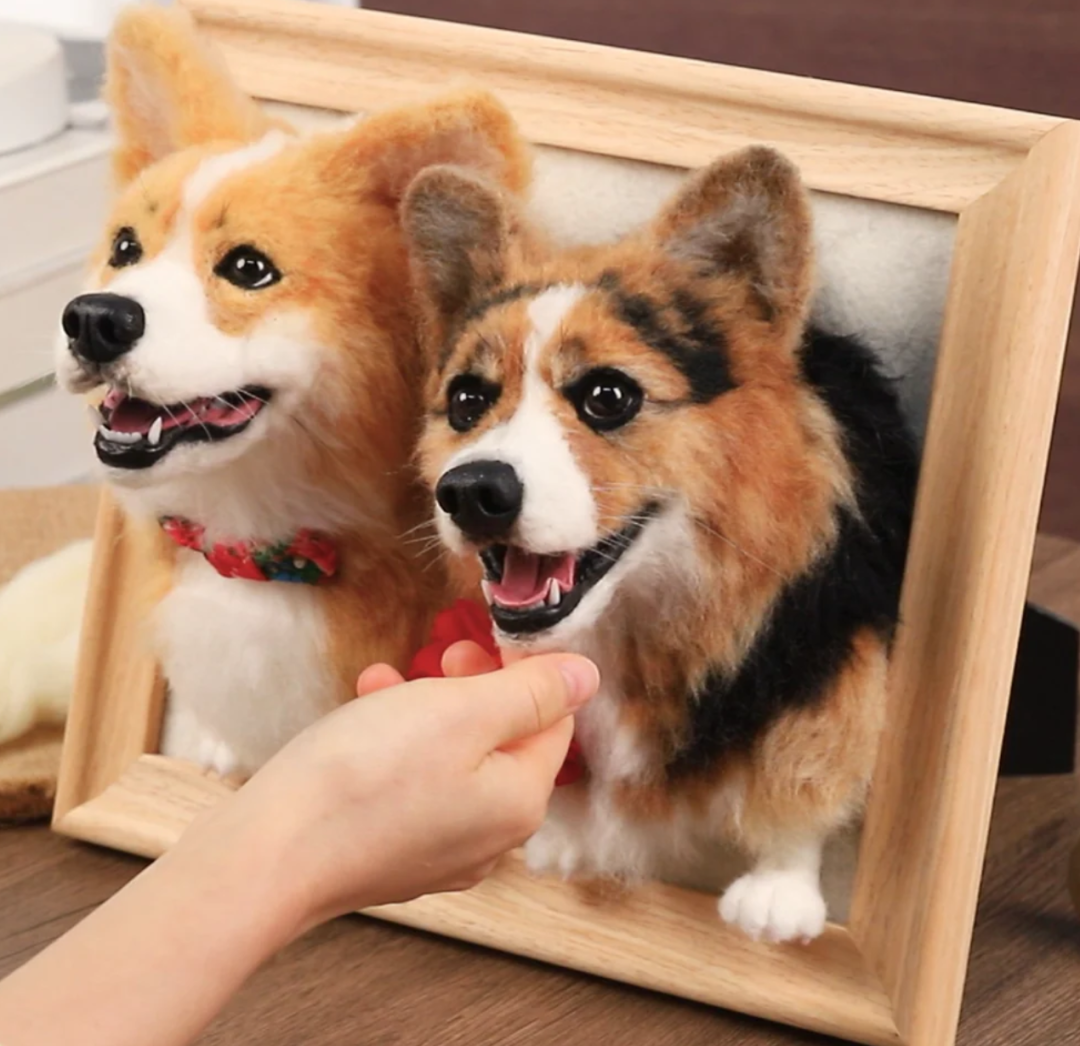
Of course, My Woolever Friend has not blindly expanded SKUs; it focuses on a few core memorial forms to reinforce a professional, high-end, custom brand image.
More importantly, every subcategory shares the same underlying logic: it is not selling the craft value of felt, but a visible, touchable vessel for emotion.
Building an irreplaceable value anchor
As noted above, My Woolever Friend has built a tiered product matrix from entry to premium, anchoring different price niches. But even entry-level items like felted pet ornaments and pet caps start at $100, and fully customized memorial ash keepsakes run into the thousands.
Décor, portraits, dolls — products whose materials cost only a few dollars and whose mainstream versions usually retail in the tens of dollars can sell at dozens or even hundreds of times the price on My Woolever Friend’s independent site. Why?
The answer is simple: make the product an irreplaceable material anchor and ritualize the consumption journey, so pet owners cash in unique emotional value and a healing experience.
Future Data Stats data shows the global custom pet products market was about $8.5 billion in 2025. But in this increasingly crowded pet-customization and replication track, My Woolever Friend occupies a deliberately narrowed niche.
Take Cuddle Clones, the US pet replica doll brand: its core positioning solves "owning a doll that looks like your pet." My Woolever Friend is different — it targets the need to "still have something of your pet you can touch after it is gone." The former is a consumer product; the latter is closer to emotional first aid.
That is why bereavement psychological comfort forms the underlying logic of My Woolever Friend’s product design.
My Woolever Friend products are made from pure Australian merino wool, handcrafted with fine needle-felting techniques. Details include hand-painted glass eyes, noses, tongues and teeth sculpted from clay, fur fibers blended in for lifelike hair, and adjustable wire-armature paws — all reproducing the beloved pet’s appearance and spirit.
What’s more, customers can send in the pet’s real fur, whiskers, or even ashes, which the artists blend into the piece. This model is extremely hard to scale commercially, yet psychologically unique: the replica is no longer an external object that merely "resembles" the pet, but, on a material level, a continuation of the departed life.
If it were only about resemblance, no matter how good My Woolever Friend’s craftsmanship, it would easily fall into commoditized competition and be quickly copied. But by translating emotion into physical details that cannot be replicated, it moves beyond handicraft and anchors product value in irreproducible traces of a life.
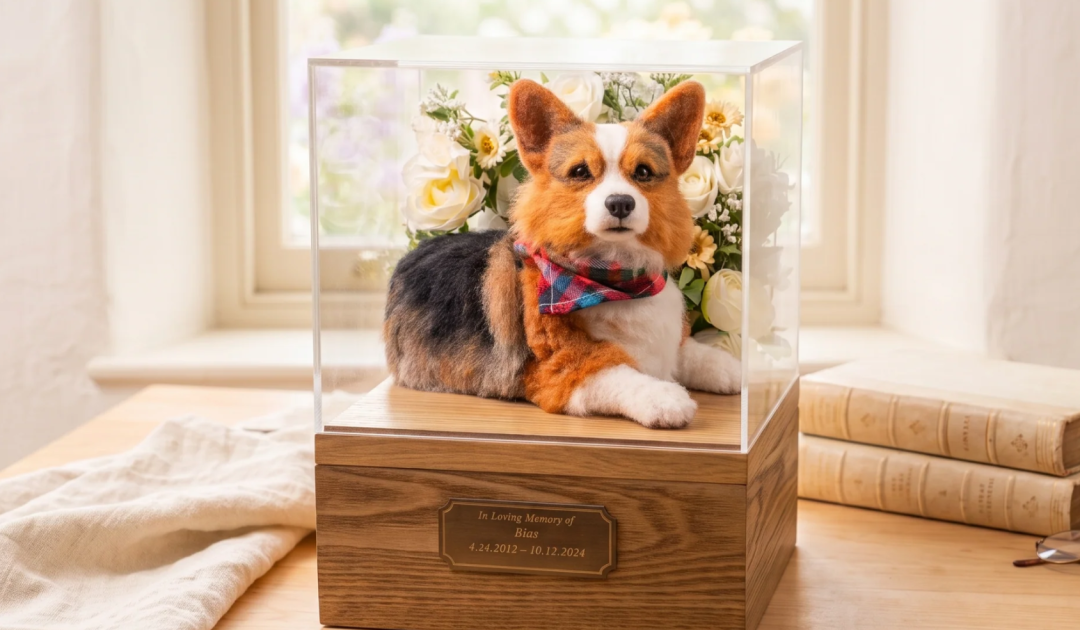
Across its product matrix, the formats cover different stages of pet memorialization — portraits while alive, ash keepsakes at passing, miniature pendants for daily carry — fully penetrating the user’s emotional lifecycle, and filtering out a customer base that treats pets as family and will pay a premium to keep the companionship alive.
That is why, despite a modest SKU count, My Woolever Friend can anchor a premium position within a limited line and command premiums far above peers.
Of course, My Woolever Friend’s moat comes not only from its irreplaceable product value anchor, but also from a distinctive consumption experience.
As we learned, after ordering on the site, customers must provide photos and the story of their pet, carefully confirming details of features and expressions.
Notably, My Woolever Friend opens only about 100 customization slots, and the production cycle runs two to three months or longer. During that time, the brand regularly sends photo and video previews and refines details based on feedback — a transparent co-creation process that dissolves the trust concerns that high price points usually raise.
In the context of pet loss, the long wait itself becomes part of the mourning. Customers are not "waiting for a product"; they are participating in a months-long ritual of meaning-making centered on the departed pet.
Even so, its open slots sell out within seconds, and no matter the price, loyal customers are willing to pay.
In an efficiency-obsessed ecommerce environment where brands chase faster, more, and cheaper, My Woolever Friend does the opposite: make scale small, make each piece heavy, slow down the pace, and make the emotion real.
Emotion-driven content storytelling
For a brand like My Woolever Friend built on high price points, an unavoidable question arises: before users ever touch the product, what makes them believe?
Its answer is to reach consumers’ minds directly through content marketing.
As we learned, My Woolever Friend barely relies on traditional ad buying; most of the site’s traffic comes from organic search and social media marketing.
As noted, My Woolever Friend is essentially selling an emotional vessel, and that positioning dictates its social content direction: if you sold crafts, social content should show "pretty"; if you sold keepsakes, it should show "lifelike." What My Woolever Friend shows instead is the slowness and solemnity of the making process, and the loss of composure and release at the moment of unboxing.
Today My Woolever Friend uses Instagram as its core marketing base and has accumulated 1.02M+ followers. Its content falls mainly into two types: making-of videos and unboxing videos.
First, the felting process is naturally suited to short video. A needle, a tuft of wool, thousands of pokes, and a pet’s silhouette gradually "grows" out of the chaos. Posting the entire process on Instagram — dense stitches, focused hands, the emerging eyes and fur — creates a viewing experience close to ASMR.
A product starting at hundreds of dollars looks expensive and gimmicky next to an ordinary plush, bordering on a "stupidity tax." But placed in the narrative of "someone spending months making one thing for you, stitch by stitch," it becomes understandable. By publishing immersive making-of content, My Woolever Friend translates "expensive" into perceptible time, letting viewers re-anchor the price as they watch.
Of course, a brand’s most powerful ad creative often hides in real customer feedback. That is why the content My Woolever Friend posts most is customers’ unboxing reactions: the genuine moment of emotion when a client opens the package and recognizes the facial features of a departed pet.
In My Woolever Friend’s videos, someone discovers the baby fur tucked inside the pet’s ear from birth, accompanied by a card reading "touch here, just like old times"; a terminally ill elderly woman commissions a golden retriever sculpture, asking for the pet’s paw print pressed into the base, placed in her hospice room.
These videos have no script, no lighting, and no hidden ads. Precisely because of that, this authentic content is more affecting than any polished advertisement.
More strategically, My Woolever Friend pins heartbroken comments like "I want to replicate my cat too..." to amplify resonance, triggering more shares and orders. In this mechanism, every customer is not just a consumer but a co-producer and distribution node of the brand’s emotional narrative.
What makes My Woolever Friend worth dissecting is not how well it makes or how dearly it sells a felted handicraft, but that it has built a one-of-a-kind product value in a pet-customization track awash with homogeneous competition.
For pet owners who have lost a companion, what they buy is not a simple figurine, doll, or ornament, but a relationship they can touch again, an emotional healing that gives longing somewhere to rest.