

Author: Crossroads
Source: Crossroads
Background:
On October 17, at the After Party of the Crossroads × Table for Six joint event, we held a roundtable discussion at the AI Hacker House in Shanghai.
From the bankruptcy restructuring of former king Character.AI[1] to the new king OOC[2] at $70 million ARR: behind this changing of the guard, new opportunities in AI companionship are emerging.

Host:
Yang Yuanchang (Koji): Founder of Crossroads and investing partner at ZhenFund
Guests:
Zhong Wending (Vito), founder of MobAI: His product Lunaverse Stories[3] is exploring AI interactive storytelling, bringing text-and-image shows, video, mini-games and character relationships into one experience. He cares about how to let story lovers enter a story with ease.
Qisi[4], producer of Book of a Thousand Nights 1001[5]: An indie game creator. In Book of a Thousand Nights 1001, players tell stories to an AI king, then take weapons out of the stories and challenge the king in return.
Xiaoning, host of the 405 Game Bureau podcast[6]: Follows games and AI interactive entertainment. In this conversation, she breaks down this round of change from the angles of product experience, business model and game design.
The following is edited from the live conversation, with cuts. Some long answers were split into Q&A with connecting follow-ups added; guests' views are preserved as intended.
Chatting is also a demanding thing
Koji: Character.AI recently announced it is starting bankruptcy restructuring[1]. As practitioners in this field, what are your thoughts?
Vito: I'm not that surprised, honestly. For us it's already a very old product — it isn't even on our competitor list.
I tried Character.AI[7] in both 2024 and 2025, and even then I felt its product was falling behind.
Making a companion product looks simple: open ChatGPT[8], type a prompt, and you have the simplest companion product. But whether you can get real content and emotional supply out of it is actually hard — and that's a key point that separates good products from bad ones.
Qisi: I wasn't as shocked as you'd expect either, but I do feel it's a pity. A while ago I gave a remote talk to their team about interactive storytelling. I have friends working there, and from the quality of the questions and everyone's spirit, it seemed like a team atmosphere I'd really admire.
This also made me rethink a question: many companionship, semi-companionship and semi-story-generation platforms look pretty similar. Of course, their cores and emphases may differ.
But what are they really competing for? Why do people tell stories, and why do they come to these products? Besides the existing forms, are there other approaches? As an indie game maker, I keep thinking about these questions.
Koji: So, have you found the answer?
Qisi: No. If there were an answer, not so many people would be making failed games and products.
Xiaoning: I care more about whether this will make the already-cold AI application funding market even colder.
As for products, I think today's AI app startups may need to ship new things faster. Old things may have brought you success, but they can also become baggage.
$70M ARR new king: OOC
Koji: OOC[2] has quickly grown to $70 million ARR and attracted a lot of attention. What exactly did it do right?
Xiaoning: Let's start with the experience. Many past products revolved around a single character: you could craft a virtual character or model one on a real person, and the core experience was chatting with them.
Chatting is actually quite hard — I wonder if everyone feels the same.
Suppose I really want to chat with Koji and can't find him, so I craft a Koji. But then every conversation has to be initiated by me. I have to think about what to talk about. Even the most charming person gets old after a few hundred rounds.
OOC adds a worldview and background. It tells you why Koji is here, what is happening in this world, and that you're part of the story too. With background, the story gets some momentum to move forward.
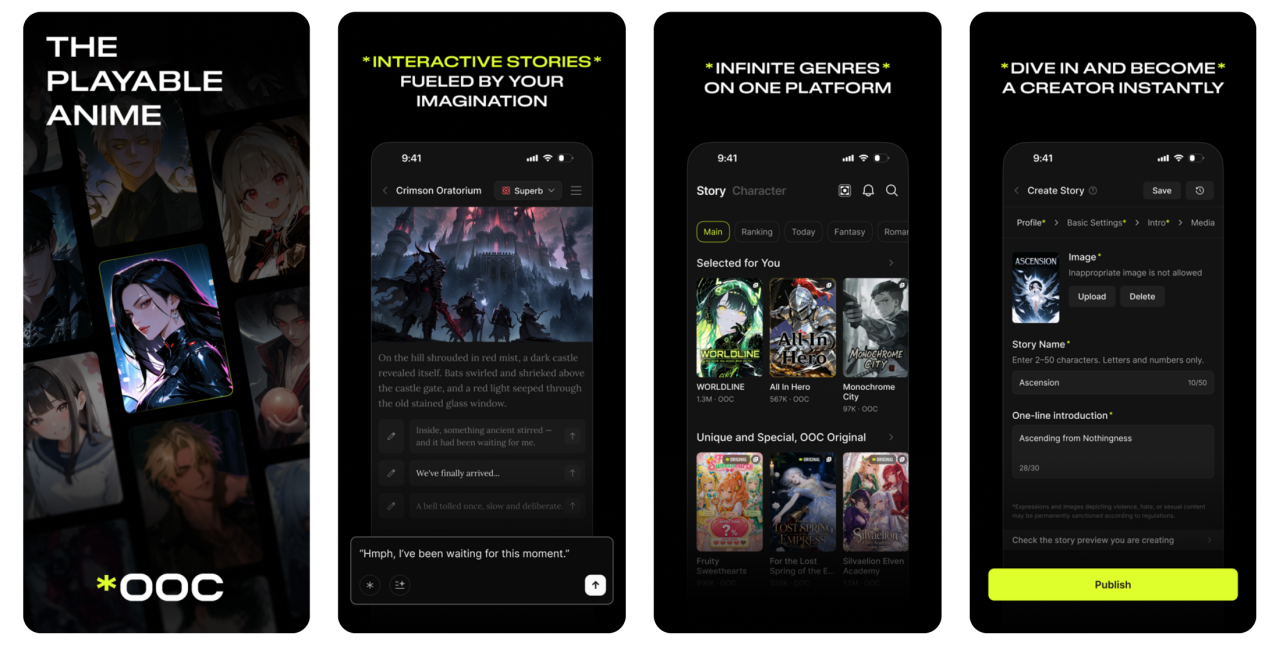
Koji: So users no longer have to keep coming up with topics?
Xiaoning: Right. And the interaction isn't just back-and-forth chatting — it adds gamified design like nurturing and stat growth. Many different stories can happen within the same worldview.
It's a bit like reading a novel. A good novel's worldview matters because it opens up your imagination and makes you wonder what else this world holds.
Koji: What kind of content do people enjoy most in OOC right now?
Xiaoning: Haven't you tried it yourself? What did you feel?
Koji: I entered a magic academy — superpowered boys and girls dating on campus. I played one of them and even made myself a guardian cat.
What I found interesting: thanks to improvements in long-context agent capabilities, it remembers a lot of context and responds fast enough. I said the cat would give me some superpowers, and later when I met a new character, his eyes flashed with a light only cats could recognize.
Still, a magic campus is fairly close to what I expected. Have you noticed new content motifs emerging?
Xiaoning: It's all over the place right now; I personally prefer sci-fi. Which world is the hottest doesn't matter that much, I think; the key is having enough choice — you can enter a magic academy or a completely different world.
Qisi: I'd describe the experience OOC provides as “a short drama in text form”. One thing especially worth borrowing is how quickly you can enter the situation.
It's not as simple as dropping in a character and giving a one-line opener; through great opening design, within ten seconds users know where they stand and what their initial motive is. If the story doesn't grab you, you swipe it away and pick another.
From a design standpoint, I really like this smoothness of entering the situation.
Pay first for a good experience?
Koji: Beyond worldview and interaction, why does this generation of products like OOC also look different commercially?
Xiaoning: Model intelligence has improved fast this year, but we have to look at it together with the business model.
Previous-generation products tended to meet two kinds of users. One kind already knows AI well and even builds their own experiences with “the Tavern” (SillyTavern)[9]. With a good model plus world books, they can do much themselves, so the platform's added value isn't big enough.
The other kind finds AI chat novel and is willing to try it for free. Many apps use that funnel: attract users free first, then gradually convert a portion to paying.
But if you're a PM providing chat to a huge base of free users, which model would you choose? Usually only a cheap one, or the inference cost is unsustainable. Now add images and video and the cost pressure grows.
That easily forms a loop: to lose less money you cap model capability; with worse experience, users are even less willing to pay.
Koji: So OOC's choice is to charge earlier?
Xiaoning: Right. From the start it wants to capture people who already understand this kind of experience and are willing to pay. You may hit a paywall after only a few exchanges.
Koji: My experience was the same. It's like reverse filtering: if you only want to play free, it detects that up front and won't serve you; it filters for people willing to pay and then moves forward with them.
Xiaoning: The upside is it can use a better model and deliver a better experience. It's a different monetization choice.
Products that have accumulated a huge free user base will find it very hard to turn onto this path. The user scale they once won can become a burden in the transition.
Koji: Does a model like OOC have a chance in China?
Xiaoning: If it's a direct copy, I think it's hard right now. Content compliance and the capability of domestically available models are both factors to consider; China may need a different model.
But I know many domestic teams are going overseas. Chinese teams have a lot of experience in fine-grained user acquisition and operations, so more products may be built abroad.
Koji: Is it that products like OOC may not have very high DAU, but per-user payments are relatively high?
Xiaoning: Public data is scarce. From what I've seen, judged by traditional internet product standards, their day-1 retention may not look great, but long-term retention can be okay, and monthly revenue per user comes out a bit higher than you'd expect.
Still, they face a new question: have they already reached most of the users who love this content, get hooked easily, and are willing to pay?
To go further, they may need recognizable IP or breakout hits, like short dramas. We've talked for a long time, but someone who hasn't played may still think: it's just text chat, how fun can it be? It takes truly breakout content to get more people willing to come in.
Koji: Qisi, would you play such a product long-term?
Qisi: I really like some of its design choices, but I find it hard to play long-term myself. That may just be personal preference.
Our team of a dozen or so, including part-timers and interns, has maybe one or two people playing otome games, but nobody heavily uses companion software. That doesn't mean companionship has no demand — it means many people still aren't covered by this category.
Everyone knows companionship can create strong stickiness, but it isn't everything. Indie games value strong differentiation, which follows a different logic from products that try to serve as many people as possible from day one.
Hiding real-time generation
Koji: Vito, when you analyzed OOC, what did you see?
Vito: Its marketing is excellent. OOC is originally an in-group term (Out of Character), meaning a character's behavior goes beyond its original setting. Using it as a name makes people familiar with OC and character creation instantly feel this product was made for them.
Its user filtering, design style and marketing are all connected. Products like Tipsy[10], Emochi[11], Korea's zeta[12] and OOC[2] actually look quite similar; creating differentiation and then finding a user base isn't easy.
But I think the biggest problem in this track is: not many people have that much energy to put into input.

Koji: When you say “input”, do you mean creating worldviews and scripts?
Vito: Whatever the input, it's a hassle. After work, I might have the energy to watch a short drama or a variety show, but not necessarily to open a competitive game for a tense showdown. They demand different levels of attention and energy.
And the users these OOC-type products target are people who already love stories and content. I can read novels, watch TV or anime — I don't have to play a game that requires me to create. From that angle, making users create things themselves is quite “anti-human-nature”.
Koji: So what different choices did you make?
Vito: What we're building at MobAI shares similarities with OOC, but the biggest difference is we don't encourage real-time generation — we even hide that entry point.
We'd rather users first experience prepared content and storylines. The content formats are very mixed: text-and-image shows, video, mini-games and voice all sit together.
Beyond that, we also want users to build relationships inside. We argued internally for a long time over whether to add chat. My co-founder thinks an on-demand AI virtual companion is just too boring.
Koji: So what does an AI character that isn't on-demand look like?
Vito: We referenced Bubble[13], used by K-pop fans. It gives fans an experience of chatting with their idols.
We're making a romance game, and the pursuable male characters have their own in-game social accounts. You may add them and become friends, but they have their own daily schedules.
Sometimes you open the app and find him asleep. No matter how many messages you send, he won't reply. He also actively shares his life and runs his social feed — more like an idol with a life of his own.
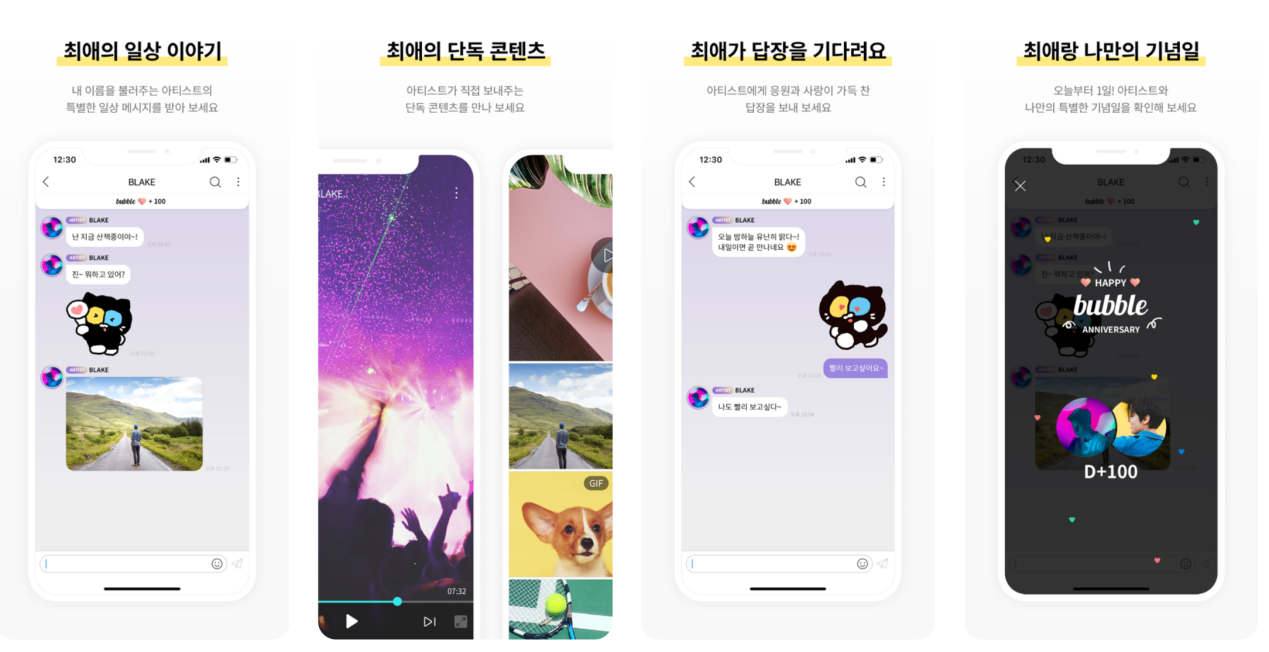
Koji: Is all this content self-produced, or will you open it up to creators?
Vito: Most of the stories already live in our product are self-made. We've also started bringing in overseas creators to use our content creation tools. They file tons of bugs, and their timezone is exactly flipped from ours — haha, that's why I look so sleepy right now: it's roughly the time they wake up and start filing bugs.
Building the whole content-production pipeline matters a lot to us. In the process, we've really felt how much AI capabilities have changed this year.
Koji: Since AI generation is getting stronger, why hide real-time generation instead?
Vito: We built a real-time generation product before and saw its limits. Very polished content requires design; we don't yet believe that can be handed entirely to AI for real-time generation.
We place more weight on “generative recommendation”: after a user plays for a while, the system learns what they may like, spends one or two hours in the background generating better-quality content, then pushes it to them.
Is creation anti-human-nature, or a human instinct?
Koji: Qisi, your game Book of a Thousand Nights 1001 happens to make players tell stories themselves. First, how does it work?
Qisi: In One Thousand and One Nights, the heroine must tell the king stories. If she tells them well, the king keeps her alive to the next day.
In our game, you also tell stories to an AI king, but you have a special ability: you can take things out of the stories. You and the king take turns building the story, and if his reply contains something you need — a sword, a blade, a shield — you can take it down and later use it to beat up the king.
What we really want to explore: is there a more accessible narrative framework that lets people participate naturally?
So when Vito said creation is anti-human-nature just now, my view is the opposite: creation is the most human, most fundamentally human part of us.
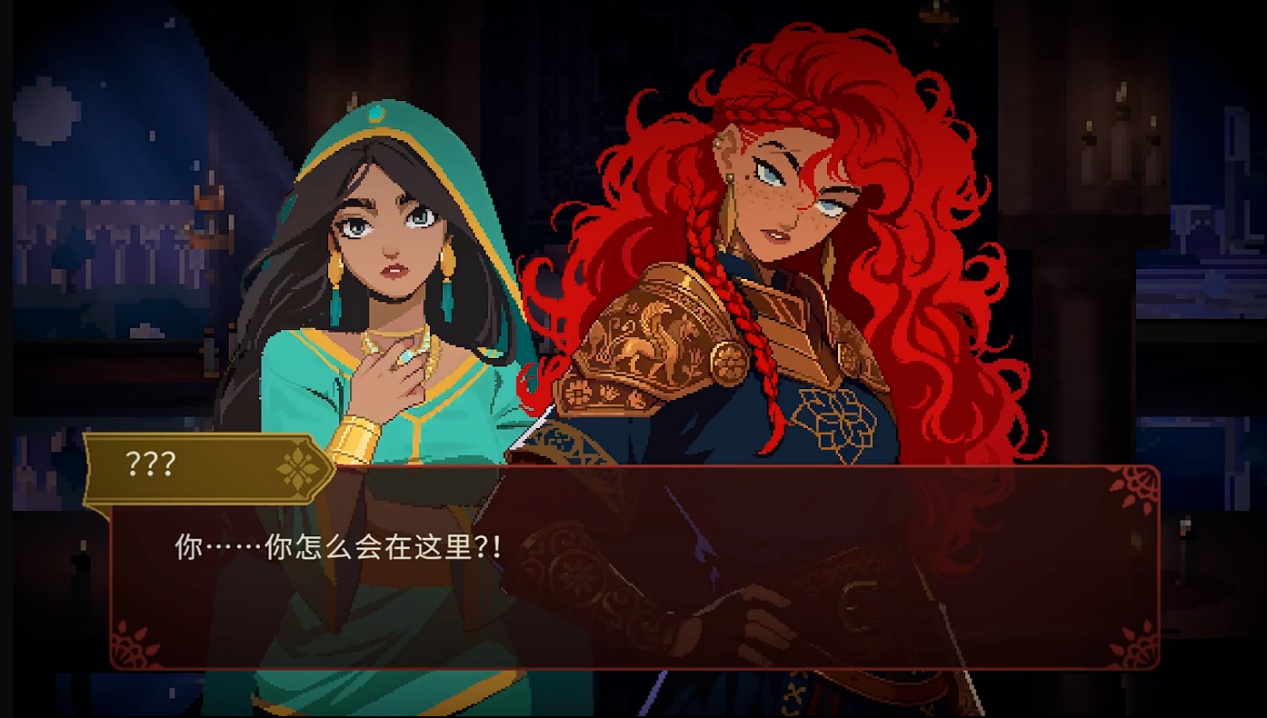
Book of a Thousand Nights 1001 | Image source: the game's Xiaohongshu account
Koji: How so?
Qisi: People have always had a desire to express and leave their mark. As a kid, you might have told stories to friends; even if not, you've told gossip to coworkers, right? Much of what people hear and watch is stories anyway.
When we say more content can be provided, the platform or tool provider naturally benefits. But as a player, I also ask: if everyone becomes a consumer, who tells the stories?
Some might say it comes down to who has more compute, or who can hire more writers. What we want to offer is another approach: can anyone naturally become a storyteller while playing? Without first making them distinguish whether they're playing or creating.
Koji: Real life is actually like this. We live our days while also creating stories others can hear and see.
Qisi: Right, you just don't usually call that “creation”. If I said outright “come, tell me a story”, you'd probably say you can't — you're not a writer.
Through games, we're helping people remember they have this ability, or giving them a situation to start from.
Koji: Is that a vision, or something you've already seen in players?
Qisi: If you single out our game's requirement — “you need to write a story” — doesn't it sound scary?
Koji: Yes. The moment I heard it, I thought: I have to tell the king stories to avoid death, and pay to do it?
Qisi: We have a free demo, so it's okay (laughs). But people who actually play don't think that way.
They tell me they started just wanting to tease the king or test whether they could make him “jailbreak”. After getting scolded a couple of times, they began telling stories. While playing, they didn't feel that much pressure.
Koji: So the key is turning “I want to write a story” into “I want to complete a goal in the game”?
Qisi: Games build a very special value framework. Socializing with people and writing essays carry pressure in real life, but inside a game, it's a different situation.
Most people don't come for “telling stories”. They think: I'm the heroine, I'm going to fight the king to the death — this game looks unique, let me try it.
Koji: How have recent advances in AI models concretely changed your experience?
Qisi: This project started as my PhD topic and later became a startup. We've always had many ideas, but implementing them used to be costly.
For example, it used to be one line from the player, one line from the king. We wanted characters in the story to step onto the stage and act it out themselves. Now Jev[14] can make decisions faster: the moment a player finishes a line, characters on stage can react instantly with shock, fear or joy.
Adding such a layer used to mean another layer of API calls and costs; the conditions are different now.
Koji: Has your internal development efficiency improved?
Qisi: Big changes too. I think Claude Opus 5.5[15] and Astra[16] have helped a lot. Our iteration pace went from once every few weeks to once a day, even twice a day.
I come from an art background with no development experience. Before, there was a long gap between a designer producing a concept and a gameplay design, and actually building it in a game engine.
Games aren't just code; they involve 3D, collision and all kinds of engine internals, which used to be hard to finish directly through vibe coding.
Now we use AI coding in the game, and the experience increasingly feels like writing a small web demo. Roughly speaking, working only in my evenings, two weeks of my output may equal what a programmer used to do full-time in two months.
Don't chase real-time for real-time's sake
Koji: Finally, please each share: recently, what new signals in AI and interactive content are worth watching?
Xiaoning: I actually feel these months are when everyone is heads-down working. After new models came out, many producers found methods and possibilities changing fast, so they all went back to building.
I'm looking forward to answering this question again in two or three months.
Koji: Will people be discussing real-time or high-speed video generation models like Vidu S1/S2[17], Vivix[18], and the fal fine-tuned MiniMax H3 Max[19]?
Xiaoning: I think “real-time” is being demystified. I've made games and sandbox games before, and I've long had many fantasies about real-time generation and real-time interaction.
But first, today's “real-time” is still far from the response speed games truly need.
Second, technology is changing so fast — isn't it more important to ship some content first? Real-time for real-time's sake sounds like technical language, not game language.
Koji: Rather than chasing real-time, which concrete changes do you care about more now?
Xiaoning: One is 3D. Not just whether AI can generate a model, but whether its ability in decimation, topology and mesh repair can enter a pipeline that scales to production.
In game companies, 3D used to be a major moat between small and large studios. Changes in this capability are well worth watching.
Another is interaction design — how to lower the user's burden. Chatting is actually effortful: the more effort you put in, the higher the payoff you expect. Short dramas and games differ in what you invest, so the stimulation you expect differs too.
I think there will be many more attempts at making participation easier.
Qisi: I'd like to build on that. More investment, higher expectations — it sounds like a difficulty. But from another angle, if the return after investing is high enough and surprising enough, it could become a new kind of gameplay.
For example, there's a recent dressmaking game, Dream Tailoring[20]. You really cut fabric and make dresses — the task itself isn't easy.
It has no direct relation to AI, but I follow such games because I don't just look at what people play — I also look at what a game lets people create.
There was also a hide-and-seek game, MECCHA CHAMELEON[21], that lets players draw on characters. Drawing and dressmaking look completely different, but both turn creation that once seemed hard into an experience players willingly join.
Koji: So creation itself can be something we're willing to consume?
Qisi: What I want to ask: when content becomes cheap and easy to produce, does getting people to create have value in itself?
I don't have a definitive answer right now, but these games make me feel this question is worth continuing to ask.
Koji: I think creation itself can be consumed. Like people paying for pottery classes — nobody questions: I'm the one creating with my own hands, why pay?
Qisi: Right — isn't that interesting?
Koji: Vito, what change has struck you most recently?
Vito: What struck me most recently is Claude Opus 5.5[15]. We have a lot of video production needs and are building our own marketing video pipeline. With the new model, some old limitations can be dropped.
We initially thought the barrier to video generation was the video model. We later found many problems still have to be solved by the workflow layer around it.
We used to judge video models by how many seconds they generate at once and whether they support reference images; now we look at whether they're real-time and streaming-capable. But more than these metrics, what matters is their understanding of content.
Can it understand editing and what makes an expression flow? When models get stronger at this, the final output will clearly differ.
References
[1] Character.AI bankruptcy restructuring: https://blog.character.ai/an-update-on-character-ai/
[2] OOC: https://ooc.ai/
[3] Lunaverse Stories: https://playlunaverse.com/
[4] Qisi: https://fakecheese.me/About-me
[5] Book of a Thousand Nights 1001: https://store.steampowered.com/app/2542850/1001/?l=schinese
[6] 405 Game Bureau: https://www.xiaoyuzhoufm.com/podcast/682b082a7a18085b07730038
[7] Character.AI: http://character.ai/
[8] ChatGPT: https://chatgpt.com/
[9] “The Tavern” (SillyTavern): https://sillytavern.app/
[10] Tipsy: https://tipsy.chat/
[11] Emochi: https://emochi.com/
[12] zeta: https://zeta-ai.io/
[13] Bubble: https://dear-u.co/pages/business_bubble.php
[14] Jev: https://typesafe.ai/blog/introducing-system-one-models-and-jev
[15] Claude Opus 5.5: https://www.anthropic.com/claude-opus-5-5
[16] Astra: https://openai.com/index/gpt-6-astra/
[17] Vidu S1/S2: https://go.vidu.com/vidu-stream
[18] Vivix: https://vivix.ai/
[19] MiniMax H3 Max: https://fal.ai/minimax-h3-max
[20] Dream Tailoring (Zhen Ying Cai Meng): https://store.steampowered.com/app/4019220/?l=schinese
[21] MECCHA CHAMELEON: https://store.steampowered.com/app/4704690/MECCHA_CHAMELEON/?l=schinese

A "Watershed" for Two Tech Giants' Ad Businesses: AI Empowers Meta, but Becomes a "Straightjacket" for Google Search
AI is helping Meta improve ad delivery efficiency and expand monetization opportunities, while it may be eroding the traditional search-advertising model on which Google depends.

Finally, a Chinese Team Turns AI Language Learning into a Million-Dollar Monthly Revenue
Midoo, an AI language learning app built by a Chinese team, pushed its monthly revenue close to $1 million in September. Its first wave of growth came from influencer marketing and AI-personalized courses, but can one product really serve everyone?

96 Minutes a Day, 8x Growth in 9 Months: ByteDance's Overseas Short-Drama Apps Approach the 'Hongguo Threshold'
Is ByteDance about to replicate Hongguo's growth path overseas once again?