Original title: Yiwu's crispy squishies go viral overseas—TikTok stress-relief toys welcome a new star
By: TT123 Cross-Border E-Commerce
Source: TT123 Cross-Border E-Commerce

Cover image source | pexels
Yiwu's squishies are trending again! This time, the breakout hit is the "third generation" of the squishy family—crispy squishies.
Squeeze once, and the shell cracks with a crisp "crunch"; squeeze a few more times, and the thin, brittle outer layer shatters piece by piece. The contrast of a hard exterior and soft interior delivers an irresistible stress-relief experience.
Recently, crispy squishy toys have firmly captured squishy enthusiasts. With their unique texture, crisp cracking sound, and the ever-changing visual effects during squeezing, they have quickly become a hot topic on social platforms.
On Xiaohongshu, searching "#脆皮捏捏" (crispy squishy), related topics have accumulated over 410 million views. From snacks and desserts like doughnuts, bread, ice cream and potato chips, to everyday items like eggs, milk tea and soap, crispy squishy designs keep refreshing—familiar objects are turned into stress-relief toys you can crush with your own hands.
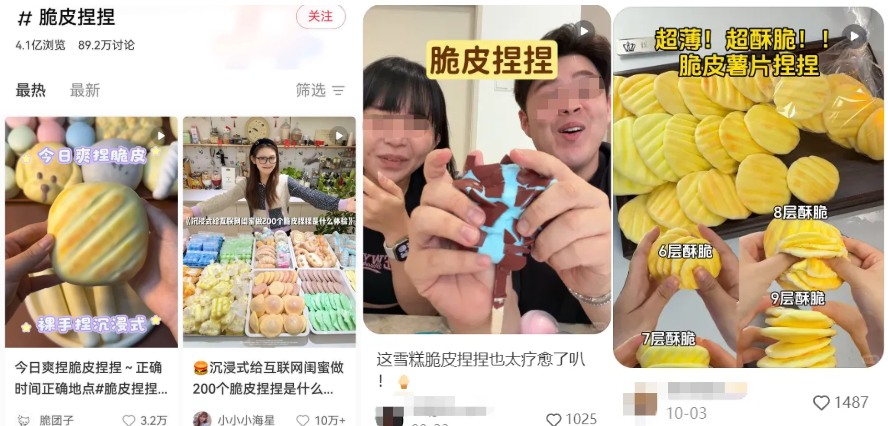
Image source: Screenshot from Xiaohongshu
And this craze is now spreading from domestic social platforms to overseas markets.
Yiwu's "crispy squishies" go viral overseas
My research found that, per recent Exolyt platform data, topics related to #CrunchySquishy on TikTok have accumulated over 481 million impressions, with no shortage of individual videos surpassing one million or even tens of millions of views.
Unlike traditional squishies that emphasize a soft, bouncy feel, the biggest feature of crispy squishies lies in that thin "crispy shell" on the outside.
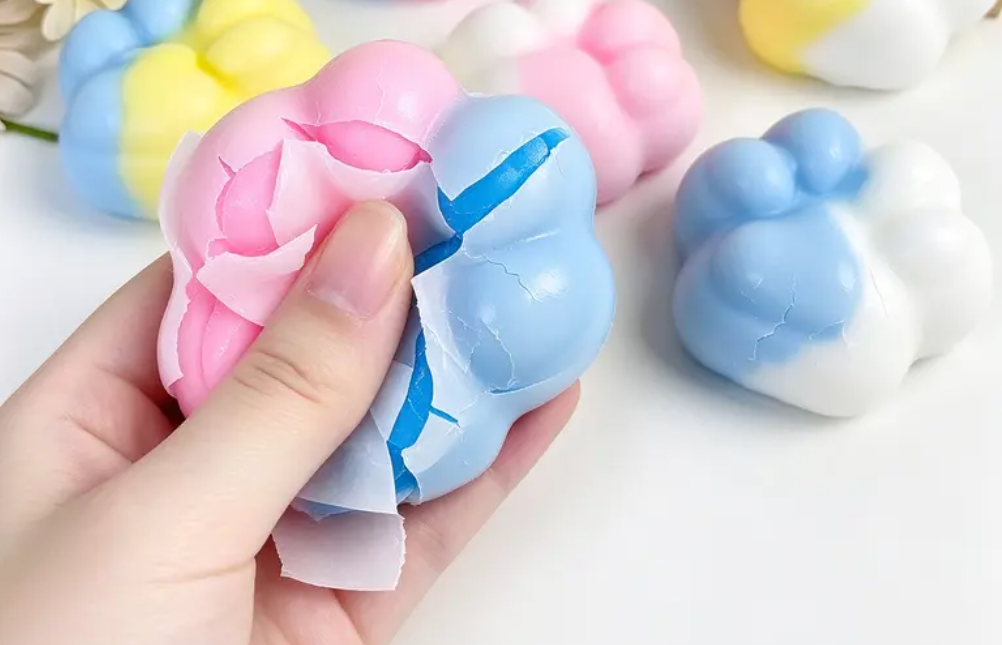
Image source: Screenshot from TikTok Shop
This "crispy shell" is usually made from waxy or plaster-type materials, while the inside is filled with blended soft materials such as clay or slow-rebound putty, forming a unique hard-outside-soft-inside structure. When users squeeze the product, the shell cracks open with a crisp "crunch," combined with the visual effect of the shell shattering—delivering a stress-relief experience that blends sound, touch and sight.
Looking at related videos on TikTok, most adopt an immersive ASMR (Autonomous Sensory Meridian Response) filming approach. TikTok creators capture the crisp sound of squeezing the toy up close, paired with the shell gradually cracking and fragments peeling off layer by layer, directly presenting the product's unique tactile feel and sound effects.
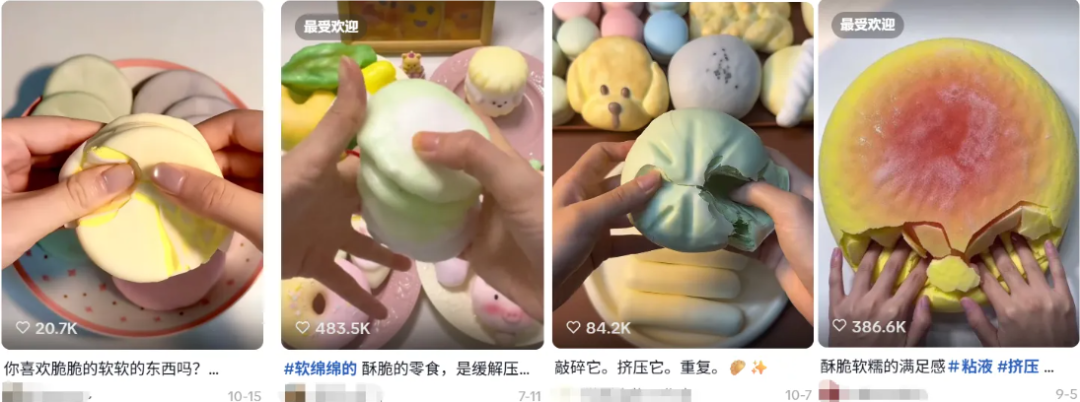
Image source: TikTok
With no narration at all, just a few squeezes are enough to give viewers a sensory "brain-gasm." In the comment sections of these videos, many overseas users exclaim: it's way too addictive!
"It's one of the best ASMR I've ever heard"
"This is so satisfying"
"Oh my god, that's amazing!"
"I absolutely love it! What brand of wax do you use?"
"Where can I buy this?"
From marveling at the stress-relief satisfaction of crispy squishies to asking about materials and purchase channels, overseas comments not only reflect affection for the product experience but also reveal potential consumer interest.
The virality across the web is now also spreading to cross-border markets, drawing overseas sellers' attention to crispy squishies.
Overseas orders for crispy squishies grow
Recently, China Yiwu Net reported that European and American orders at Yiwu-related factories have risen markedly. One factory head said foreign trade accounts for over 95% of its business, with strong order demand from June to August this year, and factories are still racing to fill crispy squishy orders. Compared with traditional PU squishies, the crispy versions involve more complex production processes—including hand-applied wax and drying steps—with daily output of roughly 10,000 to 20,000 units, meaning relatively limited capacity.
In addition, my research found that related products are currently for sale in both the U.S. and U.K. markets on TikTok Shop, with some items only listed in early October this year, showing that sellers have recently taken notice of this niche. Despite the short listing time, some products have already begun accumulating sales as market momentum climbs.
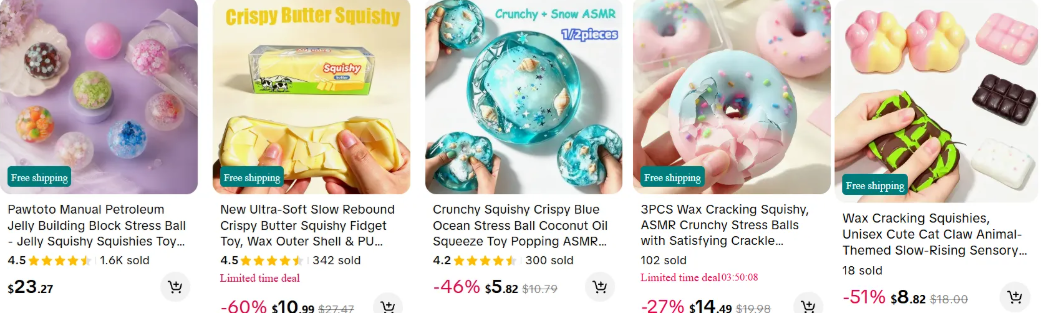
Image source: TikTok Shop
On Amazon U.S., searching "Wax Crispy Squishy" also turns up multiple crispy squishy toys in various designs, mostly priced between $7 and $20, with no shortage of products from Yiwu supply chains among them.
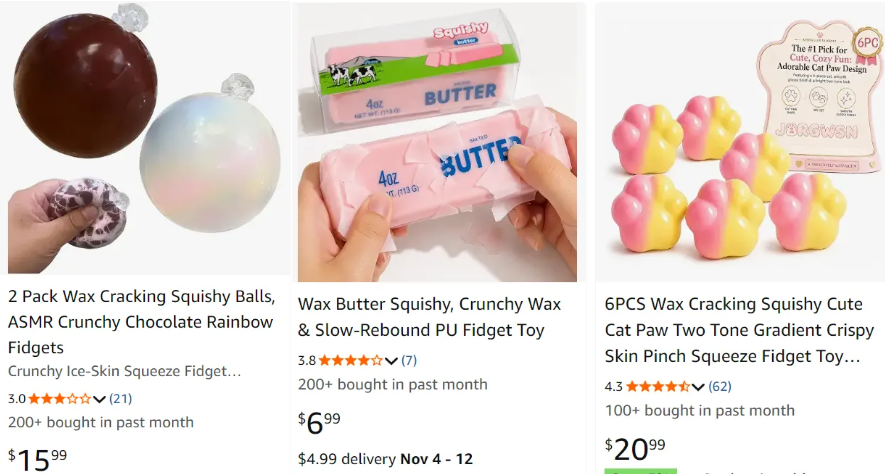
Image source: Amazon
On the 1688 platform, some Yiwu crispy squishy products sell for around 3 yuan for a pack of 12, reflecting a low sourcing threshold.
It is worth noting that, unlike traditional slow-rebound toys that can be kneaded and restored again and again, a crispy squishy's shell, once broken, usually cannot be restored—the product then shifts from a "crispy stress-relief toy" into an ordinary soft squishy. Hence it also carries a "single-use" experience attribute.
To further enrich the play patterns, different variant designs have appeared on the market. For example, some sellers wrap waxy objects or other plastic beads inside a clear coconut-oil squishy; when users squeeze, the inner objects crack or deform, preserving a soft feel while adding richer visual changes and stress-relief experience.
From slow-rebound to crispy-cracking, and now "filled" squishies, squishy stress-relief toys keep upgrading. Facing this "handheld emotional stress-relief business," how can cross-border sellers uncover new consumer needs and turn fleeting social buzz into sustained sales opportunities?
The squishy business keeps "upgrading"
For cross-border sellers, the rise of Yiwu's crispy squishies is not just another toy sub-category heating up—it also reflects that consumer demand for stress-relief experiences is constantly evolving.
In the past, squishies competed mainly on softness, rebound speed, clay material and appearance; today, crisp cracking sounds, the visual change of the shell breaking, and the sensory satisfaction during squeezing have all become new directions for product innovation.
How to keep doing this "handheld emotional stress-relief business" well hinges on continuously mining new needs in play patterns and sensory experiences. One direction worth watching is extending products from pure stress-relief toys into creative experiences that people can make, transform and share with their own hands.
On TikTok, DIY squishy content also has strong viral potential.
According to Exolyt platform data, #squishymaker topics have accumulated over 1.8 billion views on TikTok. DIY stress-ball crafting content is especially active: creators showcase the making process—material filling, shape design, decoration—gradually turning ordinary materials into unique personalized squishies, making the crafting process itself a stress-relief experience.
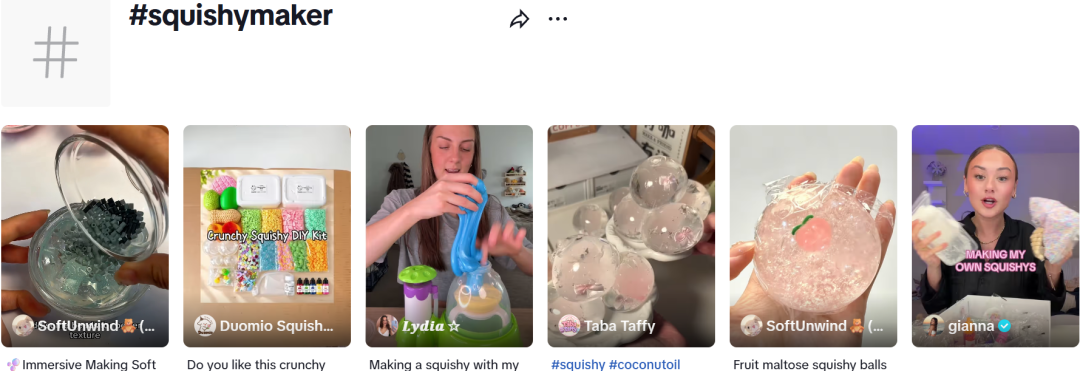
Image source: TikTok
Meanwhile, a Yiwu-origin cross-border store on TikTok Shop U.S. has also produced a hit DIY squishy stress-ball slime kit. Data shows that within just 3 months of launching in the U.S. market, the product accumulated 29,700 orders, with GMV exceeding $833,300—about 5.55 million yuan—demonstrating the market potential of self-made squishy toys.
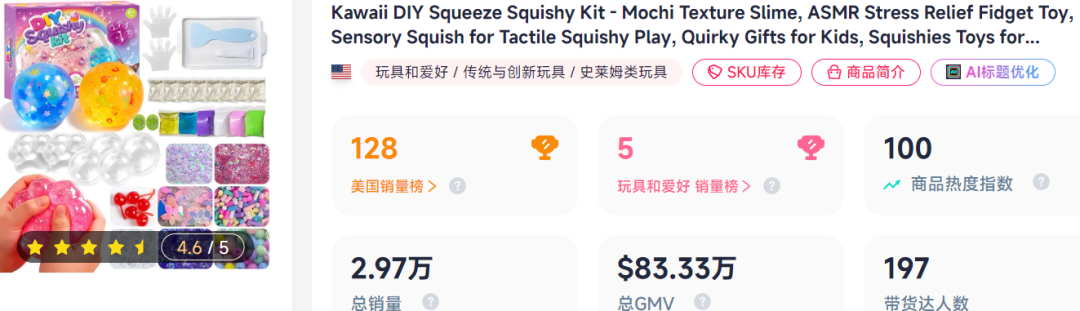
From selling toys to selling participation experiences, the squishy business has changed again.
This also offers cross-border sellers a new angle: beyond selling finished products, they can develop DIY material kits, fillings of different textures, molds and decorative accessories around "make it yourself," extending consumers from buying toys to joining in the making. At the same time, sellers can showcase play patterns through tutorial videos, spark users' creative desire, and further expand sales of accessories and combo sets.
A reminder: in the squishy track, the more products chase novel textures and play patterns, the more sellers must not overlook material safety and product compliance.
Recently, recalls, warnings and delistings of squishies and related sensory toys have appeared one after another in European and American markets.
For instance, the U.S. Consumer Product Safety Commission issued multiple squishy toy recall notices in September this year, involving products containing water-expanding beads, with main risks including accidental ingestion, choking and intestinal blockage; the U.K. also released a safety report in August on a liquid-filled, glitter-containing squeeze toy, noting risks of microbial contamination and small-part detachment.
Safety is no small matter—a seemingly insignificant little bead can become the crux of product compliance and business risk. Cross-border sellers in related fields should learn from these cautionary tales, proactively screen potential risks, and avoid product-safety issues harming store operations and brand reputation.
Final thoughts
From an unremarkable fingertip stress-relief toy to today's ever-innovating "squishy industry," the evolution of this category mirrors the vast and varied landscape of cross-border e-commerce.
The seemingly simple Yiwu squishies keep uncovering new consumer needs. It also shows that cross-border business is not only about big categories, big brands and high-price-point products. A small toy, a new play pattern, even a subtle experiential change—any of these can become the entry point into overseas markets.