Original title: Treating Floss Like a Beauty Brand: How COCOLAB Grew Revenue 183% in Three Years | WaveGlocal Lab
Author: Addison
Note: This is a column article published on Baijing by WaveGlocal. For republishing or reuse, please contact WaveGlocal for authorization.
Cover image source | pexels
Walk into almost any American dental clinic and the dentist will likely recommend flossing to clean between your teeth. But the brand they recommend isn’t Oral-B or Colgate — it’s a name you may not recognize.
Open COCOLAB’s website and the surprise continues: you almost never see the serious, clinical style of a hygiene brand. Instead there are strawberry, coconut and litchi flavored products, Instagram-worthy packaging, and a festive vibe for every holiday.
Yet this floss brand that doesn’t quite look like “floss” has actually built a real business. In 2025, COCOLAB reported sales growing about 5x over the past five years, with nearly two-thirds of sales coming from repeat customers; according to third-party commercial data platforms, its three-year revenue growth hit 183%.
Backed by dental professionals’ endorsement, it turned floss into a lifestyle item with influencer appeal, getting consumers to willingly pay a premium. Today we break down COCOLAB, the American floss brand with an unconventional look.
From dental clinics to Hollywood, the birth of an “extraordinary” box of floss
In 2016, the team of Hollywood actress Gwyneth Paltrow received a special email. The sender was American entrepreneur Catherine Cu, who hoped Paltrow would try a box of dental floss she had created.
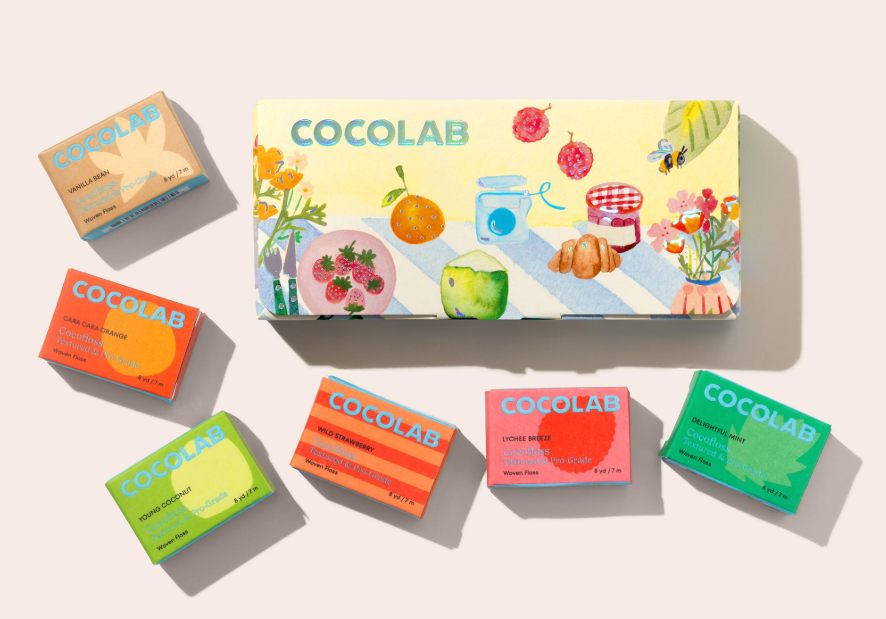
But this wasn’t the ordinary floss you find in supermarkets. Made of polyester fiber with fruit scents like strawberry and coconut, packaged as brightly as a candy brand, it cost $10 a box — nearly 3x the price of floss on the market at the time.
Days later, Catherine, far away in California, got a reply — Paltrow herself had tried the floss and decided to stock it on the website of her lifestyle brand Goop. The floss later became one of the brand’s most iconic products.
The floss favored by many American celebrities comes from COCOLAB; Catherine, who emailed Paltrow, is one of its co-founders. In 2015, Catherine and her dentist sister Chrystle teamed up to build the brand.
The most annoying problem Chrystle faced in her dental clinic was patients refusing to floss. Some would rather spend 20 minutes on a celebrity-endorsed coconut oil pulling routine than a single minute on floss. The sisters saw this as an opportunity waiting to be unlocked.
Chrystle realized this oral-care pain point might hide a business: if consumers were willing to follow trends and try novel health-care routines, why not make floss fun too?
So the dentist sister and the business-and-design-savvy sister joined forces and began developing this “interesting” floss.
Mixing scents and looks — can floss really be done this way?
To get consumers to love flossing, the floss itself had to be redesigned first.
Most ordinary floss on the market prioritizes smoothness, using nylon or PTFE materials made into fine filaments or flat ribbons that slip easily between teeth — but with a high usage threshold and poor user experience. So Cocofloss switched to polyester fiber, made it thicker and softer, and gave it a texture closer to a cleaning thread.
But to get consumers to willingly pay $10 for floss, cleaning effectiveness alone is clearly not enough. Regular floss is usually mint-flavored or flavorless, and as a medical-care product its packaging is mostly clean white or blue. Cocofloss, by contrast, went all in on looks.
First, flavors. Strawberry, coconut and mint are the basics, later joined by litchi, watermelon and more. The brand also launches holiday limited editions and gift boxes every year. On packaging, it went for a high-appeal route: transparent boxes with bright colors, designed to sit beautifully on a shelf or in a bathroom.
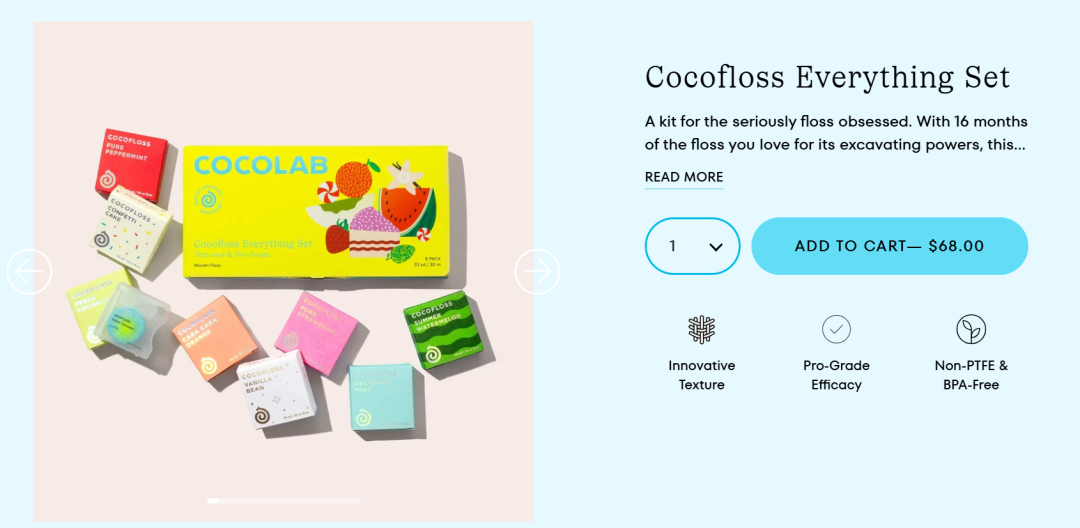
Cocofloss gift box
Consumers bought it. According to the founder’s 2024 public interview, Cocofloss has sold over 5 million boxes since its founding. By 2025, the brand reported sales growing about 5x over the past five years, with nearly two-thirds of sales from repeat customers.
After tasting success with floss, the sisters expanded the product line — launching toothbrushes in 2021, toothpaste in 2023, and formally renaming the brand from Cocofloss to COCOLAB in 2025 to extend the business across the oral-care space.
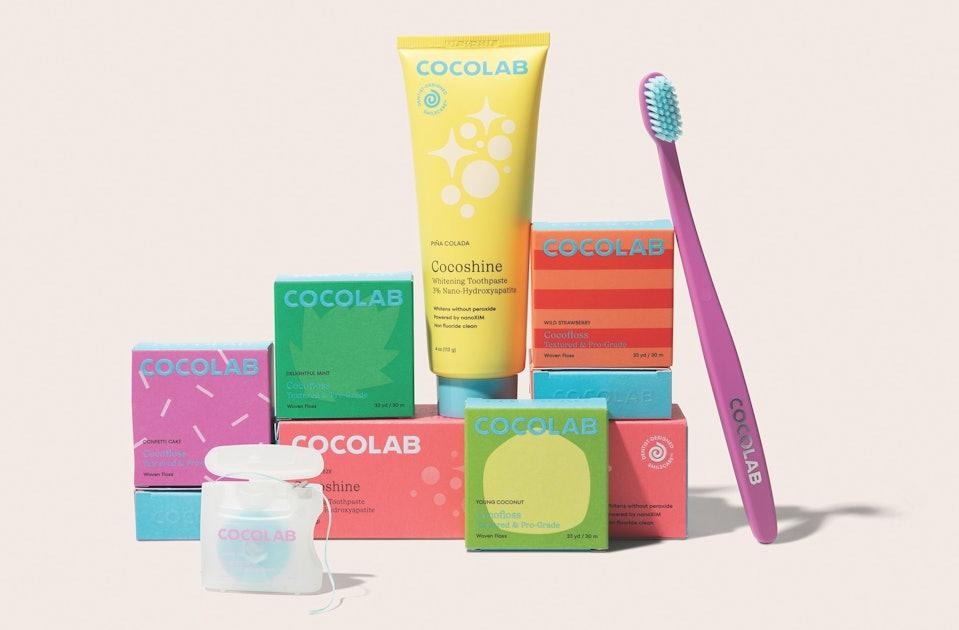
From a box of fruit-flavored floss to an oral-care brand with toothbrushes and toothpaste, COCOLAB used differentiated product experience and design-led packaging to turn unremarkable, low-engagement floss into a lifestyle item people are willing to pay a premium for.
Looks like a beauty product, but broke out through dentists
COCOLAB’s products look like a beauty brand, but the people who first opened the market for it were professionals — dentists.
Before Cocofloss was sent to Paltrow, the sisters first sent product samples to one dental clinic after another. Dentists and dental hygienists tried them, then recommended them to their patients; some professionals even shared them on Instagram.
This snowballing word-of-mouth marketing became a key driver of early growth. In a 2017 Fast Company report, Cocofloss had already earned about 7,000 user reviews on Sephora’s website.
This marketing approach carried into social media creator partnerships — COCOLAB’s partners are mostly professional dentists. For example, Dr. Linda Parra introduces COCOLAB products on TikTok, building trust through clinical authority.
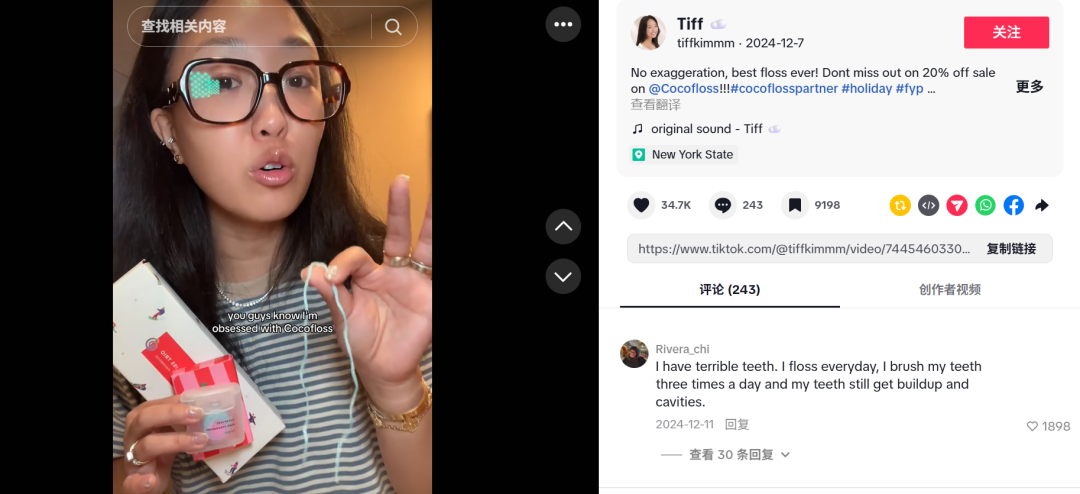
Attracting users to try with a unique product position, then dispelling doubts about effectiveness and safety through professional endorsement — along this path COCOLAB kept growing, earning a spot on the 2026 Inc. 5000 list.
COCOLAB doesn’t just treat dentists as KOLs — it has gradually turned them into an independent sales channel. The brand allows dentists to buy product samples and put them into daily care kits after patients’ dental cleanings, turning clinics into de facto distribution points.
On the mass consumer side, COCOLAB took a different route: packaging flossing as a lifestyle. Early on, the brand launched a campaign called #JetSetCocoFloss, encouraging consumers to photograph their floss on trips and travels.
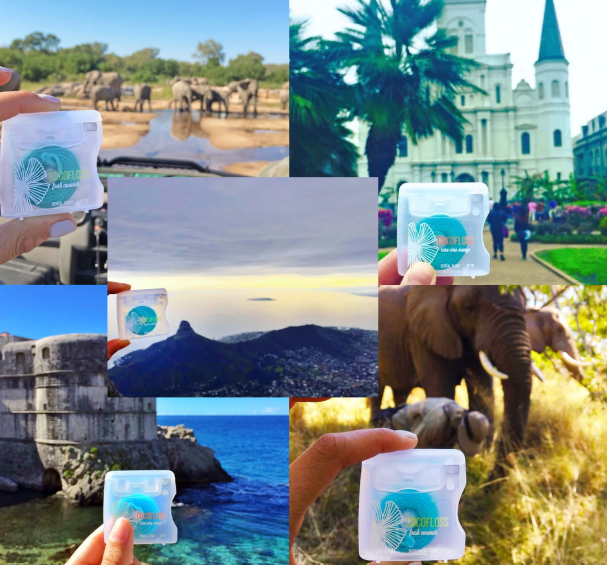
Some #JetSetCocoFloss photos
The campaign turned a box of floss that should hide in a bathroom drawer into the star of travel photos. Consumers willingly showed off and shared floss as part of daily life. This lifestyle positioning gave the brand more channel options, and it successively entered beauty retailers and beyond.
From professional dental clinics to beauty retailers and mass drugstore chains, COCOLAB gradually sold floss into more consumption scenarios. In 2025, the U.S. Chamber of Commerce reported the brand’s products covered about two-thirds of CVS stores.
A once-unremarkable box of floss thus went from dentists’ recommendation lists into the shopping lists of a much wider set of American consumers.
How else can low-price daily goods build a business?
Redesigning product experience and creating new reasons to buy — COCOLAB found its growth space, offering several lessons worth borrowing for going-global brands.
First, mature categories still hold innovation opportunities. Especially for daily goods with high usage frequency but low consumer attention, rather than stacking features, start from the overlooked usage experience to find new differentiation.
Second, professional trust is also a growth resource. COCOLAB built word-of-mouth through dentists early on, then gradually entered beauty and mass retail channels. For products with strong professional attributes, finding the people who truly influence purchase decisions sometimes matters more than chasing broad traffic.
But a premium doesn’t mean high prices forever. In 2025, COCOLAB planned to cut its toothpaste price from $22 to $15, hoping to leverage cost improvements from scaled production to reach a broader consumer base.
This means a brand that could rely on differentiated experience to attract premium-paying consumers early on will face price-competitiveness challenges once it enters mass retail channels and confronts broader audiences and traditional industry giants. Balancing market expansion with channel costs and profit margins is the test COCOLAB must face going forward.
But at least for now, COCOLAB proves that in a seemingly stagnant mature market, a tiny box of floss can still be turned into a new business.