Original title: An Overlooked Bulky Category Turned into a $480M-a-Year Business by Two Ordinary People
Author: Yena
Source: Tuke Going Global
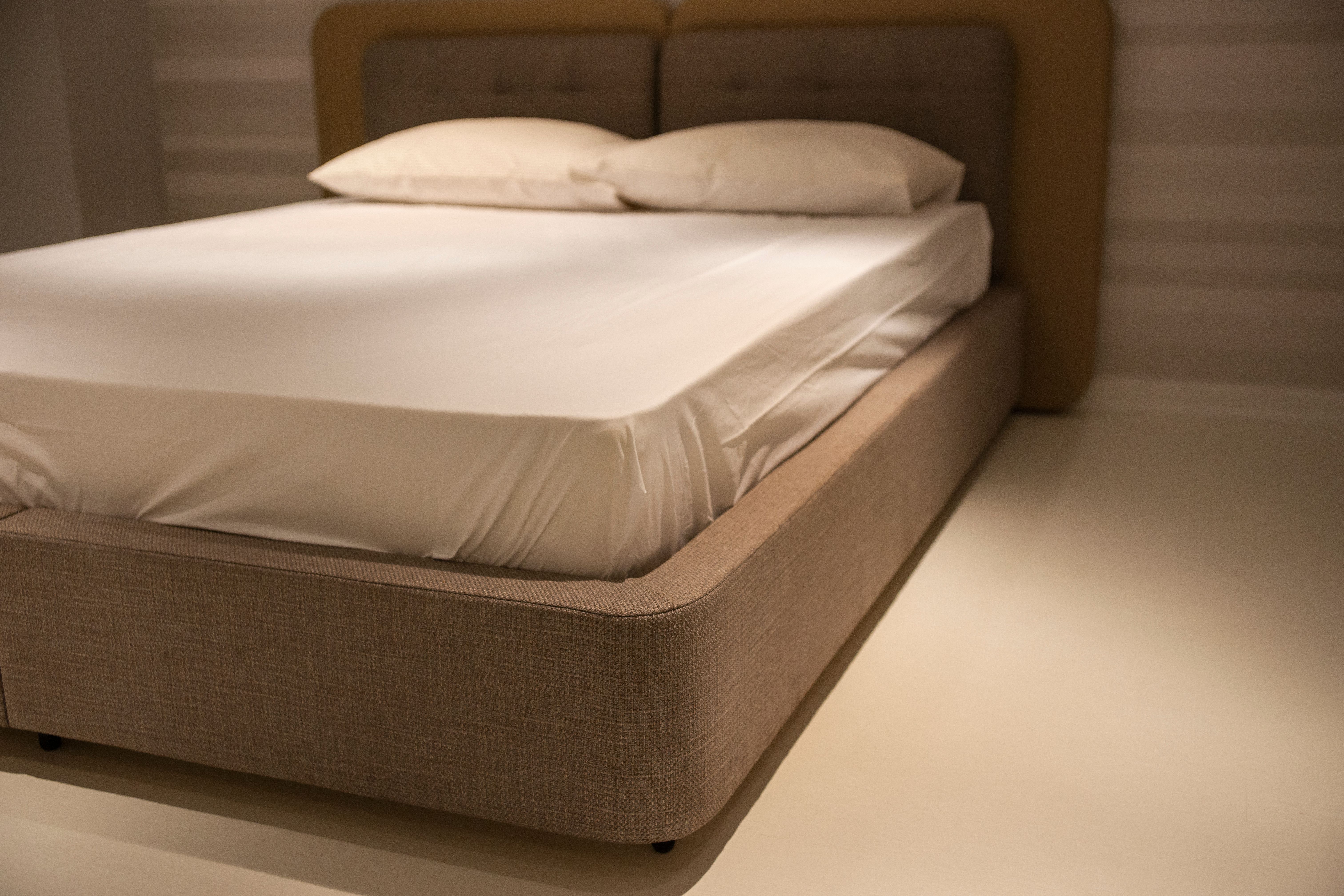
Cover image source | pexels
Over the years working with cross-border e-commerce, I have seen too many brands interpret going global as simply burning money on traffic, as if the harder you spend on budget, the bigger the market.
But the players that truly break through are often not the ones most willing to spend, but the ones who spend where it matters most.
Today I want to talk about Emma Mattress, a case worth unpacking. Using a closed-loop strategy, it built a business with annual revenue of over RMB 4.8 billion without relying on hard-ad bombardment.
Three killer moves that won over consumers
The story of Emma Mattress started simply.
The two founders were originally ordinary consumers who stepped on many landmines when buying mattresses offline—inflated prices, complex selection processes, troublesome large-item delivery, and high barriers to returns or exchanges if the trial sleep was unsatisfactory.
The bad experience made them see an industry opportunity and sparked a bold idea: selling mattresses, a low-frequency bulky category, online.
The idea was not well received at the time. After all, a mattress cannot be seen or touched, and online sales naturally carry a trust gap.
But the two founders did not back down; instead, they came up with three ways to crack the problem:
Method one: use a roll-pack compressed box-in-a-box design to greatly reduce the mattress's size, solving the bulky delivery problem;
Method two: launch a 100-night free trial sleep, giving consumers ample in-home experience time—any dissatisfaction within 100 days qualifies for return or exchange;
Method three: offer a 10-year warranty, using a long-term commitment to ease concerns about product durability.
In this way, the layers of concern were resolved one by one. Selling mattresses online was half done.
The online DTC model can work
In 2015, the two founders officially launched the Emma Mattress brand in Cologne, Germany, starting with a pure online DTC model.
Over the following years, in addition to building in-house sleep scientist and materials engineering teams, developing proprietary foam, temperature control, and support structures, and continuously refining the mattress sleep experience, they also launched global expansion, radiating outward from core markets such as Germany and the UK.
By 2021, Emma Mattress's annual mattress sales exceeded 1.5 million units.
According to officially released financial results, the brand achieved revenue of $733 million (equivalent to over RMB 4.89 billion) that year, with a growth rate of 59%, validating its online business model in the market.
Image source: Emma Mattress financial report
All roads lead to revenue
Although Emma Mattress's going-global logic was to first penetrate the market with its own independent website, continuously accumulating reputation, content, and data.
This is indeed a very solid starting path for a DTC brand, but it also has obvious shortcomings:
Many overseas users' shopping habits have already solidified—they prefer to buy on e-commerce platforms. Even if the service provided on the independent website is more complete, they will not easily change channels.
Image source: Emma Mattress
All roads lead to revenue. Emma Mattress naturally did not miss any opportunity to make money.
In addition to treating the independent website as the brand's core main base, it also entered Amazon's Germany, UK, France, Italy, Spain, US, India, Australia, and other marketplaces, using third-party platforms to reach users who do not like visiting DTC websites and prefer ordering on e-commerce platforms;
Meanwhile, it entered top online platforms and premium department stores in Germany, the US, and the UK such as OTTO, Wayfair, and John Lewis, leveraging the platforms' credibility to elevate brand positioning and drive sales;
Beyond that, Emma Mattress also deployed on UK group-buying platforms such as Wowcher, LivingSocial, and DOCK86, and US furniture discount platforms, focusing on special-offer and refurbished models, using promotional volume to acquire new customers.
Image source: DOCK86
With this combination punch, online channels were basically fully covered.
By 2023, Emma Mattress officially announced cumulative total mattress sales exceeding 7 million units. The impressive market response also confirmed the feasibility of this multi-channel strategy.
Aiming at Gen Z, breaking out through viral content
Product and channels are the foundation, but to continue acquiring customers and growing, front-end exposure and seeding cannot be relaxed either, and social platforms like TikTok happen to be excellent battlegrounds.
On TikTok, Emma Mattress's marketing approach is very flexible.
Given that overseas Gen Z consumers are easily moved by viral content, real user-generated sharing converts better than brand-made ads. So the brand encouraged buyers to share short videos of unboxing and trying the mattress.
Image source: TikTok
Such UGC content may not be beautifully shot, but it wins on authenticity. Massive numbers of similar seeding videos continuously ferment and are more easily pushed by platform algorithms to potential buyers who are choosing mattresses.
In lifelike scenes such as setting up a new home and improving daily sleep, the sense of happiness conveyed by the videos is an emotional power that polished commercial ads find hard to replicate.
Image source: TikTok
Of course, Emma Mattress's marketing does not rely only on ordinary users' spontaneous sharing; collaborating with vertical influencers on TikTok is also a very important tactic.
As the saying goes, using more is not as good as using right. The key to marketing is not how many followers an influencer has, but the fit.
For example, @Ken & Chez - Millennial Couple, a home-life vlog couple with 497,200 followers, has filmed commerce videos for Emma Mattress.
Although this influencer's follower base is not particularly prominent, her video content revolves around fragments of home life.
This slow-paced, tidy life imagery, paired with a cream-toned home decor style, is deeply healing and perfectly matches the browsing preferences of today's audiences.
As a result, the influencer's short videos have earned multiple million-view plays and a total of 10.7 million likes.
Image source: TikTok
In the videos collaborating with Emma Mattress, the couple fully documents the process of unboxing and laying out the mattress.
Rather than stiffly stacking selling points, they use intuitive visuals such as a water glass resting steadily and jumping on the bed to show the mattress's support and stability.
This style of less talk and more demonstration is instead more likely to move viewers and push them to make a purchase decision.
Image source: TikTok
Final thoughts
Emma Mattress's development path is actually not mysterious: find the pain point, refine the product, cover multiple channels, and use authentic content to drive word-of-mouth—every step lands on solid ground.
For domestic companies, the reference value of this logic is not in copying a certain platform or playbook, but in understanding the word "closed loop."
Channels must support each other, and content and conversion must connect with each other, rather than each fighting its own battle.
Traffic is fleeting; trust is the most solid foundation for a brand to ride through cycles. Seizing user pain points and building your own commercial closed loop is the simplest and most powerful answer to going global.