Halo-5 Raises Over HK$26.5 Million in 24 Hours, Setting a New Desktop Textile Crowdfunding Record
Desktop Textile Crafting: The Next Maker Craze?
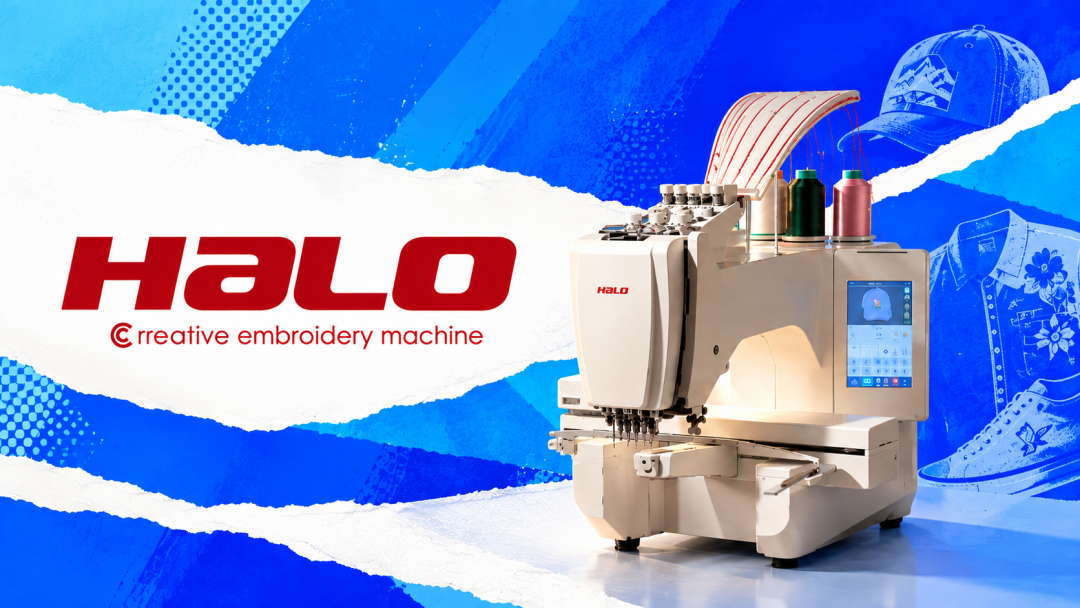
On October 27, the Halo-5 desktop embroidery machine launched on Kickstarter, and as of press time its crowdfunding total had already surpassed HK$26.5 million. Viewed as an independent niche within desktop textile crafting, the Halo-5 has broken the crowdfunding records of earlier products including Craftphilia and CLAWLAB, which is backed by miHoYo. Following 3D printing, laser engraving, and desktop CNC, embroidery and tufting textile manufacturing equipment is now emerging as a new Maker hardware hotspot. Image source: Kickstarter
Halo's Chinese Roots
HALO is not an embroidery machine startup built entirely from scratch. One of its Chinese entities is Guanghuan Embroidery Machinery (Taizhou) Co., Ltd., founded in October 2019, with Zhang Hua as its legal representative. According to trademark filing records, as early as October 2020, Guanghuan Embroidery had applied to register the HALO trademark and began expanding into overseas markets. Before the Halo-5, the brand had already launched several embroidery machines, including the single-needle Halo-1 for home entry-level users and the ten-needle Halo-X for home studios and small commercial users. Notably, another Chinese manufacturer sits behind the Halo-X — Zhejiang Hehe Electromechanical Co., Ltd., founded in 2014, which owns the FORTEVER embroidery machine brand. According to its official disclosures, it produces more than 10,000 embroidery machines annually, selling to more than 120 countries and regions worldwide. Judging by its existing products and manufacturing track record, HALO is at least not a brand-new hardware player lacking an industrial foundation.
Desktop Textile Crafting: The New Maker Hotspot
HALO's crowdfunding performance is not an isolated case. Multiple players have already emerged in the desktop textile crafting Maker space. In June 2026, Hong Kong-based team Craftphilia launched a fully automatic tufting machine that ultimately raised HK$4.17 million. Compared with traditional handheld tufting guns, the device can convert images into motion paths and automatically complete the main production steps of pile-surface works such as rugs and tapestries. Entering the market even earlier than Craftphilia is CLAWLAB. According to public reports, CLAWLAB's cumulative revenue over the past two years has approached RMB 100 million. CLAWLAB has also attracted successive capital investment in recent years. Its founder Hu Wenxin previously worked at DJI and Meituan. As of July this year, the company has raised several hundred million RMB in cumulative funding, with investors including Sequoia China, Shunwei Capital, Yuanjing Capital, and miHoYo. The Pre-A2 round was led by Yuanjing Capital, and the Pre-A3 round was led by miHoYo. Also in this track is Xinsheng Technology, which listed on the Beijing Stock Exchange in August this year. As a leading domestic computerized embroidery machine company, its revenue in the first half of 2026 reached RMB 822 million. Through its subsidiary Wujie Wanxiang, it is exploring AI-driven pattern making and is gradually rolling out consumer home embroidery machines. Looking at existing products, this market can broadly be divided into three directions.
The first is embroidery. Represented by HALO and Ricoma, it sews patterns onto existing fabrics, with the core application being the personalization of clothing, hats, and bags. The second is tufting. Represented by Craftphilia and CLAWLAB's early products, it embeds yarn into base fabric, mainly producing home decorations such as rugs and tapestries. The third is digital knitting. Compared with embroidery and tufting, knitting can manufacture fabric directly from yarn. As early as 2017, Kniterate raised US$636,000 on Kickstarter, and now CLAWLAB is also trying to push digital knitting further toward smart home manufacturing.
Desktop Textile Crafting May Be Closer to Everyday Life
In terms of pricing, desktop textile equipment is not significantly cheaper than other Maker devices. The Halo-5's early-bird price is close to US$2,300, while the recent crowdfunding hit HeyGears G1X UV was priced at US$3,300 for early birds. Compared with other Maker devices, however, the long-term usage cost of desktop textile equipment — namely consumables — may be relatively low. Embroidery thread, yarn, and fabric have a mature and open supply chain, which may substantially lower the barrier for users to try. Conversely, for manufacturers, a business model built around proprietary consumables may be harder to sustain. In addition, products such as embroidery and tufting machines are closer to everyday life. In traditional scenarios, many craft enthusiasts already have experience hand-embroidering. As a result, the desktop textile Maker track may give rise to a distinctly different business model in the future.