

Image source | pexels
On the evening of October 29, Kunlun Tech released its unaudited third-quarter 2026 report.
For the first three quarters of 2026, Kunlun Tech reported revenue of RMB 8.937 billion, up 53.9% year over year; net profit attributable to shareholders was RMB 2.609 million, turning profitable; non-GAAP net loss was RMB 1.546 billion, expanding 129.5% year over year.
The company's overseas revenue reached RMB 8.706 billion, up 60.7% year over year and accounting for 97.4% of total revenue; domestic business has shrunk to RMB 250 million.
As shown in the chart, in Q3 alone, Kunlun Tech generated quarterly revenue of RMB 3.578 billion, up 72.71% year over year; net loss attributable to shareholders was RMB 1.085 billion, expanding 670.6% year over year; non-GAAP net loss was RMB 1.088 billion, expanding 686.41%. What dragged down Q3 results was the group's
DataEye Research Institute sums it up in two sentences: revenue is growing strongly, attributable profit has turned positive but non-GAAP losses remain deep, AI short-drama gross billings look impressive, and selling expenses have doubled. For the first three quarters combined: a swing to profit; but in Q3 alone, the company lost RMB 1 billion, and the loss widened, because promotion spending surged.
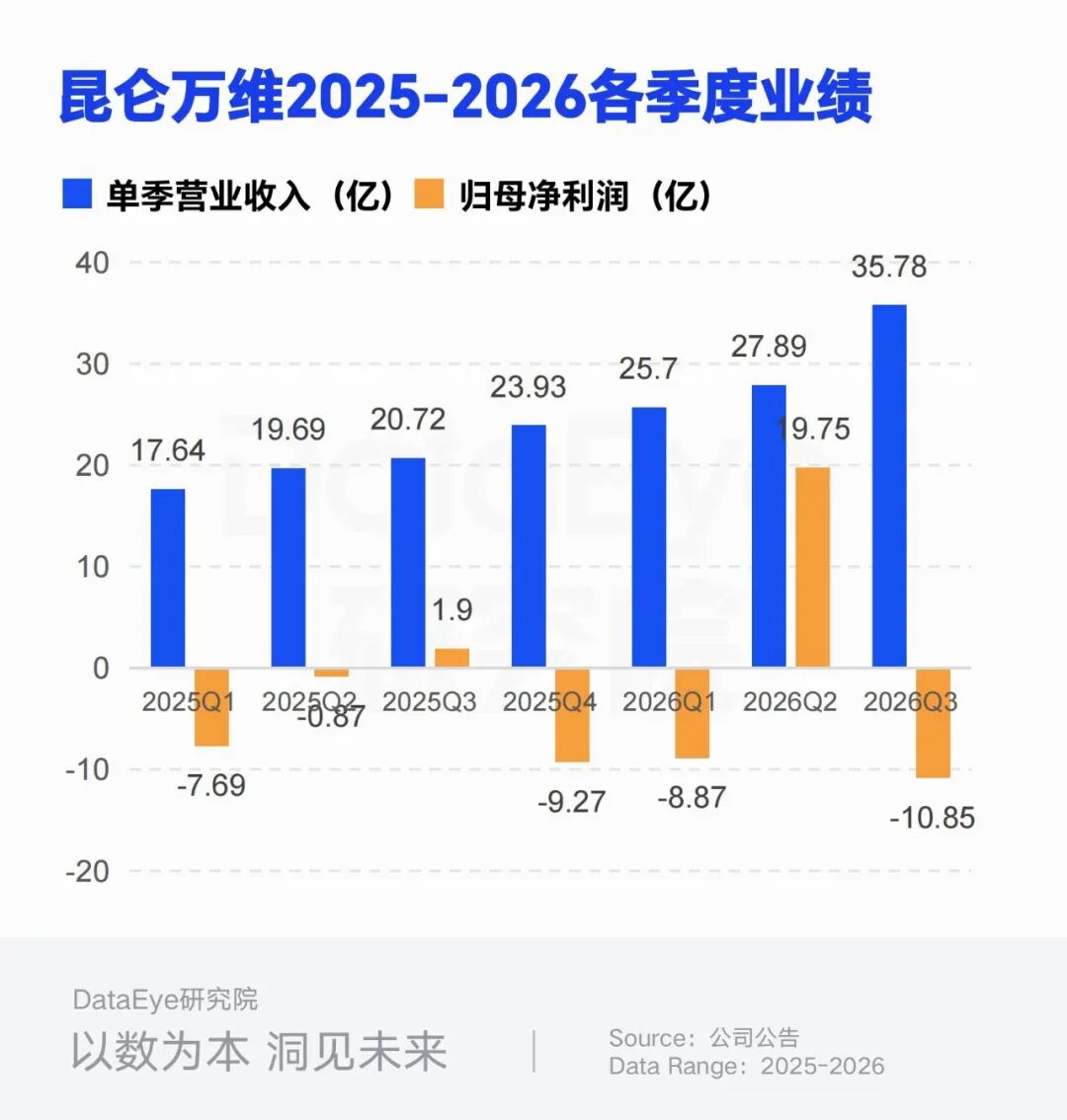
Single-quarter revenue hit a new high, but the RMB 1 billion loss was also a new high
(1) The RMB 26 million attributable net profit came almost entirely from non-recurring gains.
Kunlun Tech's non-recurring gains and losses totaled RMB 1.549 billion in the first three quarters, including RMB 1.478 billion from disposal of non-current assets and RMB 1.596 billion in investment income. The financial report explains that subsidiaries absorbed external financing and were passively diluted, resulting in loss of control and conversion of the remaining stakes to equity-method accounting. The corresponding fact is that in 20
In Q3 alone, the company recorded an attributable loss of RMB 1.085 billion and a non-GAAP loss of RMB 1.088 billion — nearly identical, showing that Q3 contained no non-recurring items at all and the loss was purely operational.
(2) Gross profit was almost entirely consumed by selling expenses.
Q3 gross margin was 74.41%, a new high in recent years, indicating a rising share of high-margin AI business. But for the first three quarters, gross profit of RMB 6.176 billion minus selling expenses of RMB 5.818 billion leaves only RMB 358 million; after deducting G&A of RMB 977 million and R&D of RMB 1.147 billion, the core operating
DataEye Research Institute's takeaway: on the revenue side, AI short-drama-driven growth is accelerating; on the profit side, operating losses are widening; the attributable "return to profitability" is mainly contributed by one-off gains.
In other words, this is an accounting-style turnaround, not an operating turnaround.
Under heavy promotion spend, AI short dramas are a growth engine with striking data
Looking at the AI short-drama business specifically, the report highlights three impressive figures:
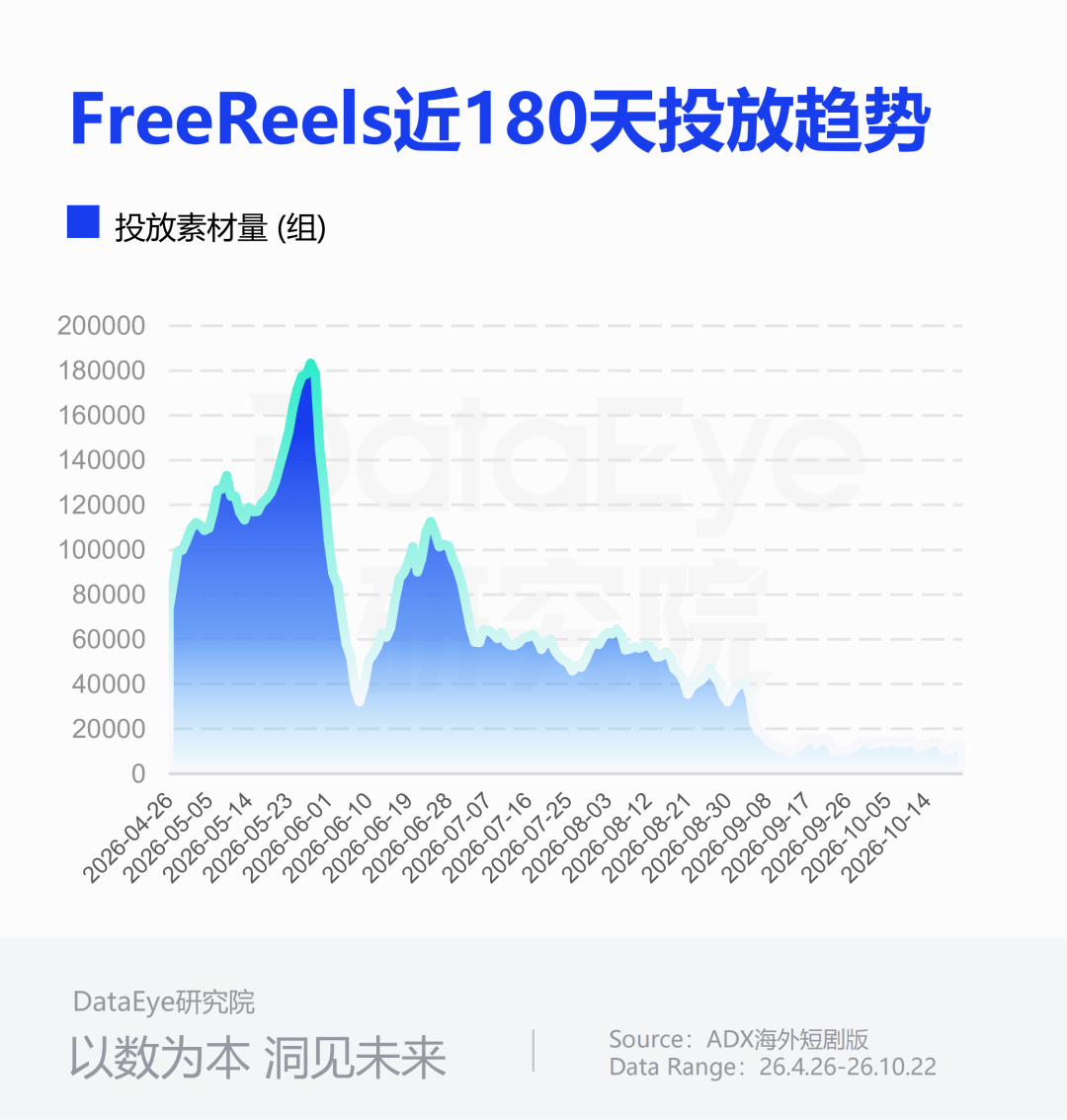
(1) User scale. In the first three quarters of 2026, the company's AI short-drama platform ranked first by overall MAU (monthly active users) in the overseas short-drama market; its free short-drama platform FreeReels remained No.1 by downloads among overseas short-drama apps.
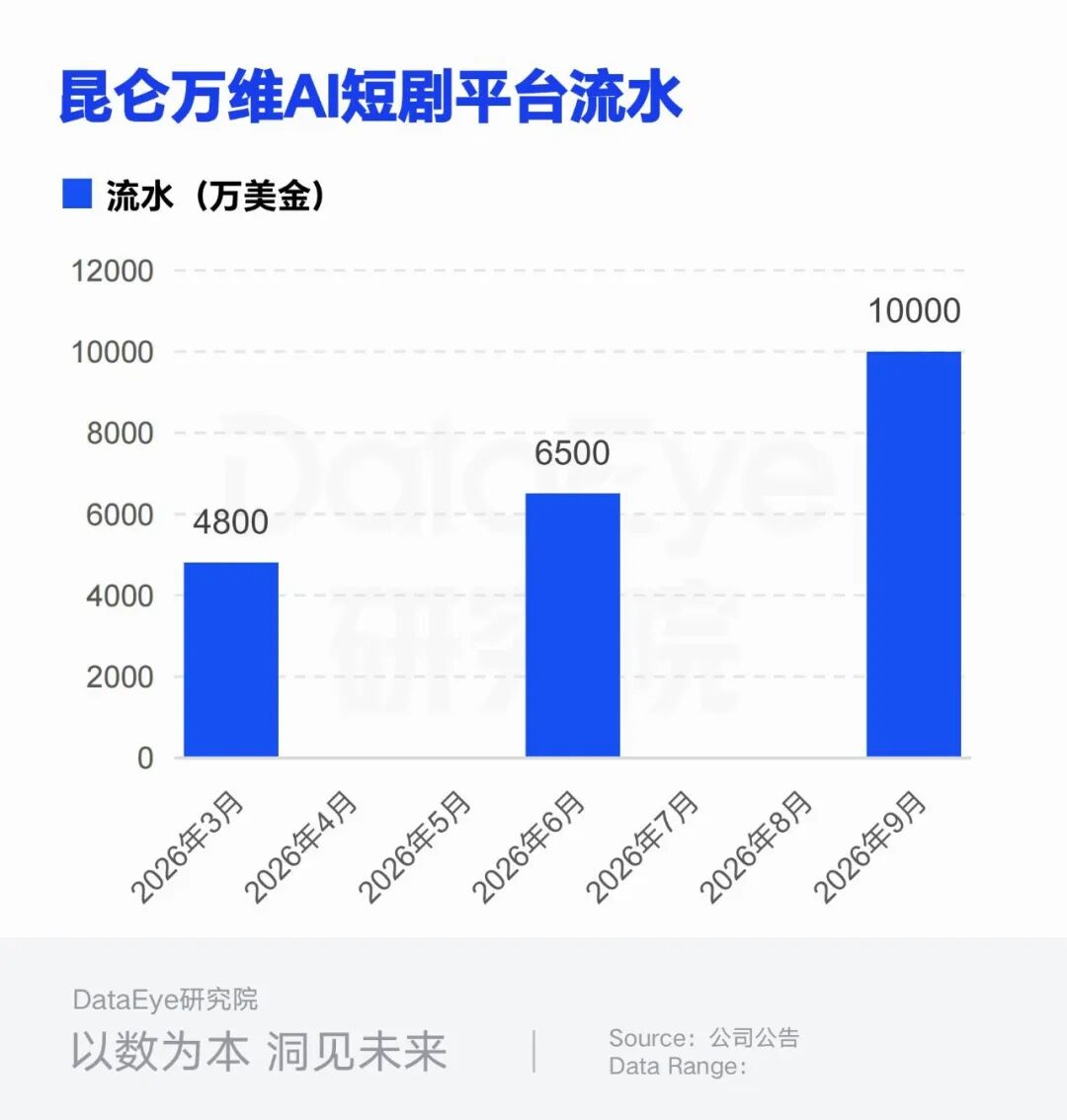
(2) Gross billings. In September 2026, the AI short-drama platform generated nearly $100 million in monthly gross billings. (Note: gross billings differ from revenue. Gross billings usually refer to total user payments; when recognizing revenue, the platform must deduct channel shares, payment-channel fees, and similar items.)
DataEye Research Institute notes that the 2025 annual report disclosed that as of December 2025, the short-drama and AI short-drama platform business had monthly gross billings of nearly $36 million and ARR (annual recurring revenue) exceeding $400 million. From $36 million to nearly $100 million, a 9
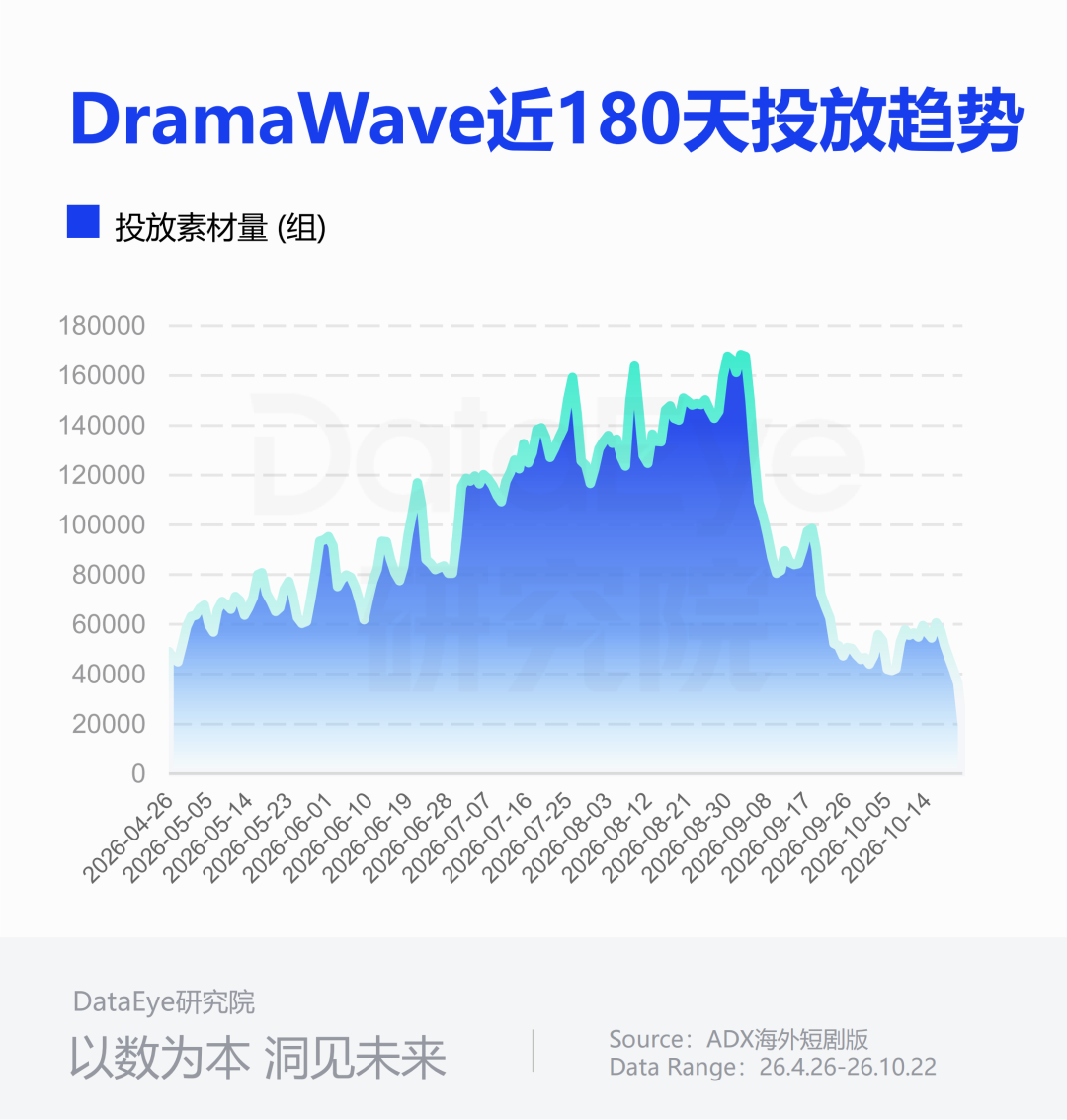
(3) AI penetration. In September 2026, over 95% of new episodes released monthly on the paid platform DramaWave were AI-generated. The company says that compared with live-action short dramas, production costs have been drastically cut while finished episodes reach cinema-grade viewing quality.
In terms of time spent, paying users of DramaWave averaged more than 40 minutes per day, while FreeReels free users maintained 80+ minutes.
Selling expenses doubled, but could Q4 improve...?
Looking only at gross billings, the conclusion looks very rosy. Put the income statement next to it and the picture gets more complicated.
Revenue is accelerating, but so are the losses.
The reason lies in expenses. First-three-quarter selling expenses were RMB 5.818 billion, up 101.27% year over year — already exceeding the RMB 4.182 billion for all of 2025. R&D expenses over the same period were RMB 1.147 billion, down about 5.3%. The selling-expense ratio reached 65.1%.
Two items on the balance sheet corroborate each other:
Accounts payable stood at RMB 2.687 billion, up 110.81% from the start of the year. The report notes this mainly reflects increased market promotion fees payable.
Contract liabilities stood at RMB 472 million, up 110.76% from the start of the year. The report notes this mainly reflects increased prepayments for the AI short-drama platform, Opera advertising, and AI software technology.
On one side, pending promotion fees have doubled; on the other, prepayments have doubled.
This shows two things: ad spend is still being scaled up, and some users are already willing to pay in advance (such as monthly or annual subscriptions).
Still, remember that the above reflects the situation through Q3. By Q4, things may have changed... or not?
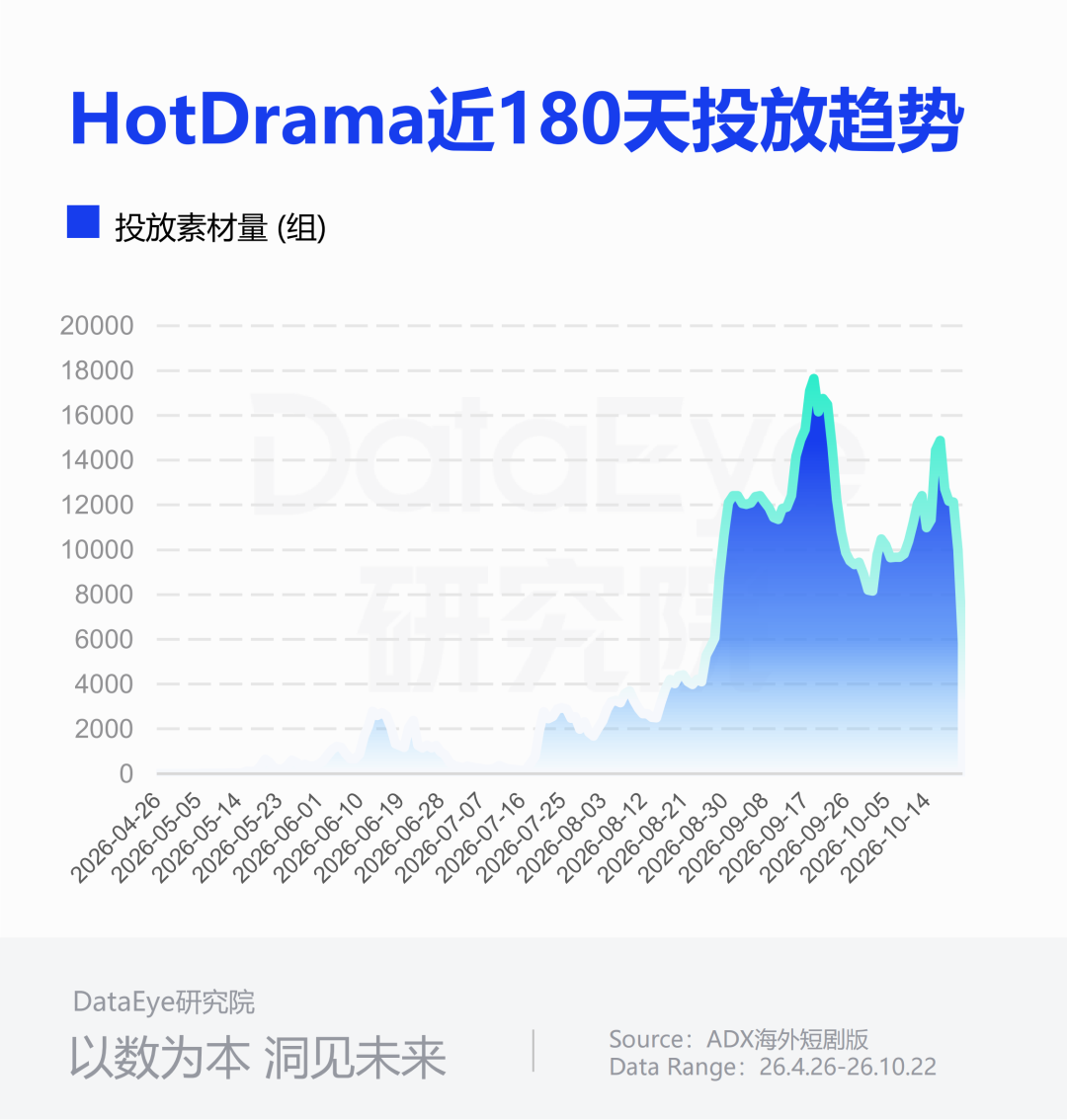
Recently, DataEye Research Institute has observed a shift in Kunlun Tech's overseas short-drama ad-creative strategy: creative volume on DramaWave and FreeReels has dropped sharply, with the focus shifting to the new platform HotDrama.
This adjustment coincides with the departure in October of the AI short-drama business lead, who left to start a company. Does this mean Kunlun Tech will change its "spend heavily, trade losses for growth" approach in Q4? Let's wait and see.
Source: Company financial report