
Original title: An Unlikely Category Hits Tens of Millions in Revenue: Traditional Chinese Medicine Wellness Is Surprisingly Lucrative in Vietnam
Author: Duodong
Source: Tuke Going Global

Hero via Pexels
When a category reaches 40% domestic market share, it usually means the game is already won.
But ULucky's e-commerce lead doesn't see it that way. Sales were still climbing while margins were sliding, and big brands kept squeezing into the menstrual heating belt track one after another — price wars had reached the point where “even if your quality is better, consumers still pick the cheaper option.”
Staying in China would work, but the pace was too slow.
At the end of 2025, ULucky brought its menstrual heating belt with a built-in mugwort pad into Vietnam's TikTok Shop. At its peak, single-day revenue surpassed hundreds of thousands of RMB. The store listed only 4 products, yet sold 38,600 units in total, with total sales reaching 63.529 billion VND.
A niche category that had already hit its ceiling in China switched markets and switched storytelling — and turned a product almost no one was searching for into a category gateway on TikTok.
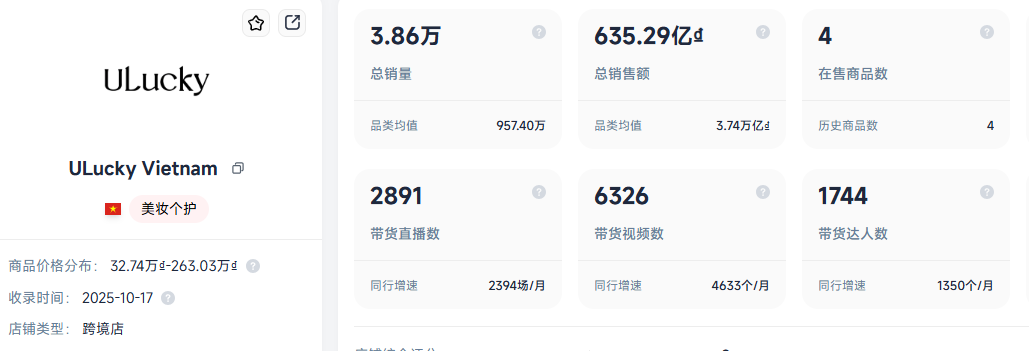
Source: FastMoss
Starting at Home, Turning the Heating Belt into a Niche Hit
For those unfamiliar, here's a quick introduction to ULucky.
According to public information, the brand was founded in 2023, with its core product being the mugwort-heated menstrual belt — combining traditional Chinese moxibustion and electric heating into a single belt.
Within six months of joining Douyin, it took first place in its subcategory; two years later, its domestic market share climbed to 40%. Its product strength and feel for content commerce had already been proven at home.
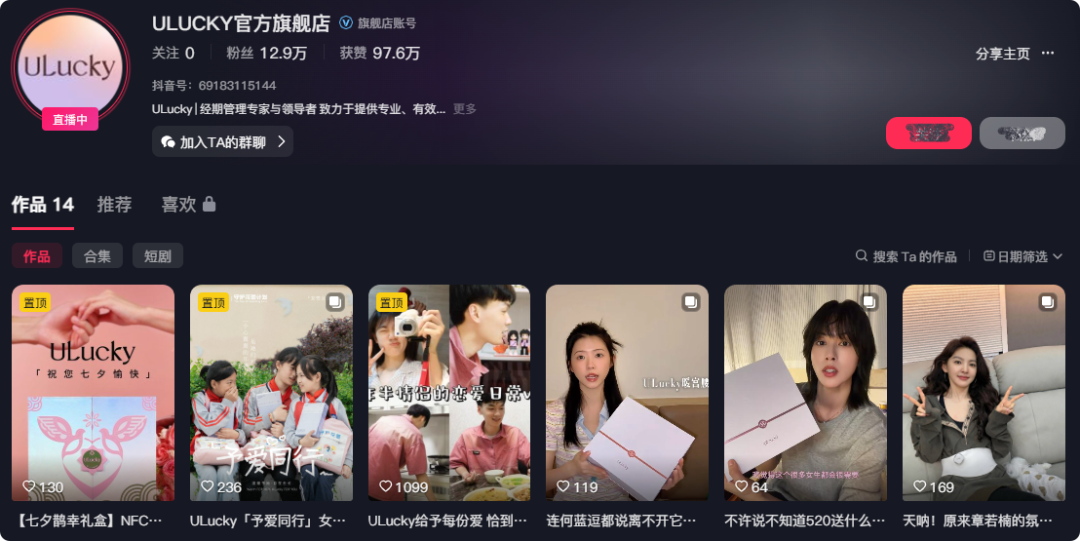
Source: Douyin
But the menstrual heating belt has a natural limitation: it solves a real yet relatively low-frequency need. Consumers don't replace it often, and the market pool is only so big. After reaching the top domestically, room for growth visibly narrowed.
ULucky's team flew to Ho Chi Minh City, Hanoi, Bangkok, and Phnom Penh for on-the-ground assessments, ultimately choosing Vietnam as its first overseas stop.
Vietnam's special quality lies precisely in the fact that “mugwort” is nothing new there.
Moxibustion therapy shops line the streets of Ho Chi Minh City even more densely than in many Chinese cities, and about 7 million people received traditional medicine treatment in 2025. Vietnamese consumers don't need to be told what mugwort is or what heating therapy does — they already use it.
At the same time, almost no one on local e-commerce platforms was searching for or selling menstrual heating belts. Category awareness was a blank slate — no competitors, no price wars.
Only one question remained: how do you make people see a product that doesn't exist in their search box?
Over 1,000 Short Videos Doing the Work of “Translation”
ULucky built its business on content commerce in China, and what its team does best is translating a product that needs to be “understood” into the language of short video.
In Vietnam, this capability was reused directly, but with one key adjustment to the playbook.
The heating belt's function (relieving menstrual cramps) is hard to demonstrate visually in a ten-second video. If they followed the hard-ad route and explained the mechanics, they'd likely get swiped past in a market where the average age is 32 and people are used to scrolling entertainment content.
ULucky's choice was to skip the function and lead with scenarios. The team reached out to over a thousand local Vietnamese creators and ultimately collaborated with more than 200 of them, rolling out over a thousand short videos in batches, focused on one thing: placing the heating belt inside emotional scenarios.
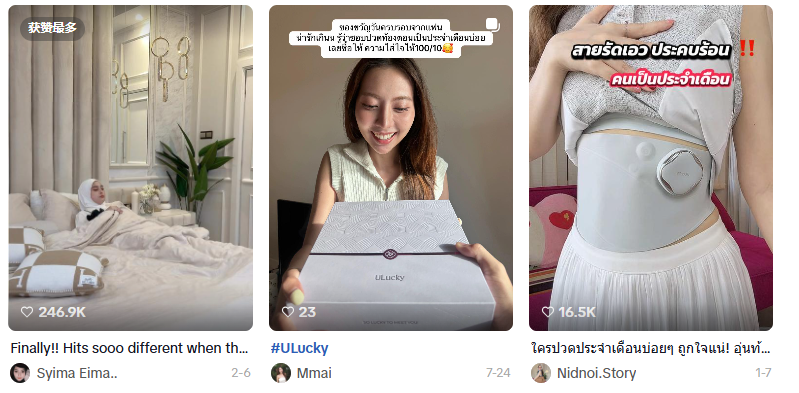
Source: TikTok
Valentine's Day was the concentrated test of this strategy.
According to public information, the brand hit 1,000 orders in a single day that day — dozens of times its usual volume. A Vietnamese couple account's related video drew nearly 300,000 likes and 9.4 million views, bringing not just exposure but real inquiries and conversions.
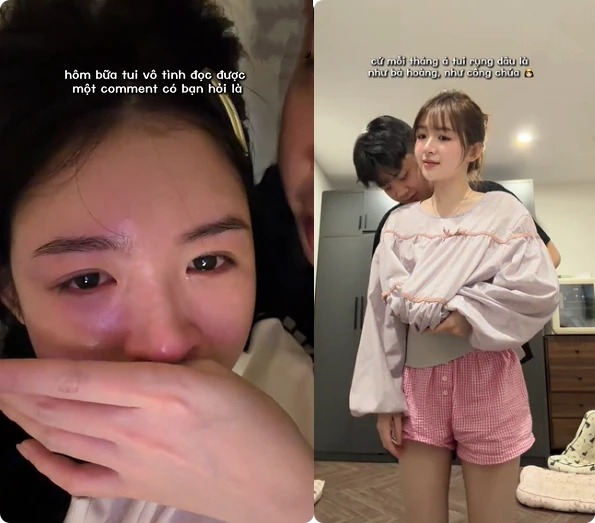
Source: TikTok
Self-Run Accounts, Creators, and Live Streams: The Full TikTok Funnel
Beyond Valentine's Day marketing, ULucky's day-to-day operations in Vietnam have also been multi-pronged.
According to public reports, the brand has built a complete operating line on TikTok Shop: self-run accounts for education, local creators for spread, and live streams for conversion.
1. Self-run accounts explain the product clearly
For a brand just entering the Vietnam market, ULucky can't expect consumers to know what a product is the moment they see it.
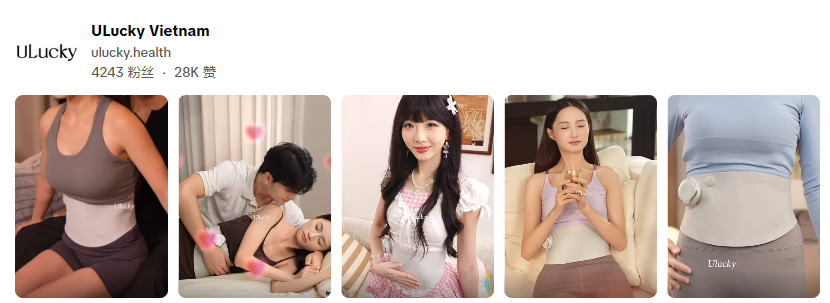
Therefore, its self-run accounts focus on product-related content, including product functions, usage methods, and women's daily care information.
Not every piece of content needs to sell directly; what matters more is gradually familiarizing consumers with the product.
Source: TikTok
2. Local creators make the product easier to accept
When a brand explains its own product, it inevitably carries a commercial flavor.
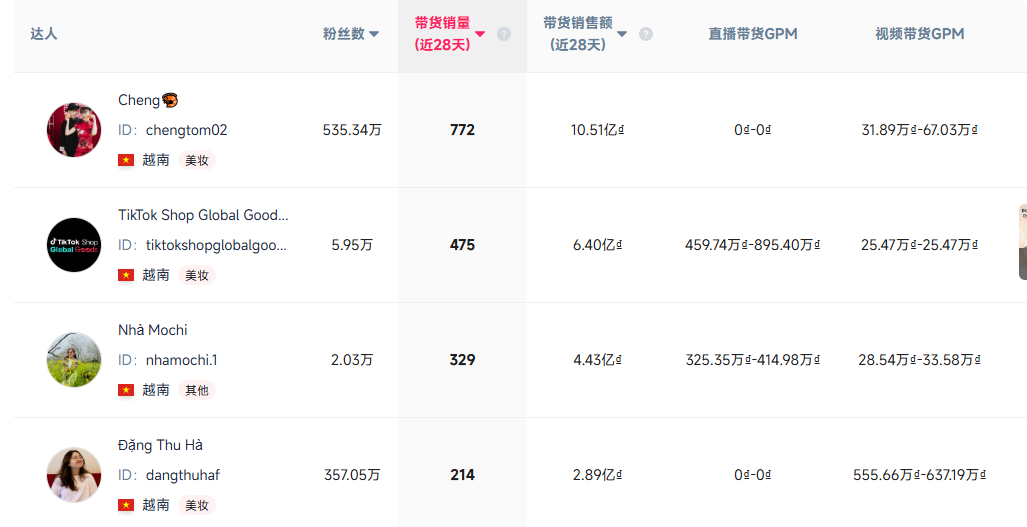
Local creators, however, speak the local language and share experiences from their own life scenarios, which tends to bring them closer to consumers. In building its creator network early on, ULucky didn't blindly chase mega-influencers; instead it prioritized creators' expressiveness and audience fit.
Source: FastMoss
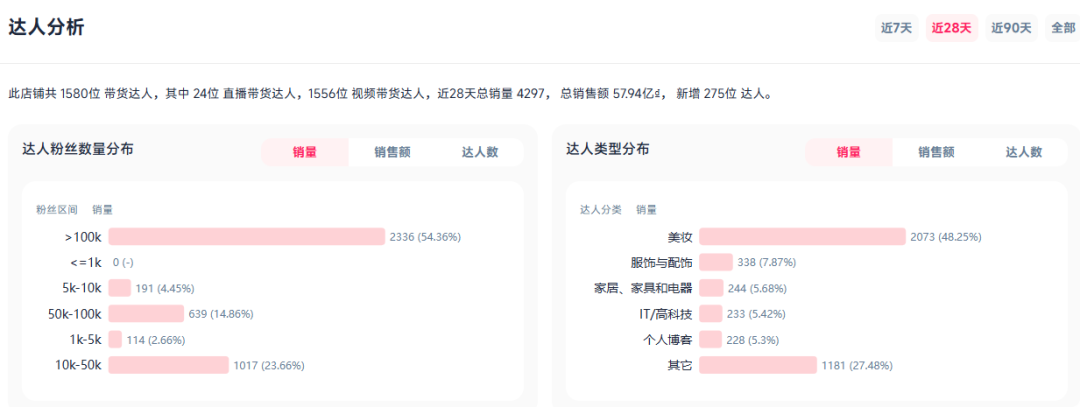
This is corroborated by FastMoss data from the past 28 days: in ULucky's sales mix, creators with over 100,000 followers contributed 54.36% of sales, while creators with 10,000 to 50,000 followers contributed 23.66%. Meanwhile, beauty creators drove 48.25% of sales, making them the primary selling force.
These figures show that the fit between content audiences and a product's target demographic is also a key factor in selling effectiveness.
Source: FastMoss
3. Live streams catch consumers who are already interested
Short videos make consumers aware of the product, and creator content helps build trust — but when users are actually ready to buy, concrete questions often arise: how to use it, how effective the heating is, whether it suits them. All of these can be answered in live streams.
So live streaming isn't a separate sales channel independent of short videos and creator marketing; it's a key link in the entire content operating chain.
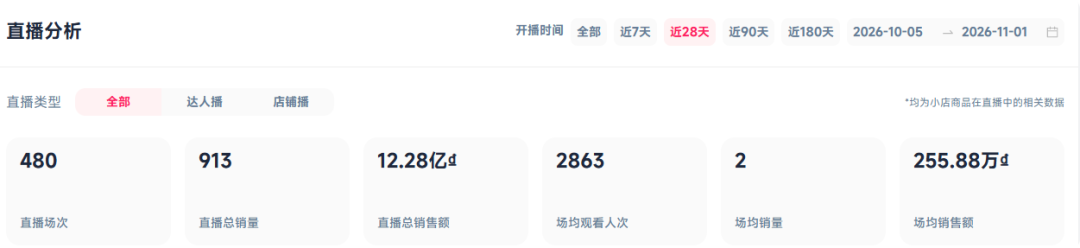
According to FastMoss data from the past 28 days, the brand ran 480 live sessions in total, with 913 items sold through livestream, generating about 1.228 billion VND in sales, or roughly 2.5588 million VND per session.
Source: FastMoss
By the numbers, this full-stack setup has clearly worked.
It also shows that ULucky isn't just relying on holiday marketing to drive short-term sales — it is steadily building a content operating system that can keep reaching consumers and absorbing purchase demand.
Conclusion
There's a question worth every cross-border seller pondering:
When overseas consumers have no idea your product exists, how do you sell it?
ULucky's case may be a direction worth taking seriously for many brands that have already found success in the domestic market.
The market won't create awareness for a stranger product on its own, but good content can be the key that opens the door. When a product hasn't yet earned a place in the search box, a brand can first learn to be seen and understood in the feed.