

On October 27, Singapore-based consumer electronics brand Stryv announced the completion of a US$11.5 million Series B round, led by Indonesian investment firm ACV Capital, with participation from Singapore VCs Openspace Capital and PE firm OCTAVE Capital.
These days, it is no small feat for a consumer brand in Southeast Asia to raise funding of this magnitude. Stryv's business is very concrete: starting with personal-care appliances such as hair dryers, it first sold online, later opened physical stores, and this year expanded through acquisitions into air purifiers and massage chairs.
Judging only by its products, Stryv makes appliances that are hardly unfamiliar in daily life. But from personal care to home appliances, the company is steadily widening its product scope. It must compete with established brands in each category while also figuring out how to make consumers willing to choose the Stryv name across different purchases.
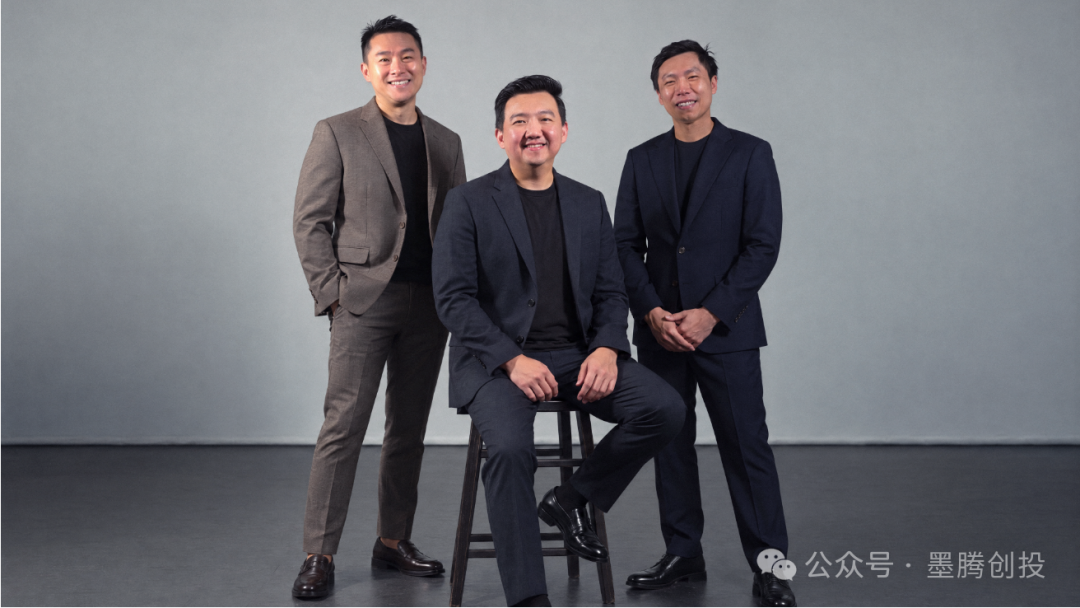
(From left to right) CFO Chen Wenyou; CEO Roy Ang; co-founder Zhang Minghao
Two former Grab employees build a consumer brand
Behind Stryv is Evo Commerce, founded in 2020 by Roy Ang and Zhang Minghao, both of whom previously worked at Grab. Roy was responsible for building and expanding Grab's regional payments business. Colleagues who worked with Roy before Grab describe him as one of the sharpest minds and most agile operators among them.
CFO Chen Wenyou also brings a rich background. Before joining Stryv in June 2025, he spent four years in Indonesia co-founding D2C restaurant-brand incubator Hangry, going from an online-first model to opening physical outlets — itself a long journey. Earlier, he served as finance head for Grab's Indonesian payments business OVO and oversaw Taralite, the P2P lending business Grab acquired.
Evo Commerce's original venture was not Stryv either — it started with livestream-commerce software before shifting to health supplements. When it announced a US$2 million Pre-A round led by GSR Ventures in 2023, its flagship products were still focused on hangover relief, hair-loss prevention and beauty hair care. It later pivoted to appliances, turning Stryv from one of its incubated brands into the main brand, starting with hair dryers and positioning on "professional-grade experience" at relatively accessible prices. According to its website, the company works with "manufacturers with 40+ years of experience" and sells D2C to strip out middleman costs.
Stryv's product line later expanded from hair dryers to multi-functional styling tools, straighteners, curling irons, portable shavers and water flossers, covering hair care, personal grooming and oral care — a mix of home products and travel-friendly gadgets. Sales channels also gradually expanded from online-first to physical brand stores.
In May 2024, Stryv opened its first physical store at Suntec City in Singapore, later extending to markets such as Malaysia; it now operates multiple stores. The founders recalled in media interviews that the team spent six months preparing for the first store and consulted founders with retail experience. Even so, they later ran into plenty of issues in site selection, hiring, training, merchandising, renovation and incentive design. Moving from running a website to managing dozens of physical stores demanded a different team and management approach.
Laifen and Simplus are also in this business
Southeast Asia's small-appliance market already has new brands that have reached scale. Simplus, the small-appliance brand founded by Zhang Wenxuan, a former CEO of Lazada Thailand, has received backing from several Chinese VCs including Yuanjing Capital, Qingshan Capital and Yingdong Capital, and also raised from ACV (then called AC Ventures), the investor in this Stryv round. In categories such as air fryers, vacuum cleaners and hair dryers, Simplus has become a market leader in Thailand and other countries.
According to information disclosed by ACV in July 2026, Simplus has more than 18 million users, with business covering six Southeast Asian countries. Besides TikTok Shop, Shopee, Lazada and its own DTC site, the brand has also entered offline retail channels such as HomePro and Big C. On production, Simplus runs a relatively asset-light model: it handles product R&D and industrial design itself, then partners with mature ODM manufacturers for production.
Laifen and other Chinese small-appliance brands have also entered Southeast Asia's online and select offline channels. But their positioning differs considerably from Simplus or Stryv. As everyone knows, building a small-appliance brand is not just about producing the product (in-house or via OEM); you also need to build your own competitiveness in product, brand and sales channels.
From the capital side, though — especially domestic Chinese capital over the past year or two — the prevailing view might be: so a brand reaches the top in Southeast Asia, then what?
Next: expand markets, and expand categories
According to the funding announcement, Stryv plans to use the US$11.5 million to enter the Taiwan region of China while expanding its business in Malaysia and the Hong Kong region of China. Besides increasing R&D investment, the company also plans to keep acquiring brands that complement its existing product lines and market footprint. In March this year, Stryv acquired Singaporean home-appliance brand Sterra. Leveraging the acquired team's expertise in home appliances, Stryv began launching the Oasis massage chair and Halo air purifier in September, extending further into home appliances. Per the announcement, Stryv has started integrating Sterra's team and products, with the final steps of the brand merger expected to be completed in the coming months.
From selling hair dryers online to opening physical stores to acquiring appliance brands, Stryv's business scope is steadily expanding.
That said, hair dryers, air purifiers and massage chairs serve very different consumer needs. Going forward, Stryv must not only bring its products into more markets but also make its new brands and categories work together with the existing business.

A $17B Deal Nears: DoorDash in Talks to Acquire Instacart to Enter the Grocery Delivery Arena
DoorDash is in advanced talks to acquire Instacart in a deal that could value the company at about $17 billion, expanding into online grocery delivery.
Amazon to Invest Another EUR 16B in Germany by 2027 — Why Germany?
Amazon announces plans to invest more than EUR 16 billion in Germany by 2027, covering cloud computing, AI, satellite internet, logistics and local content — cementing Germany as its European stronghold.

DoorDash Looks Most Likely to Take Over Instacart; Analysts Call the Combo the 'Optimal Answer' Against Amazon and Walmart
Instacart is reportedly evaluating sale options, with Uber and DoorDash initially seen as potential bidders.