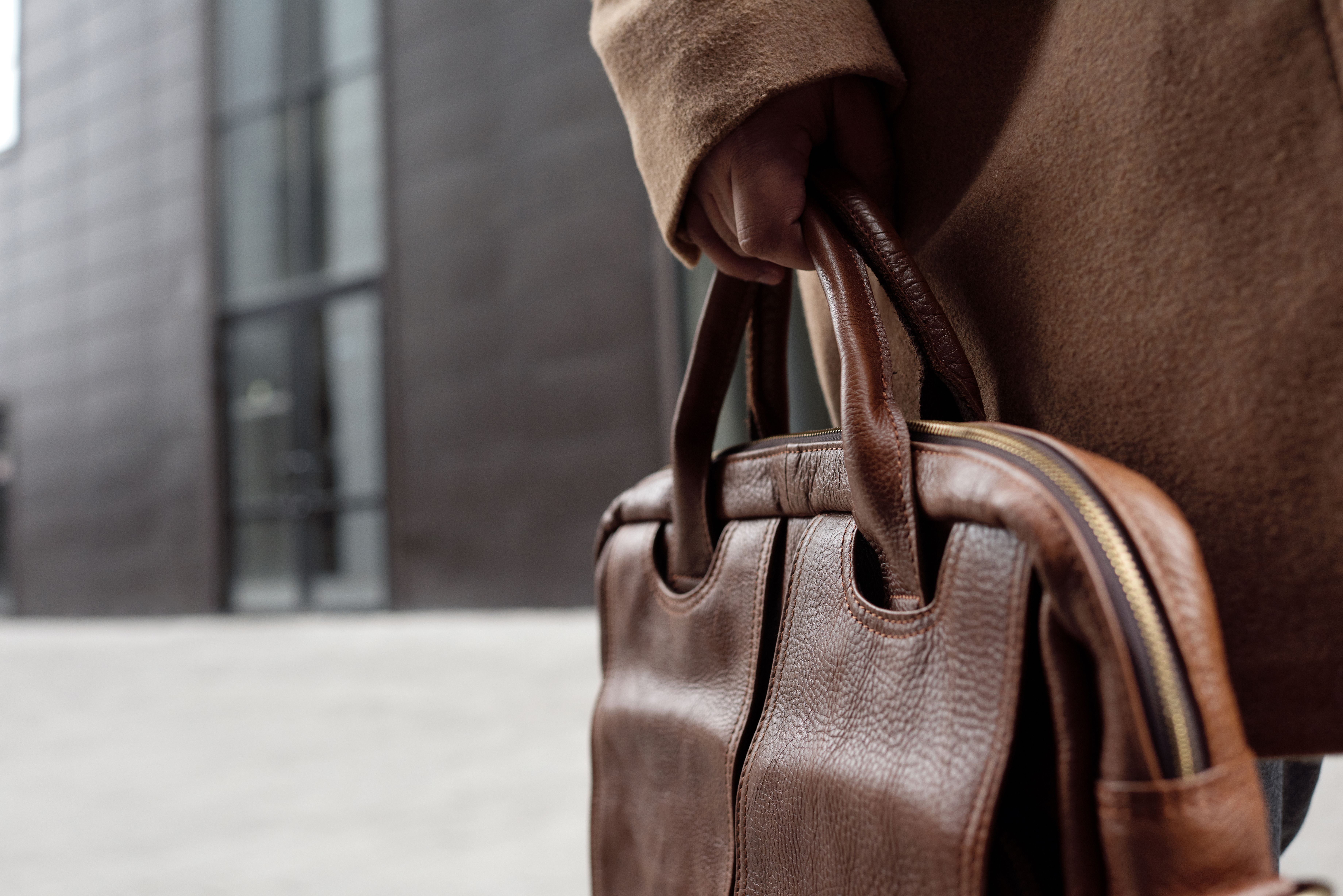
Original title: Focused on Men's Bags: What Makes This Hong Kong Brand's Playbook So Effective?
Author: SocialBook Global Influencer Marketing
Editor's note: This article is a column piece published on Baijing by SocialBook Global Influencer Marketing (WeChat ID: SocialBook). For republishing or use, please contact SocialBook via its homepage to seek the author's authorization.
Hero image source: pexels
For a long time, men's bags have been a category overlooked by the market.
Whether in luxury or fast fashion, product R&D focus, marketing budgets, and in-store displays have all centered on female consumers.
But as more male consumers begin to value personal style and aesthetic expression, bags — a product once created merely to satisfy a "functional need" — are now going through a transformation.
According to a report by Global Market Insights, the global men's luxury bag market reached US$11.8 billion in 2025 and is expected to grow to US$18.4 billion by 2035.
Within this fast-growing market, GRAMS28, a brand from Hong Kong, China, is performing remarkably well.
Although the brand designs with a "gender-neutral" approach, its core customers are overwhelmingly urban men — tech professionals, creative workers, and business people.
On Trustpilot, GRAMS28 has earned a large number of five-star reviews, with users repeatedly citing "quality beyond expectations," "design with attention to detail," and "better value than top-tier luxury brands."
How did a Chinese brand founded just a few years ago carve out a share of the niche men's bag market? We're as curious about this as you are.
1. It All Started With "Can't Find the Right Bag"
GRAMS28's story began with founder Benjamin Chan's inability to find what he wanted.
In an interview, Chan said he had long been searching for bags and accessories that combined a luxurious feel with practical functionality, but after combing through the market, he could barely find any product that met his expectations.
"Luxury brands keep raising prices, yet they lack functionality and innovation" — this observation became the starting point of GRAMS28.
So in 2019, Chan founded GRAMS28. The brand name derives from the film "21 Grams," reflecting the founder's vision that his products would become long-term companions in customers' daily lives.
This philosophy is also clearly reflected in the brand's products and services.
First, at the product level, GRAMS28's core differentiation lies in its insistence on "full-grain leather."
This is the top-grade part of cowhide, which retains the leather's natural texture and marks, developing a unique luster over time with use.
The brand works with two renowned Italian tanneries — Gruppo Mastrotto and Badalassi Carlo.
The former's eco-friendly tanning process has received a gold certification from the Leather Working Group and achieved carbon neutrality; the latter is the only tannery in the world capable of producing "snowflake leather."
GRAMS28 also makes regular on-site visits to its suppliers to ensure ethical and environmentally friendly sourcing standards.
At a time when "sustainability" has become a buzzword in the fashion industry, this insistence on supply-chain transparency is part of how the brand earns the trust of high-spending customers.
On the service side, GRAMS28 champions "lifetime companionship." The brand offers a lifetime warranty on all products, encouraging customers to repair rather than discard. Chan stated clearly in the interview that quality leather goods, with proper care, can last 20 to 30 years.
"We hope to see our works accompany our customers for a long time."
This anti-consumerist attitude not only resonates with consumers' growing embrace of "long-termism," but also softens the "slightly pricey" perception of its US$200–400 price point.
2. Word of Mouth Over Hard Advertising
Interestingly, as a DTC brand built entirely online, GRAMS28 has barely run any traditional advertising, instead concentrating its budget on influencer collaboration and content marketing.
First, it is "precision vertical" in influencer selection — the brand does not choose top-tier mega influencers. Partly this is due to budget constraints, but it also reflects the value the brand sees in the endorsement power of niche vertical influencers.
As a result, GRAMS28 deeply cultivates mid-tier influencers in men's fashion, EDC, and tech review on YouTube and Instagram.
Take Simon Songhurst, for example — a YouTube channel focused on reviewing premium carry gear and photography accessories, known for its "long-termist" review style: he doesn't rush an unboxing the moment he receives a product, but forms his opinions after weeks of real-world use.
The channel's audience is largely urban men who love photography and pursue a quality lifestyle — they care about gear, but even more about how gear fits into daily commutes and travel scenarios.
Take the review of the 175 Moon Bag as an example: this collaboration video was not a simple product showcase, but a complete "lifestyle narrative."
Moving through scenes of daily commuting, urban strolls, and light travel, the host demonstrated in detail how this 5-liter crossbody bag elegantly holds a phone, wallet, earphones, a compact camera and other everyday items — with special emphasis on the bag's sensible internal compartment layout and the convenience of its quick-access pockets.
This kind of "real usage scenario" presentation is far more convincing than a list of technical specs, because it answers the question consumers actually care about: how does this bag help me live better?
In the end, this collaboration video earned 127,000 views, 3,378 likes, and 145 comments. The data feedback was excellent, and combined with Simon's personal endorsement power, the video helped the brand gain considerable attention within the EDC audience — a major driver of downstream conversions.
The attention generated through influencer collaborations ultimately funnels into the brand's official accounts, and Instagram is arguably the platform GRAMS28 values most.
Open GRAMS28's Instagram and you're greeted by a highly unified visual language: muted tones, the delicate texture of leather, and real-life shots of products in urban street scenes.
The brand rarely uses flashy promotional copy, letting the products speak for themselves.
This "restraint" is highly consistent with the aesthetic of its target audience:
Consumers who dislike over-marketing and pursue "understated luxury" are precisely the ones drawn to this visual tone.
Worth noting, GRAMS28 is also adept at leveraging long-tail content like "product reviews."
If you search "GRAMS28 review" on Google, you'll find a wealth of review articles from travel, fashion, and tech blogs.
These articles are often produced in exchange for free products, but the reviewers are explicitly allowed to express genuine opinions — including pointing out the product's shortcomings.
This "imperfect honesty" instead enhances the content's credibility and helps the brand filter for users who truly fit the product.
3. Summary
GRAMS28's growth is built on both "product" and "content."
On product, the brand has hit the white space in the men's bag market with "premium materials + functional design + transparent pricing"; on content, it has earned overseas consumers' trust through "vertical influencers + scenario integration + genuine reviews."
For Chinese brands going global, GRAMS28's playbook offers valuable lessons.
Many brands tend to choose mega influencers with the largest followings in the early stage of going global, believing more exposure is always better.
But the GRAMS28 case proves that for categories with higher price points and longer decision-making journeys, the conversion efficiency of mid-tier vertical influencers is often higher.
Their followers have higher trust, stronger purchase intent, and collaboration costs are far lower than those of top influencers.
The key is to find influencers whose brand fit and audience profile align with the brand's own.