


From 500 million downloads in April 2022 to 1.6 billion by December 2025, Turkish game company Unico Studio has seen its cumulative downloads grow by more than 1.1 billion over three-plus years — and the new-player funnel is still expanding.
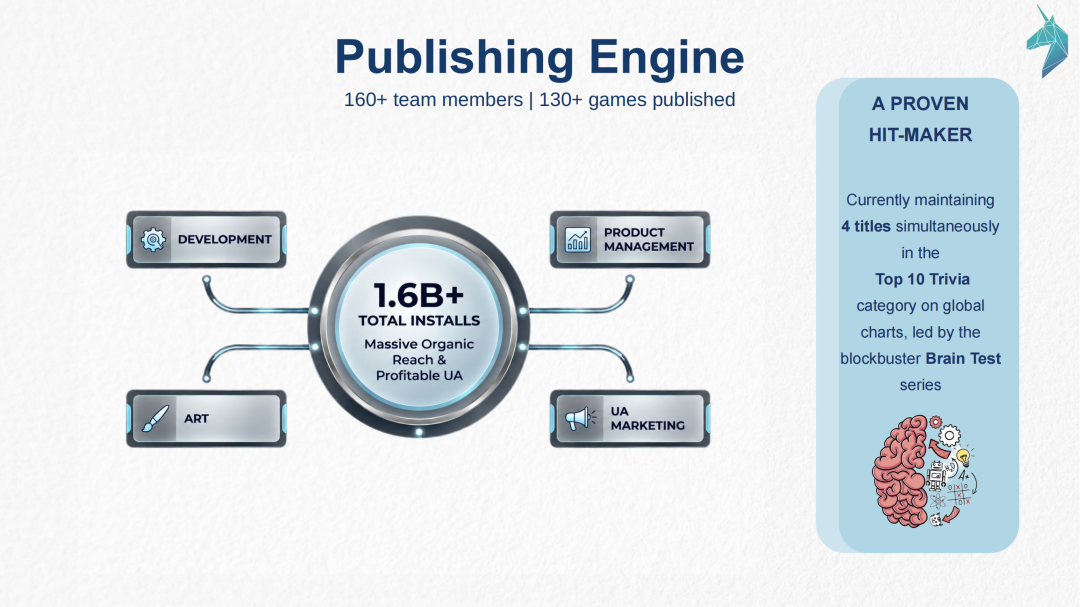
These numbers come from multiple products and years of operation. Led by "Brain Test," Unico keeps maintaining existing games while developing new series titles. As its product portfolio grows, updated content, retention tuning and user-acquisition decisions all matter more to sustained growth.
In our research trip to Turkey, the Unico team shared the experience and judgment accumulated from years of running casual games around continuous user acquisition.
How long-term operation supports sustained user acquisition
Unico was founded in 2018 and got into word and number puzzles early on. "Brain Test," launched at the end of 2019, further accelerated the company's growth; since then, the brain-training puzzle line has continued to expand.
As new products multiplied, old ones did not phase out. The original game keeps updating, sequels explore new content, and each serves a different audience. During our Turkey visit, Unico described this as a "live operating" approach, letting the series span and cover different players and content directions.
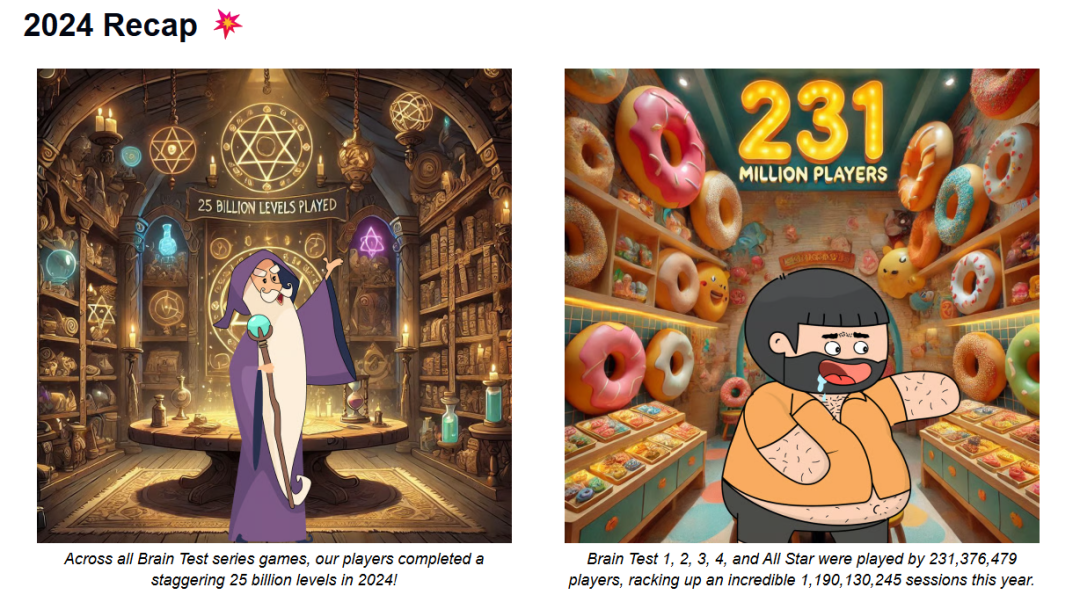
The company's public operating data offers a straightforward footnote to this parallel strategy. In 2024, the "Brain Test" series completed about 25 billion levels, generating more than 10 billion ad impressions and driving massive organic traffic across the entire series.
That play volume does not mean the same players have been retained continuously for years. A game's lifecycle can cover wave after wave of users, and long-term operation must simultaneously serve veteran players and newcomers.
Veterans need new content and reasons to return; newcomers have to go through onboarding, early levels and their first ad or payment touchpoint again. The longer a game runs, the more often these two jobs happen at the same time. The team keeps filling in and polishing both.
"Brain Test" went through exactly this kind of overhaul. Early on, some levels were too hard, lacked fun and suffered from technical issues, causing player churn; the team then spent months polishing the product.
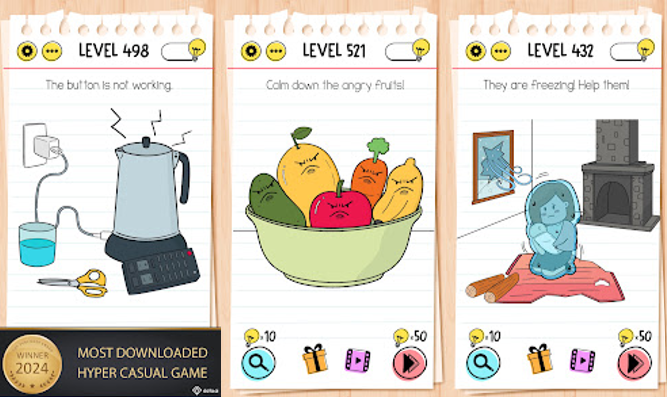
The impact of those changes keeps extending as new users arrive. A clearer hint and a smoother early experience can be reused by everyone who enters the game later. The levels, characters and art already invested in continue to pay off as the audience grows.
Long-term accumulation also benefits new series titles. Unico noted in the conversation that "Brain Test 4" gains organic users from the first three titles, so its test performance cannot be judged directly — the series' accumulated brand and player base carry over.
"The series' accumulation brings organic users to new titles, while paid promotion of mature products continues." In a 2020 public case, "Brain Test: Tricky Puzzles" saw both organic growth and steady paid campaigns reinforcing each other.
When a game keeps buying traffic years after launch, subsequent investment must be judged by new users' performance: how long they play, how much revenue they generate, and whether it is worth scaling further.
User-acquisition results are judged after installation
Unico Studio CEO Erkay Uzun once shared a buying-tips story: some ad creatives had quite good click-through rates, but when the players those ads brought in were tracked further, long-term retention and revenue fell short of expectations.
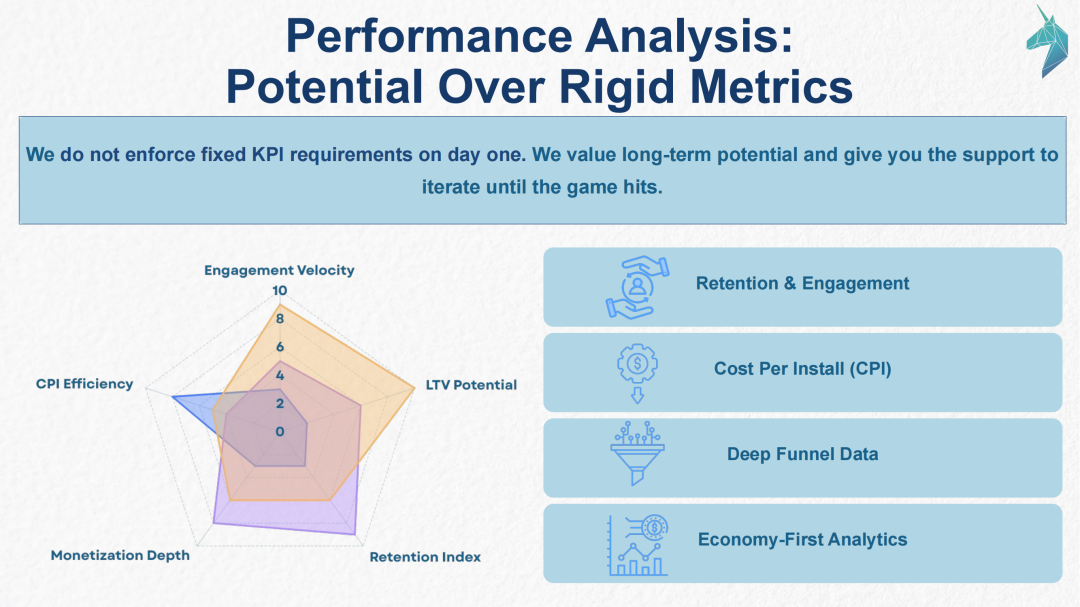
Users came, but the expected retention and returns did not — when promoting "Sudoku: Brain Puzzle Game" and "Gemdoku: Word Puzzle Game," Unico had to rework the channel mix, since install quality differed a lot across sources.
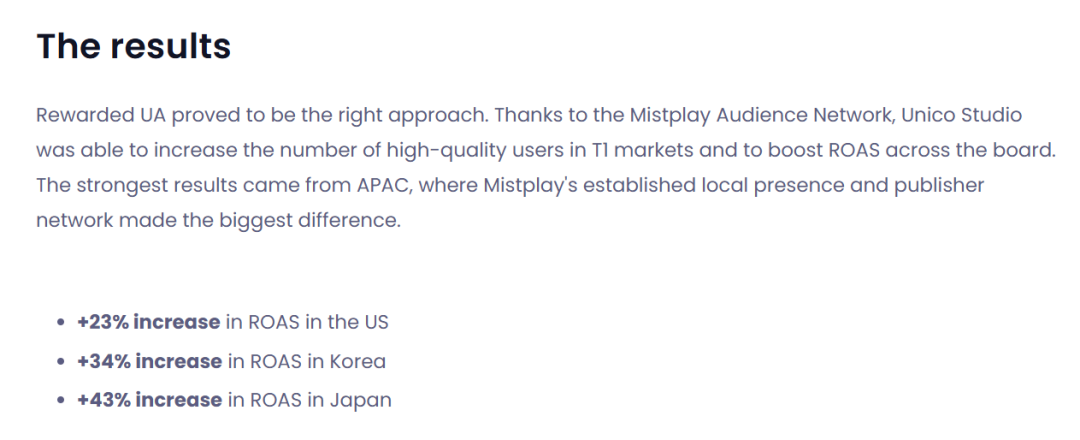
The starting point of adjusting channels is to improve post-install performance. For puzzle games that already have a body of content, a new traffic source also offers a chance to re-understand the product: who is willing to invest time, what kind of experience fits them, and which cohorts return value.
But a channel that can bring users does not mean every product can absorb them. Unico mentioned in the study visit that before trying rewarded user acquisition, it first considers level count and content readiness, then runs small-scale campaigns to observe results before scaling.
Content can be used continuously, but the way users are attracted cannot stand still. "Brain Test" adopted weekly creative testing early in its promotion, picking displayable segments from the game to make playable ads, and iterating ideas week by week.
Later tests went deeper into ad interaction design. The team expanded playable creatives that mainly contained 1 to 3 interactions to 5 to 6 taps, letting users experience a few more steps of puzzle-solving before installation.

Unico tested longer interactive experiences in playable ads
An ad must pose the problem in limited time and deliver fun through action and feedback. Users clicking means the experience piqued their interest; whether the people it attracts fit the game still has to be observed from post-install performance.
Attrition can also happen between click and install. Unico keeps A/B testing store creatives in different languages to check whether ad interest converts into installs. In-game experience then takes over to decide whether users stay.
When products add deeper growth systems, this journey stretches further. Unico strengthened hybrid casual design at the company level, expanding IAP space through growth paths, gift packs and bundle offers. Players also get clearer long-term goals to work toward.
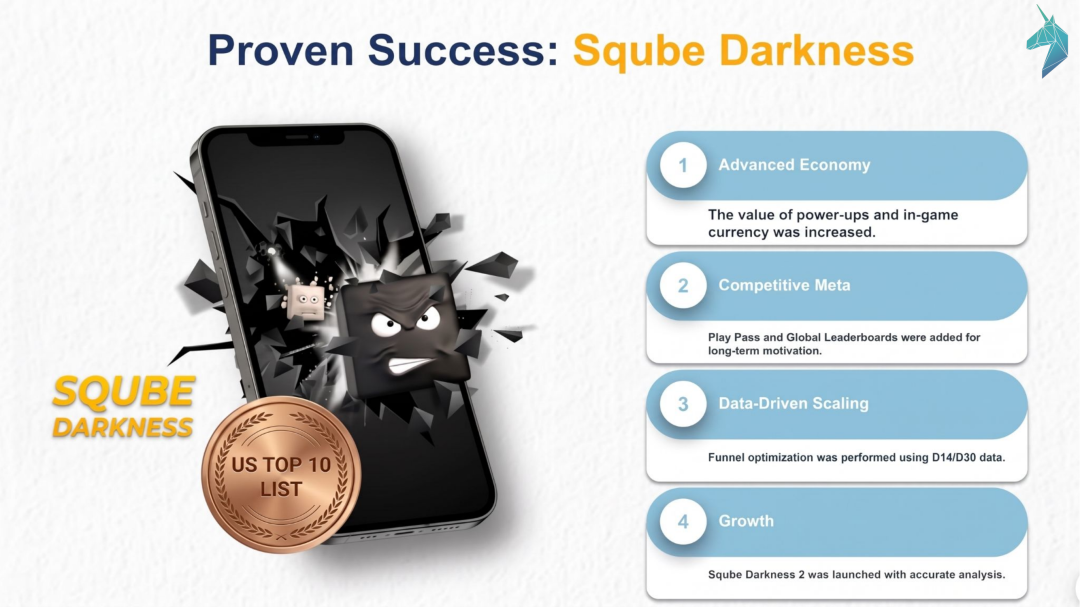
The adjustment of "Sqube Darkness" offers a concrete example. According to Unico, the team raised the value of boosters and in-game currency, added Play Pass and promo offers, and saw the metrics move.
Homa's campaign on "All in Hole" provides a comparison for this shift. It kept activities targeting 7-day post-install IAP return while adding a 28-day IAP ROAS objective, aligning acquisition targets with a longer observation cycle.
After an acquisition target changes, the users acquired and their subsequent performance may differ too. Retention therefore cannot be assigned only to the product team. To judge an improvement, one must look beyond version updates at how different traffic sources and user segments respond.
Ad revenue and IAP form differently, so acquisition goals and observation cycles need to be adjusted accordingly. Even if a product suits long-term operation, the team must weigh future revenue, payback speed and operating spend together before deciding how far to scale.
The ad and payment arrangements players face after installation also keep reshaping the return on this acquisition spend.
How ads are adjusted, and how campaigns are scaled up
Unico keeps testing the timing, frequency and perceived value of in-game ads. Uzun mentioned that if ads feel forced, the team removes or repositions them; placements that fit the gameplay better generate revenue while protecting the experience.
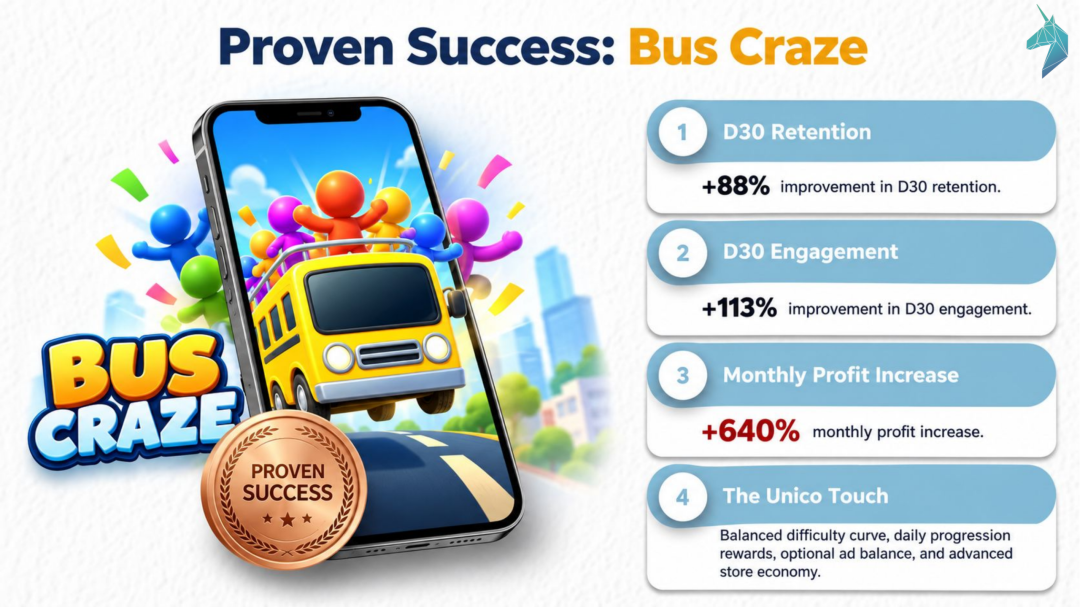
"Bus Craze" offers a more concrete example. Unico rebalanced the difficulty curve, encouraged continued play through missions and level rewards, and refined the shop and car progression so ads and IAP reinforce each other.
According to Unico's published case data, "Bus Craze" saw D30 retention improve by 88%, D30 engagement rise by 113%, and monthly profit grow 640%, showing how tuned ad and monetization design lifts a live game.
Unico does not expose every player to exactly the same arrangement. In the study visit, the team said it distinguishes organic users, ad SDK channel users, social platform users and rewarded-channel users, tailoring experiences and measurement by cohort.
This adds a layer that must be explained in channel performance. A batch of users with low returns may come from an unsuitable source, or from a poorly handled in-game experience. Conversely, difficulty, ad or payment arrangements that do not match the audience can also suppress value.
The operational value of a long-run product shows in this space for continuous adjustment. Teams can improve the experience on existing content, then use subsequent users' performance to verify changes. New markets and channels bring different feedback, keeping the loop going.
As for when to keep scaling spend, Unico's basis is straightforward: the company does not apply one fixed marketing budget cap to all projects, and mainly decides whether to expand based on profitability; as scale grows, per-unit economics and team capacity are reviewed continuously.
Looking back at the 1.6 billion cumulative downloads, behind the number are these concrete operating choices. Content and brand recognition accumulated by older products give later users a starting point; continuously tuning retention, ad and payment experience, plus acquisition scaling, turns accumulated downloads into longer-term returns.
A casual game that has been live for years can still be a brand-new experience for some player today. How to make that experience worth continuing is perhaps the question long-term operation and sustained growth can never avoid.

Phantom Blade Zero Hits 500,000 Concurrent Players Within 9 Hours of Launch
Phantom Blade Zero launched on October 29 and quickly surpassed 500,000 concurrent players on Steam within nine hours, backed by a pre-release media score of 88.

Perfect World Q3 Net Profit Up 211%, "Project: Etheria" Billings RMB 2.7B; Kaiying's First Three Quarters Net Profit RMB 2B, Up Over 30%
A Q3 earnings snapshot.
Roblox Q3 Daily Active Users Miss Estimates: Child-Safety Overhaul Pains Persist, Stock Plunges Over 17% After Hours
Roblox's Q3 daily active users of 138 million missed estimates, while bookings of $1.7 billion beat expectations.